Trip Planning FAQs
Which month is best to visit Egypt?
October through April is the best, with mild daytime temperatures hovering around 20-25°C (68-77°F), perfect for open-air sites like the Pyramids and temples, as well as a Nile cruise. But it’s also peak season, so book early and expect higher rates.
From May to September, especially between June and August, the weather is extremely hot, usually exceeding 40°C (104°F). But the Red Sea, which is suitable for diving and beach holidays, remains a great escape. This is also when you can enjoy off-season discounts on hotels and flights.
FYI: If your visit falls during the Muslim holy month of Ramadan, the ninth month of the Islamic calendar, which shifts each year, expect daytime restaurant closures and adjusted hours of attractions and shops. But the sunset iftar meals are a cultural highlight worth experiencing.
Is Luxor nicer than Cairo?
Neither is definitively better: they offer different experiences. Luxor is an open-air museum of ancient history, while Cairo is a bustling metropolis where the Pyramids rise amidst modern life.
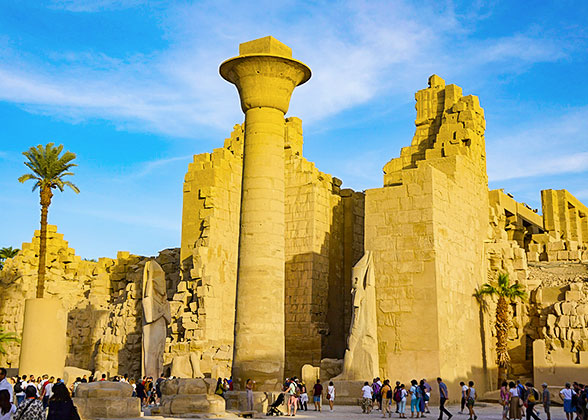
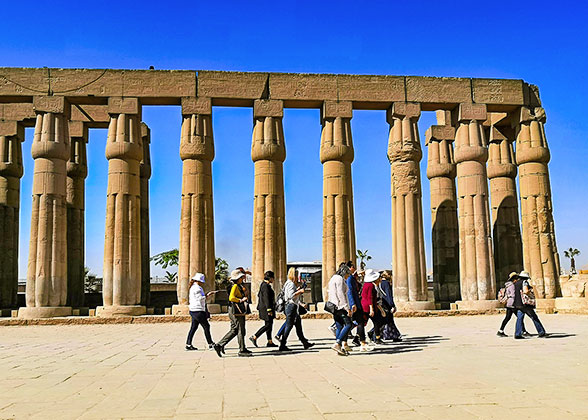
In Luxor, the Nile splits the city by theme: the East Bank is home to Karnak and Luxor temples, honoring the gods, while the West Bank holds the Valley of the Kings, where royal pharaohs were laid to rest - a layout offering the most vivid glimpse into the ancient Egyptian view of life and death. And for many travelers, a sunrise hot-air balloon ride over Luxor’s temples and the Nile and exploring its illuminated temples at night are bucket-list experiences.
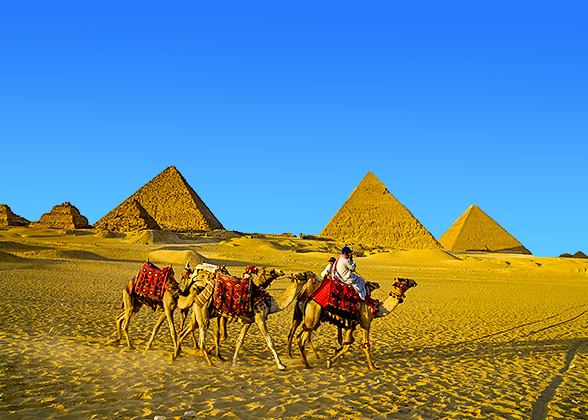
Cairo, by contrast, is anchored by the Great Pyramid of Giza, the last surviving wonder of the ancient world. Beyond that, the city reveals layers of history through the Egyptian Museum, and its Islamic Cairo with mediaeval architecture, mosques, the enchanting Khan el-Khalili market, and the ancient churches and synagogues of Coptic Cairo, together painting a fuller portrait of Egypt.
How many days do you need on a Nile cruise?
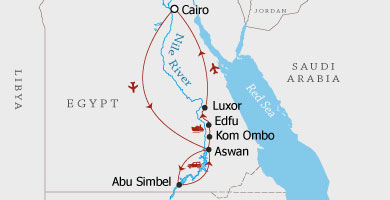
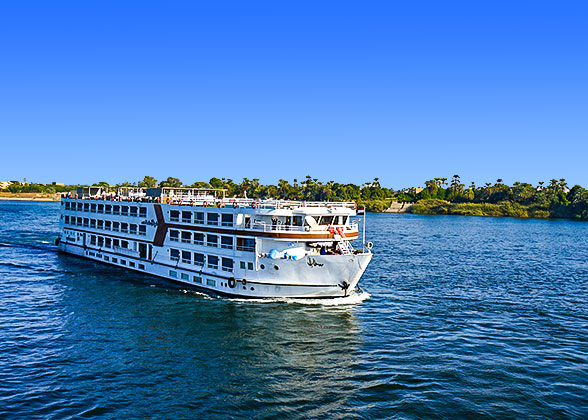
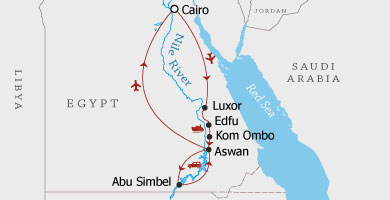
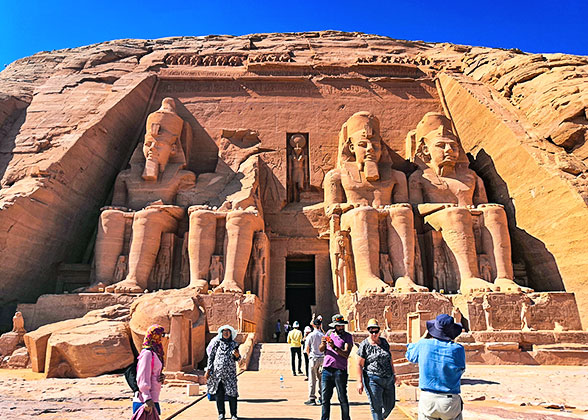
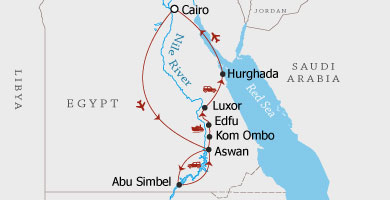
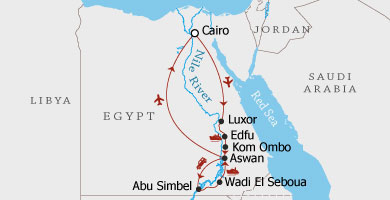
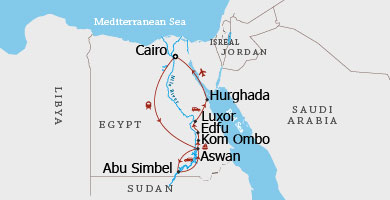
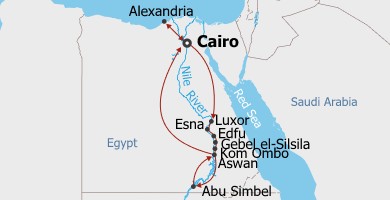
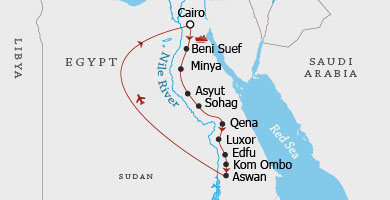
If you’re short on time, the classic 4-day, 3-night itinerary is a solid choice. Sailing the golden stretch between Luxor and Aswan, it packs in the must-sees, including the Valley of the Kings, Abu Simbel, and ancient temples at Edfu and Kom Ombo. For a more relaxed pace, consider extending to 5 days and 4 nights. That extra day gives you time to soak up the sun on deck or explore additional sites without rushing. If you have a week or more, go for 8-day, 7-night, or even 12-day cruises that go beyond the classic temples and tombs and include Cairo’s historic landmarks and the Red Sea coast.
Are mosquitoes a problem?
Yes, mosquitoes are prevalent across the country, particularly in the northern Nile Delta, along the Nile River Valley, and the Red Sea region, and can carry diseases such as dengue and chikungunya. They peak from June to August, with dawn and dusk being their most active periods. Wear light-colored, long sleeves and pants, and use insect repellent. If you develop a fever, headache, or muscle aches, seek medical care promptly and inform your doctor about any mosquito bites, which aids faster diagnosis.
What to avoid eating in Egypt?
For both religious and health reasons, keep these dietary tips in mind: out of respect for local Muslim customs, steer clear of alcohol and pork. During the month-long Ramadan (the ninth month of the Islamic calendar), avoid eating, drinking, or smoking in public by day. To prevent stomach trouble, skip tap water and anything that has used it, as well as the traditional salted fish feseekh, raw salads, uncooked meat and seafood, and peeled fruits from unsanitary street vendors. Instead, drink only sealed bottled water and eat at busy restaurants where food is freshly cooked and served hot. And pack some digestive remedies and anti-diarrheal medication just in case.
Can females wear shorts in Egypt?
Dress codes for women vary by location. As a predominantly Muslim country, Egypt maintains conservative dress norms, especially in public places. In religious sites across Luxor and Old Cairo, modesty is expected to show respect for local customs and avoid unwanted attention, so cover your knees, shoulders, and chest, and avoid shorts, miniskirts, or tank tops. Also, a lightweight shawl is useful for covering your head when entering a mosque. At Red Sea resorts like Sharm El-Sheikh and Hurghada, however, swimsuits and shorts are perfectly acceptable on the beach and within hotel grounds.
Is USD acceptable in Egypt?
US dollars are widely accepted at upscale hotels, malls, and restaurants, as well as for high-end services like private transfers or hot-air balloon ride bookings, though expect some exchange rate loss. For daily small expenses like taxis, local markets, and street vendors, Egyptian pounds are essential, so it’s wise to keep plenty of small-denomination EGP notes on hand. The dollar is one of the easiest currencies to convert, with airports, banks, and authorized exchange offices all readily accepting it.
Is tipping a must in Egypt?
Yes, tipping is expected for almost any service; it’s both a sign of appreciation and a key supplement to workers’ earnings. Always tip in cash, as businesses rarely make change, and keep a stash of 5, 10, and 20 Egyptian pound notes handy. Amounts vary by service: EGP 5-20 (USD 0.1-0.4) is acceptable for minor services like hotel porters, parking, and bathroom attendants; at restaurants, if the bill excludes service, leave 10-15% in cash, or simply round up the bill.
Scams are common in Egypt, but they’re usually after money, not harm, and follow predictable patterns. With basic awareness, you’ll avoid most of them. The golden rule: don’t trust unsolicited “kindness,” avoid falling for “bargains,” and always stay skeptical.
At major sites like the Pyramids and temples, watch out for the “One dollar!” chant, “helpful” locals offering photo tips or directions, and strangers - especially kids - shoving things into your hands and demanding money. A firm “No, thanks” and a swift walk-away are your best defense. For camel rides, horse carriages, or boat trips, always negotiate upfront: Confirm the total price, the currency (EGP or USD), and exactly what’s included. Politely decline any invitations to a “friend’s shop.” Use Uber and Careem to travel around the cities; pick top-rated drivers or the best-value car option.


 7-9 Days
 Egypt
Egypt