
 Algeria Weather
Algeria Weather
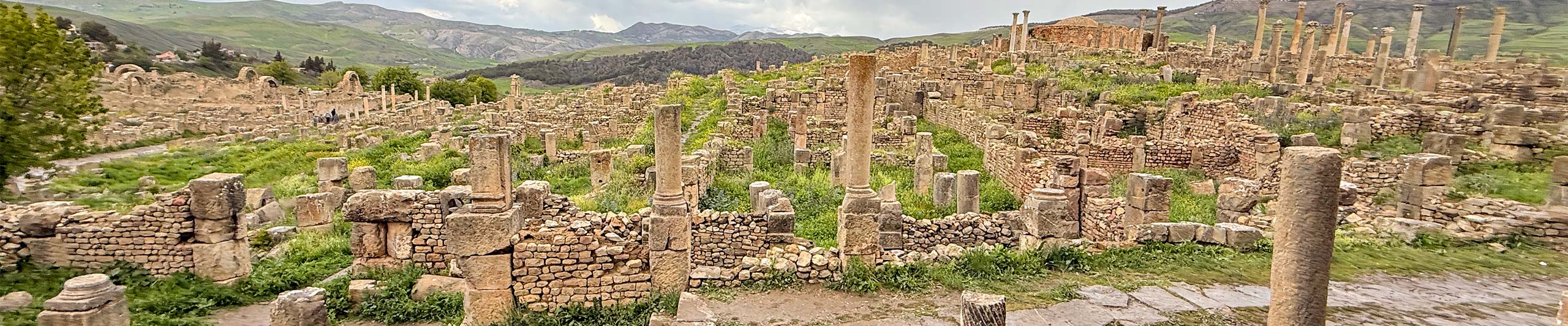
Algeria, the largest and northmost country of Africa, is geographically divided into three parts by the boundary of Tell Atlas and Hauts Plateau: the northern Mediterranean coastal part, vast southern desert part as well as the plateau area lying between. Consequently, Algeria weather is of large regional variations.
In northern Mediterranean coastlands, Mediterranean climate predominates, featured by hot and dry summer from June to August as well as mild but rainy winter from December to February. While, the central plateau area has a scorching summer and cold winter, belonging to continental climate zone. The southern desert areas accounting for about 85% territory of the whole country has tropical desert climate, with high temperatures and scarce precipitation throughout the year; therefore, the vast region sees no distinctive seasons, only burning hot season and relatively cool season.
 See also: Algiers weather, Constantine weather
Temperature
Generally speaking, Algeria weather experiences almost no severe coldness but frequent heat waves.Across the whole country, the yearly temperature trend shares both similarities and differences:
1. From northmost coastal region to plateau areas, then the southern desert parts, the temperature gets increasingly high. Timimoun in the south, known as the “Red Oasis” in the Sahara, could be listed as one of the hottest destinations in Algeria.
2. Besides, mountain and desert areas see large temperature difference between day and night, while that of coastland is small.
For sea temperatures along the northern coast, January to March has the lowest around 15 degrees Celsius (59 degrees Fahrenheit). From June to August, the average sea temperatures gradually rise from 20 to 25°C (68 - 77°F); then it falls to 22°C (72°F) in October. It is comfortable for visitors to go diving or swimming in the sea during this period of June to October.
What is the Coldest Month in Algeria?
Throughout the year, January is the coldest month for all parts, but the specific temperatures and feelings are quite diverse in different regions.
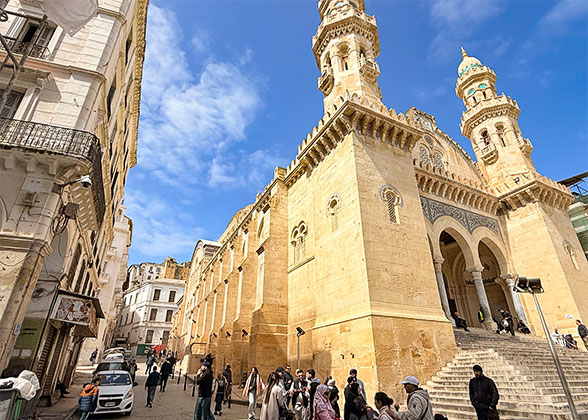
Visiting Kasbah Old City
|
For cities in the northern Algeria like the capital Algiers, the daily highs usually fluctuate between 12 and 20°C (54 - 68°F), sometimes reaching 22°C (72°F) around; the night lows lie between 9 and 16°C (48 - 61°F). It means most time in January in Algiers is cool and mild but not cold. The southern cities like Timimoun are about 5°C (41°F) warmer than coastal ones during daytime, but the night can be chilly with min temperatures of 1- 13°C (34 - 55°F). While, the plateau and mountain areas have an even colder January; for example, Batna sees high temperatures swaying between 6 and 17°C (43 - 63°F) in January and low degrees -5 - 8°C (23 - 46°F).
What is the Hottest Month in Algeria?
The hottest month in Algeria varies in different regions, usually July and August.In Algiers, the hottest month is August, seeing high temperatures hovering between 28 and 32°C (82 - 90°F) and low values about 23°C (73°F). In several days, the temperature might be as high as 36 - 39°C (97 - 102°F) during daytime and 27°C (81°F) at night. Thus, it is often hot, and becomes unbearable on occasions.
However, in plateau and desert areas, July is the hottest month. Taking representative Batna and Timimoun as the examples respectively. In July, Batna has the daily highs ranging from 33 to 42°C (91 - 108°F) and the night lows 18 to 25°C (64 - 77°F), thus the day is sweltering and night is pleasantly warm. In southern Timimoun, the max temperatures are in the range of 41 - 46°C (106 - 115°F) even the min ones are 27 - 36°C (81 - 97°F) so that it feels like being toasted in the big furnace. Historically, Ouargla once underwent the highest temperatures around 54°C (129°F).
Precipitation
The precipitation in Algeria is characterized by uneven distribution both chronologically and geographically.Across the year, December witnesses the highest rainfall and July the least. June to September is commonly regarded as the local drought season while the rainy season usually lasts from November to next April. So, Algeria climate is generally dry in summer and humid in winter.
Geographically, the northern coastal zones enjoy the highest rainfall, about 400 - 1,000 mm (15.75 - 39.37 in) annually, accounting for the majority of total precipitation in Algeria. In the transitional mountain areas, the figure ranges from 200 to 400 mm (7.87 - 15.75 in), a moderate level. Whereas, the desert areas receive exceptionally scarce rainfall the whole year that even the rainiest December has no more than 5 mm (0.2 in); in some southern cities, it sees almost no rain, with annual precipitation around 10 mm (0.39 in).
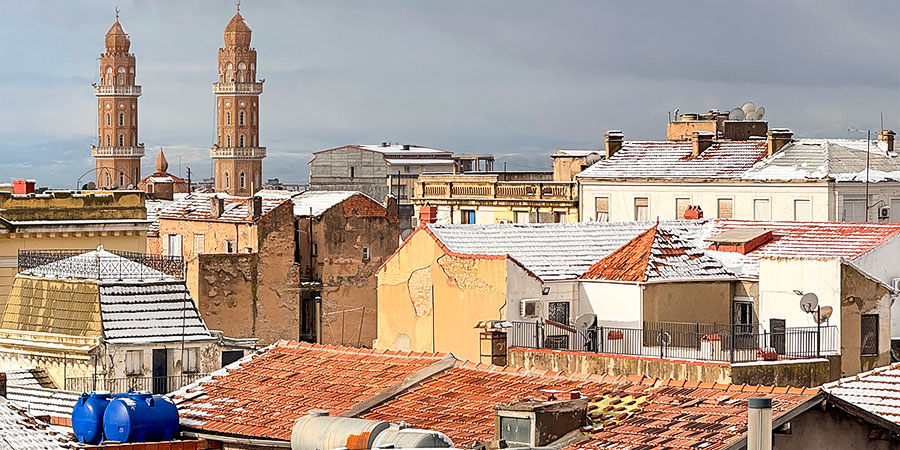
Snow-covered Setif in January
|
Does Algeria Get Snow?
Yes, but occasionally and limited to specific regions. During the coldest time when the night temperatures dip below freezing, snow might fall in the high-altitude mountain areas such as Setif. Sometimes, snowfall also happens at the edge of the Sahara, but this unusual phenomenon is very rare, only seven times in the past 40 years and the latest one was in March 2026. It is in forms of snow drizzles which melts soon in most urban areas, but snow views are available in high-land like snow mountains in Chréa.Abundant Sunlight
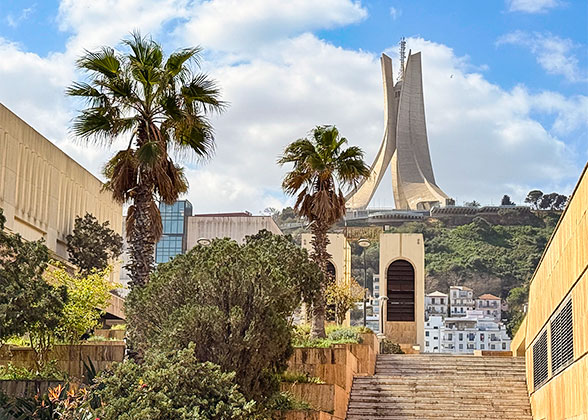
Martyrs’ Memorial under Bright Sunshine
|
The sunshine is considerably strong that visitors need to take sunscreen measures almost any time of the year, especially in the desert areas. During summer, the UV index no less than 9 is commonly seen and peaks at 10 - 11 in July, the most scorching month. It is noteworthy that deserts have extremely high UV index of 11 even higher for four months from May to August. The ultraviolet rays are so strong that your exposed skin get sunburnt in minutes.
Best Time to Visit Algeria
In general, spring from March to May and autumn from September to November are widely recognized as the best time to visit many destinations of Algeria when the climate is the most agreeable. During these periods, the northern cities witness high temperatures most in the range of 20 - 30°C (68 - 86°F) and the low values 12 - 22°C (54 - 72°F). It is cozy and pleasant generally, free from burning heat and extreme dryness. The relatively cooler central and much hotter southern regions also experience no extreme conditions during the transitional seasons.
|
|
|
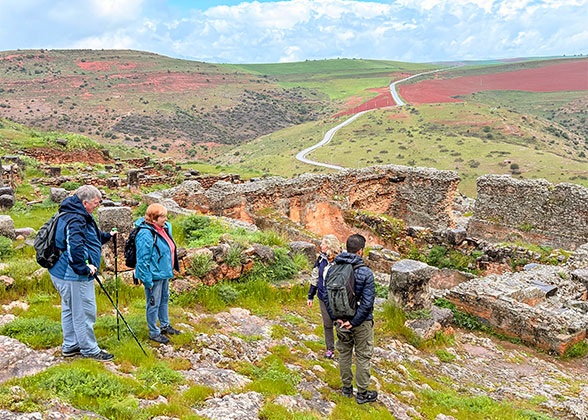
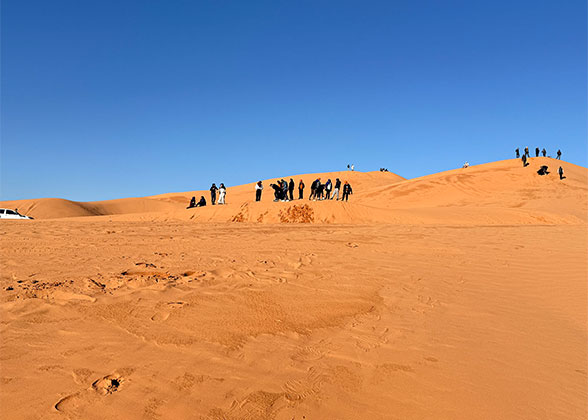
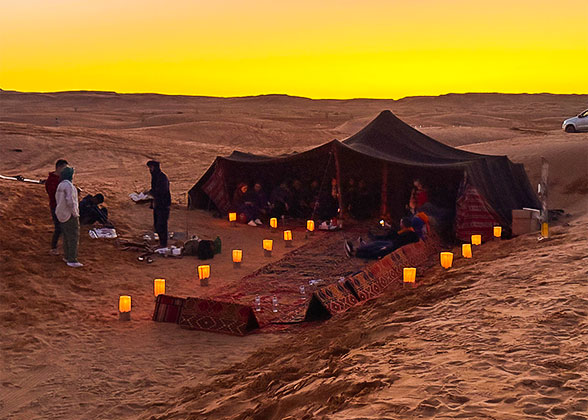
But considering personal preferences and regional diversity, the specific best time might be a little different. If you want to conduct ocean activities, June to October is the best time when the sea temperatures are between 20 and 25°C (68 - 77°F), suitable for swimming and diving in. However, if your primary destination is the Sahara, it is suggested to visit there during October to next April when the max degrees rarely go beyond 40°C (104°F); for cooler experience, you can choose November to March, but be sure to prepare for the huge day-night temperature gaps.
Algeria Weather by Month
Spring: March- May
Weather
The temperature in spring climbs gradually, while the precipitation keeps decreasing.
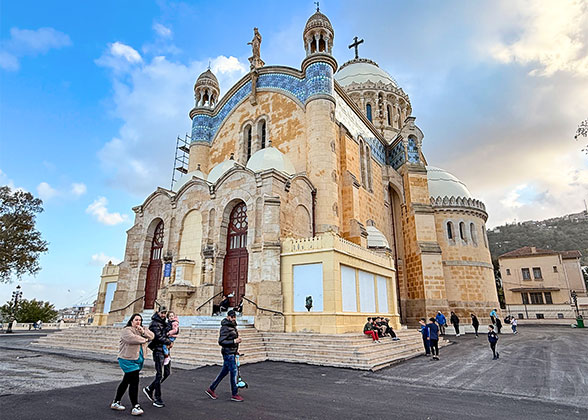
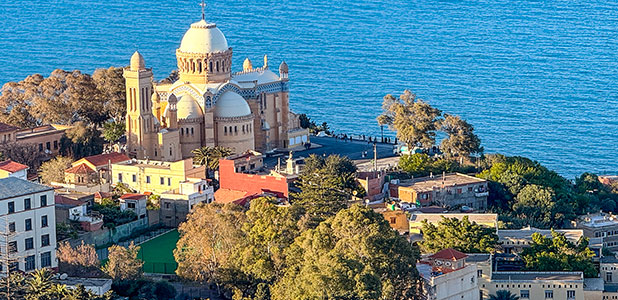
Notre-Dame d'Afrique
|
However, the plateau areas remain a little chilly in March with temperatures around 15°C (59°F) and doesn’t become warm until May. Here, the temperature in early spring fluctuates drastically that daytime degrees below 10°C (50°F) and beyond 20°C (68°F) could both been seen occasionally. This region has relatively low rainfall about 40 mm (1.57 in) monthly, but visitors won’t feel dry.
For desert regions, March to early April has a warm daytime as the high temperatures seldomly rise over 30°C (86°F) and a chilly night around 12°C (54°F). During the late spring from late April to May, daytime highs over 35°C (95°F) become common and strong winds also gets frequent, making it no more suitable for visiting there.
What to wear:
T-shirts, long-sleeved ones, hoodies, trench coats, 3-in-1 windbreaker for chilly areas and periods; long dress, sweatpants, jeans; casual shoes like sneakers and flats …
What to note:
1. Algerian Ramadan (the month of fast) in 2027 is predicted to involve March. In this period, locals shorten their working time, some restaurants and scenic spots may open later or close earlier. To show respect, visitors should avoid having meals in front of local residents. Then, the Eld al-Fitr and following 3-day holiday start after the ending of Ramadan when you can experience the lively festival atmosphere.2. Another important festival Eld al-Adha in 2027 is probably celebrated on May 16 when Algerian people enjoy mutton dishes. During the 3-day holiday, some attractions may close, so be sure to check before going.
Summer: June - August
Weather
Summer in Algeria is the hottest, driest and most scorching period of the year. To be specific, in different parts, the high temperatures vary from 31 to 46°C (88 - 115°F) and the monthly precipitation ranges from 1 to 20 mm (in), which brings visitors disparate feelings.
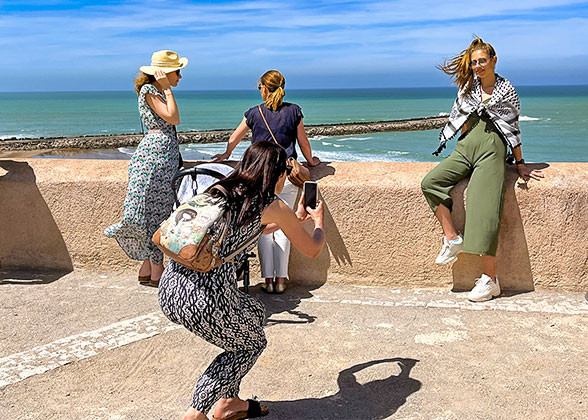
Seashore during Summer in Oran
|
What to wear:
breathable T-shirts, sunscreen coats, long dress, and summer sweatpants for day time and thin blouses or jackets for night; sandals, slippers, lightweight sport shoes …
What to note:
1. For the sake of respect and security, girls should avoid wearing shorts, skirts and camisole dress in summer except swimsuits when on the beach.2. Three religious festivals are celebrated in summer in 2026 including Awal Moharem (Islam New Year) on June 17, Achoura (Memorial of Hussein) on June 26 and El Mawlid Ennabaoui (Birthday of Muhammad) on August 25. The whole country enjoys 1-day holiday during the festivals.
Autumn: September - November
Weather
During autumn, the temperature decreases slowly and the precipitation rises step by step. With lingering heat in summer, the climate of Algeria remains hot in September. Obvious temperature drops can be perceived in October when the daily highs of northern Algeria are around 25°C (77°F), and further dip to about 20°C (68°F) in November, a cool level. In mountain areas, the day experiences the same temperature range as the coastal cities, but nights are about 10°C (50°F) cooler. The southern deserts also have the similar temperature trend but usually with 10°C (50°F) higher daytime degrees than coastlands. By and large, due to the generally pleasant temperatures, autumn is also a good time to visit Algeria.
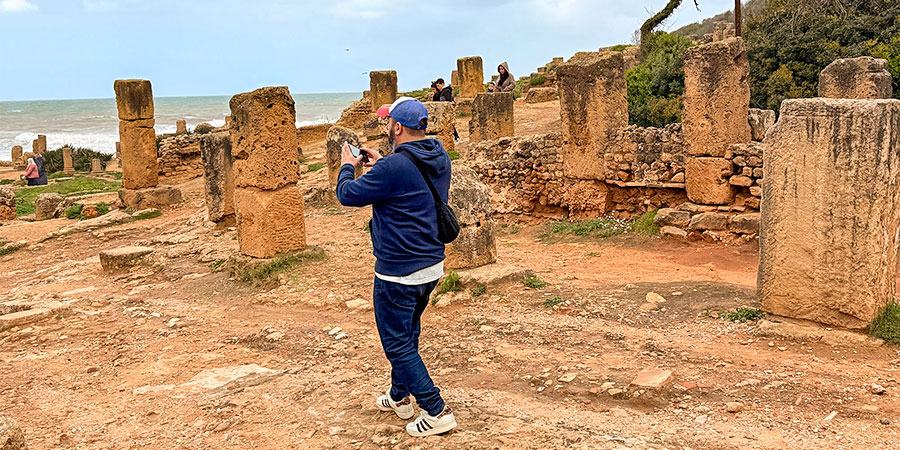
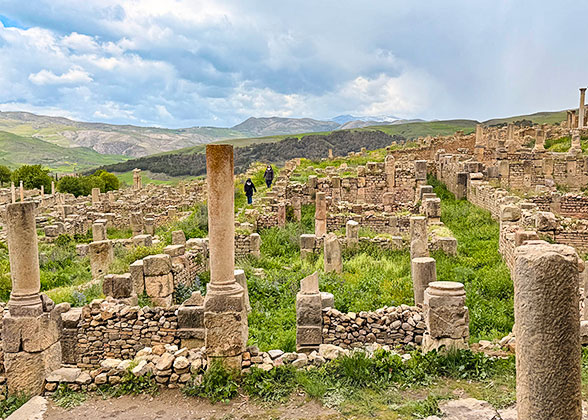
Visiting Tipasa Roman Ruins in Autumn
|
In terms of the precipitation, coastlands experience a large increase; for example, in the capital Algiers, it increases a lot from 32 mm in September to 87 mm (1.26 - 3.43 in) in November, the first month of rainy season. While, other parts see only a few variations throughout the autumn; the mountainous Batna receives monthly precipitation around 35 mm (1.38 in) and the southern Timimoun about 2 mm (0.08 in).
What to wear:
T-shirts, blouses, knit wear, trench coats, woolen coats; dress, jeans, thick sweatpants; sandals for beach, casual shoes …
What to note:
Heavy rainfall even storm might occur in autumn in the northern cities, which further leads to mountain torrents or mudslide. Visitors should keep a close eye on the warning information and forecast so as to make timely adjustments on your travel schedule. If you happen to experience the heavy rain, please avoid outdoor visits.Winter: December - February
Weather
In general, winter in Algeria is mildly cold and rainy. In coastal areas, the temperatures fluctuate slightly. Most of the time, the daytime degrees are between 12 and 18°C (54 - 64°F) except several days over 20°C (68°F), thus the winter is a bit chilly but not bitterly cold here. For other parts, the diurnal temperature difference is as large as 10 - 15°C (50 - 59°F). Plateau areas experience a cold winter as the daily max temperatures lie between 6 and 17°C (43 - 63°F), not to mention the low degrees which might go below freezing. Desert regions usually have warm day temperatures around 25°C (77°F), but considering the vast areas, the night situation is complicated, perhaps cold around 10°C (50°F) or freezing around 0°C (32°F).
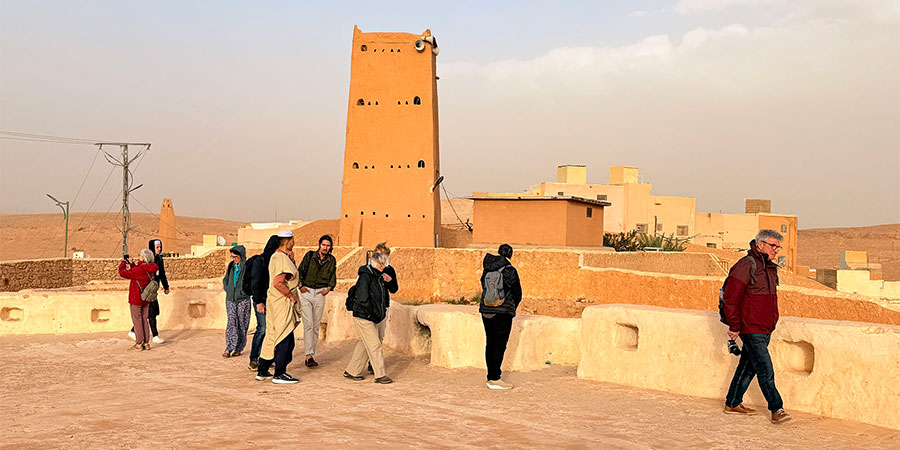
Visiting Beni Isguen in Ghardaia in Winter
|
During rainy season, coastal cities receive over 80% of total annual precipitation in winter; for example, in Annaba, the monthly average precipitation ranges from 120 to 98 mm (4.72 - 3.86 in) from December to February. In mountain areas, the precipitation is lower, falling in multiple forms such as rain, sleet, snow and hailstone. The precipitation in deserts area is scarce and rare as usual.
What to wear:
scarves, shirts, hoodies, sweaters, trench coats, woolen coats, 3-in-1 windbreaker, thin down coats; long johns, sweatpants, jeans, fleece-lined ones, thick jacket pants; non- slip sneakers, walking boots, padded ones…