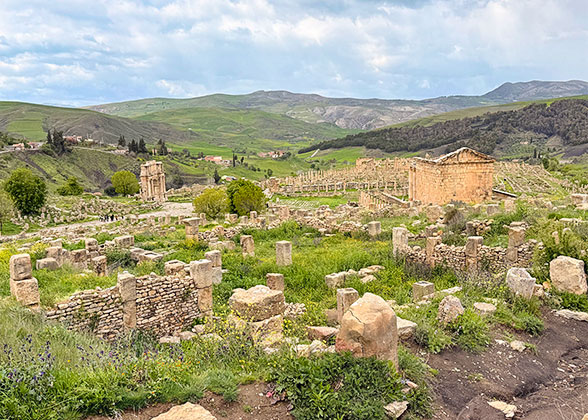
Djemila Roman Ruins, Setif
This morning, your private guide and driver will meet you at your hotel, and accompany you to explore Algeria’s complex history in Algiers and Tipasa.
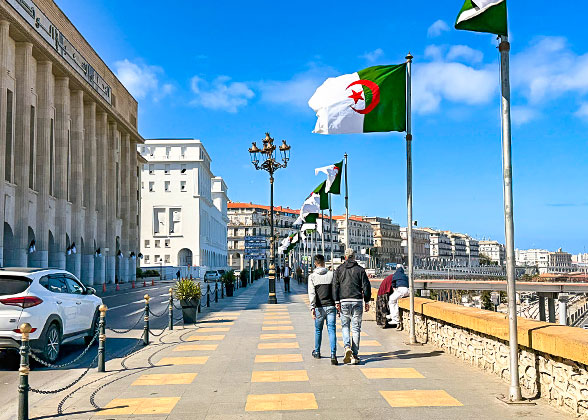
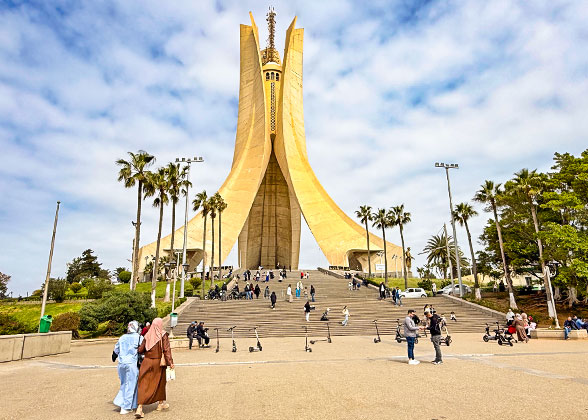
First, let’s visit the Martyrs Memorial atop Hama Hill, standing 92-meter-high (300 ft.) and composed of three massive palm leaf shapes. Erected in 1982, it majestically overlooks Algiers and the vast Mediterranean Sea. It’s a memorial to those who sacrificed in the Algerian War of Independence, which lasted 93 months from 1954 to 1962. Over 300,000 Algerians died, leaving an indelible scar on the country. At the National Museum of Moudjahid at the foot of the monument, we’ll get a direct understanding of the details of the war and its profound impact.
Then, we’ll continue to visit the Basilica of Notre-Dame d’Afrique perched on a 124-meter (410 ft.) cliff. It seems incongruous in such a country where approximately 99% of the population is Muslim. However, it is a very testament to Algeria’s cultural fusion and religious inclusiveness. Built in 1858 AD, it features both Neo-Byzantine domes and Arabic-style mosaics. Upon entering the hall, you can see the sacred bronze statue of the Virgin Mary, welcoming people of different faiths and nationalities with her open arms. Behind her is the heartwarming inscription that reads: “Our Lady of Africa, pray for us and for the Muslims.”
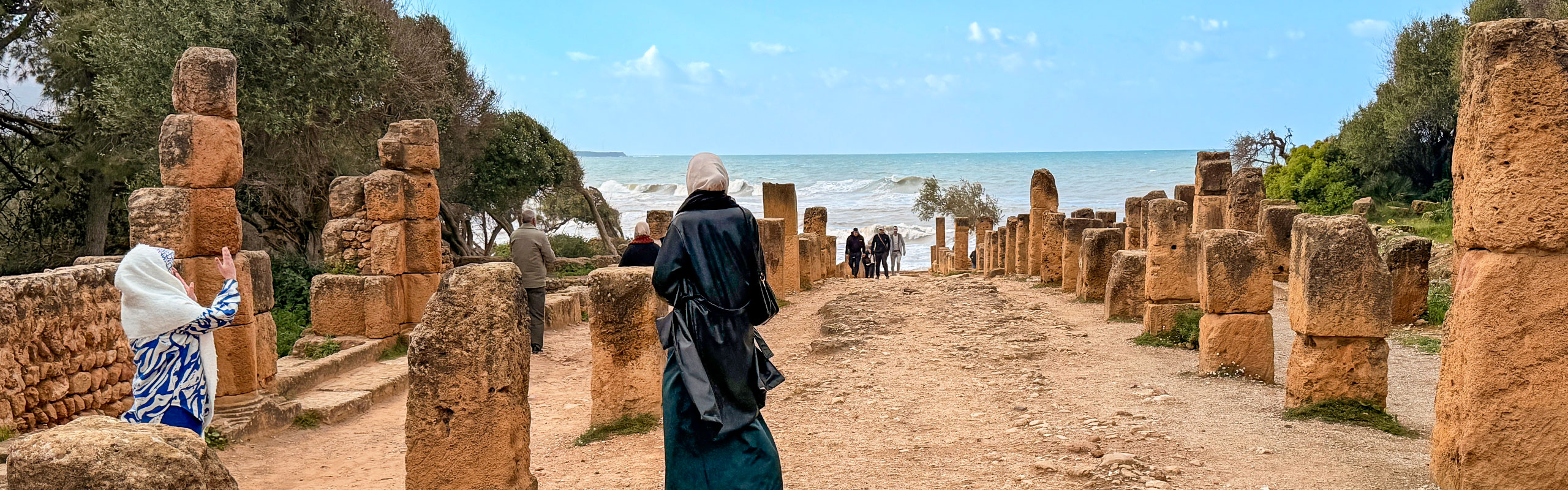
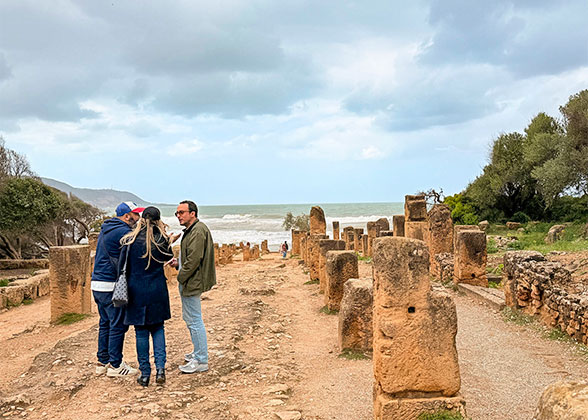
Next, let’s drive for about an hour to Tipasa, a UNESCO World Heritage Site with some of the best-preserved Roman ruins in North Africa. During the ride, you can enjoy the orchard scenery along the coast. Two thousand years ago, Tipasa was one of the most famous Roman cities in North Africa, with baths, temples, and an amphitheater. Current archaeological excavations have only touched a small part of the site, and most of it is still buried underground. As the famous French philosopher Albert Camus (1913-1960) wrote, Tipasa is not only “the flower-covered ruins”, but also “inhabited by gods”. Then, let’s drive back to Algiers, and make a stop at the Royal Mausoleum of Mauretania. The imposing 30-meter-tall (100 ft.) stone tomb belongs to the famous Queen Cleopatra’s only daughter. During her reign over the ancient Mauretanian Kingdom (3rd century BC - 40 AD), she laid an important foundation for the Romanization in North Africa.
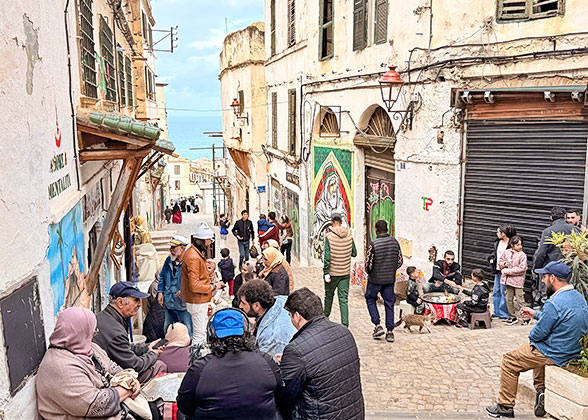
After arriving in Algiers, we’ll go to the UNESCO-listed Kasbah Ancient Town. Built in the 10th century AD, Algiers Kasbah is a maze of narrow alleys and streets, with white buildings densely packed on the hillside. Climbing the stone steps, you may encounter a vast expanse of blue sea around a corner. This old town itself is a living history book. Having witnessed the rise and fall of multiple eras, it remains the home of local residents. After the visit, your guide and driver will escort you back to your hotel.
Meals: Breakfast, Lunch
Accommodation: Hotel El Aurassi, Algiers (4 stars) or similar
Tipasa Roman Ruins
Algiers Martyrs Memorial