
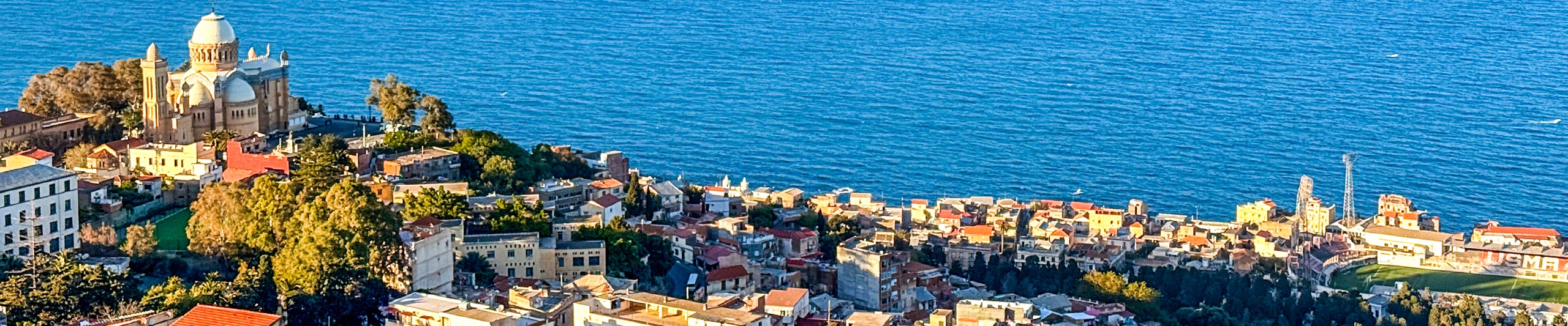

Algiers Weather
Located in the north of Algeria along southern Mediterranean coast, the capital Algiers belongs to the Mediterranean climate zone. Influenced by subtropical high and westerlies, it has four distinct seasons. Summer from June to August is noticeably hot but dry, while winter from December to next February is mildly cold but rainy. On occasions, Medicane happens and brings heavy precipitation and strong winds. Overall, the transitional spring and autumn are the best times to explore the city.
Temperature
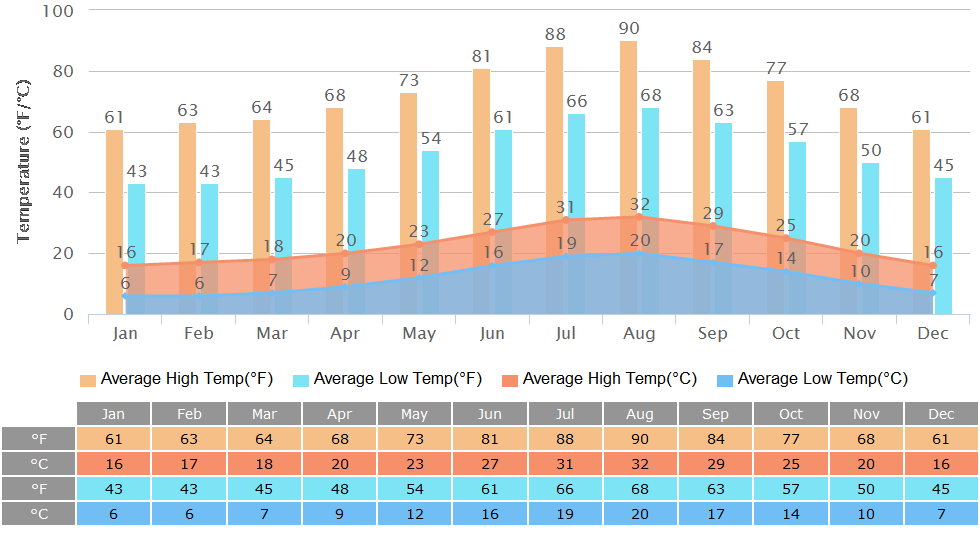
In spite of the somewhat significant yearly temperature differences, Algiers weather is generally mild, free from long-lasting unbearable heat and harsh coldness. The transition between seasons is gentle as well, but occasional drastic temperature fluctuations are possible. Surprisingly, the diurnal temperature variations tend to be relatively small, usually around 5 degrees Celsius (41 degrees Fahrenheit), which means it is unnecessary to prepare extra clothes for nighttime.What is the Coldest Month in Algiers?
The coldest month in Algiers must be January when the daily highs mostly range from 12 - 18℃ (54 - 64℉), hitting over 20℃ (68℉) for several days in hot years and the daily lows from 9 to 16℃ (48 - 61℉). Therefore, instead of cold, it is more appropriate to describe the weather of Algiers in January as chilly. But when encountering heavy rains or strong winds, you could have slight cold feelings because of much lower perceived temperatures.
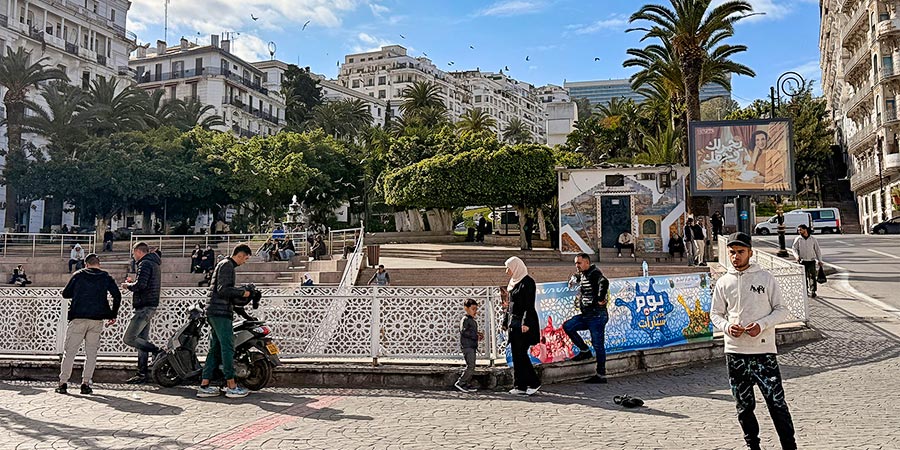
Mild Algiers During Winter
|
What is the Hottest Month in Algiers?
In Algiers, August is the hottest month of the year. It sees daytime high temperatures fluctuate between 28 and 32℃ (82 - 90℉) with occasional heat weaves over 35℃ (95℉), a level that you will keep sweating when walking under sunlight; while, the low degrees lie between 22 and 26℃ (72 - 79℉), meaning warm and pleasant night time. Compared with other destinations of Algeria, Algiers is the least hot and the heat is generally acceptable.Precipitation
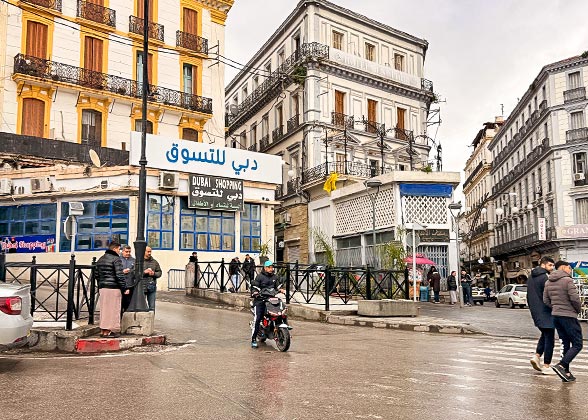
Always Wet Road in Rainy Season
|
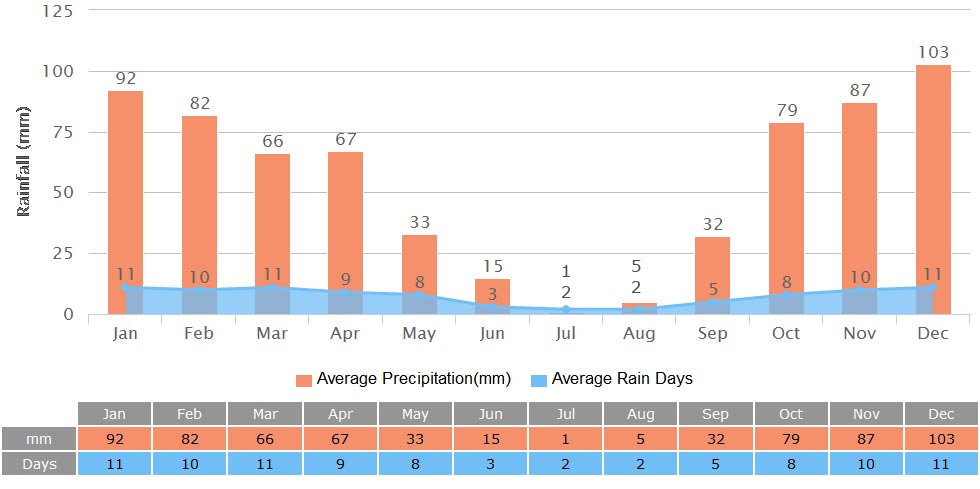
To be specific, the rainy season normally lasts from November to next March and dry season from June to September, of which December receives the highest precipitation and June the least. Of the total amount, the rainfall during the rainiest months accounts for about 70%, while that in dry season is less than 10%. In terms of the precipitation forms, rainfall in various intensity could be seen, high in winter as brief downpour and showers, but low in summer as drizzles. In the coldest months, you can see hailstones even light snow, but the latter only happens in the southern mountains of Algiers, so rare that one or two times in some years.
Daytime / Sunlight
Algiers enjoys bright and plentiful sunshine with total sunlight duration of about 2,700 hours in a year. Changing with seasons, the sunny time reaches the peak of 10 - 11 hours per day in summer and dips to the bottom around 6 hours in winter. In general, Algiers climate is sunny. The sunlight keeps strong for almost half the year from April to September with the UV index of 7 - 10, a quite high level which requires visitors to make suitable sunscreen measures; otherwise, you may get sunburnt after a dozen of minutes.Best Time to Visit Algiers
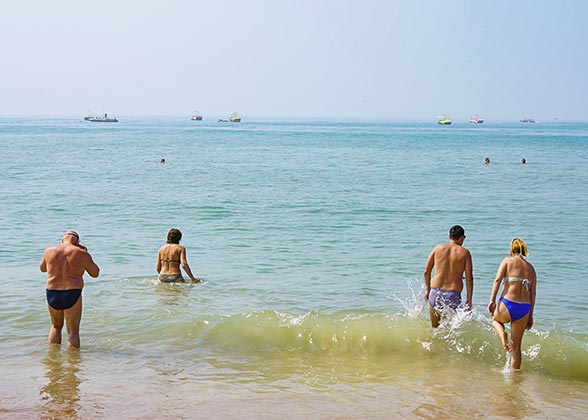
Have Fun along Algiers's Seaside
|
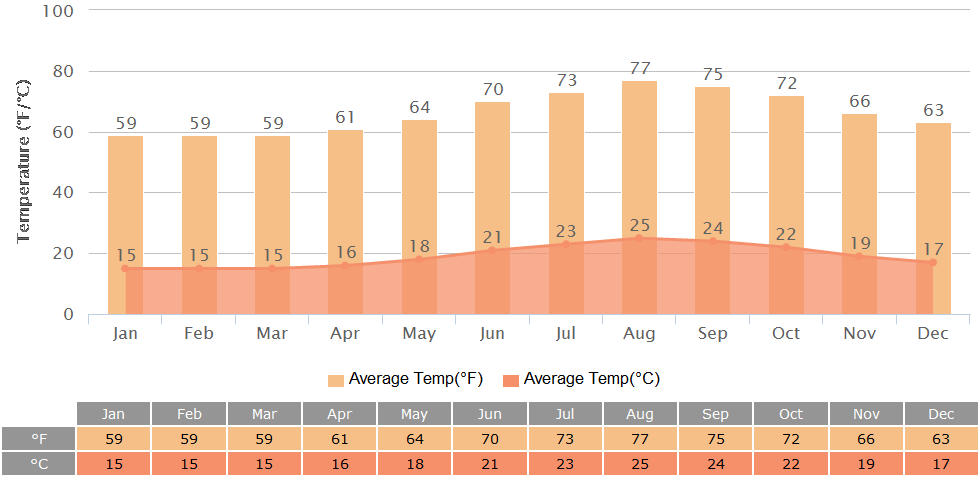
However, if you mainly target at having fun by the Mediterranean, the best time falls in June to October when the sea temperatures fluctuate between 21 and 25 ℃ (70 - 77℉), mostly suitable and pleasant for sea activities such as swimming and diving. But be sure to pay much attention on sun protection.
Algiers Weather by Month
Spring: March - May
Weather
Spring could be regarded as the most comfortable season in Algiers for its pleasant temperatures and moderate precipitation. As the daytime temperatures climb gradually from 17 to 25℃ (63 - 77℉) and the nighttime degrees range from 10 to 15℃ (50 - 59℉), Algiers climate turns from cool to warm, an ideal weather condition for various outdoor activities without the bother of extreme heat and cold. On the contrary, the monthly precipitation drops from about 66 mm (2.6 in) in March and April to 33 mm (1.3 in) in May and the rainy days also decrease from 11 to 8. It usually has short duration and low intensity, so make little trouble on your itinerary.Packing Lists:
hoodies, shirts, jackets, trench coats; casual trousers, thick long dress with leggings; comfortable sneakers, umbrella …
Travel Tips:
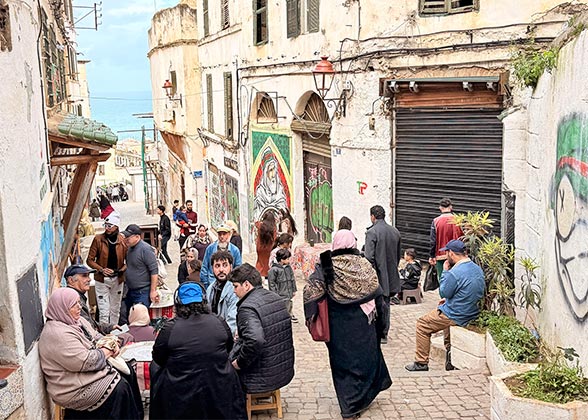
Crowded Kasbah During Festival
|
2. One of the most important festivals Eid al-Adha probably falls on May 16 in 2027 and locals will also enjoy 3 days off from work. Celebration activities are held on the city’s central squares and main streets, making it crowded. If you prefer a serene trip, avoiding this time is good choice; but if you are interested in the local traditions, be sure to make reservations on air flights and hotels in advance.
Summer: June - August
Weather
In summer, the climate of Algiers gets increasingly hot. During the three months, high temperatures mostly hover between 26 and 33℃ (79 - 91℉), sometimes surging over 35℃ (95℉), meaning the daytime is hot even sweltering. But the comfortable sea temperatures around 25℃ (77℉) provide a favorable condition for seashore exploration. The night and early morning are pleasant with the low values swaying around 23℃ (73℉).Summer also marks the driest season of Algiers: the average precipitation is merely 1 mm (0. 04 in) in the most drought July, such a low level that can be neglected.
Packing Lists:
thin and quick-dry T-shirts of light colors, sunscreen coats, swimwear; summer sweatpants, long dressing covering the knees, shorts for boys; slippers, sandals, breathable sport shoes; sunglasses, sunhats, sunblock, portable fans, mosquito repellent products …
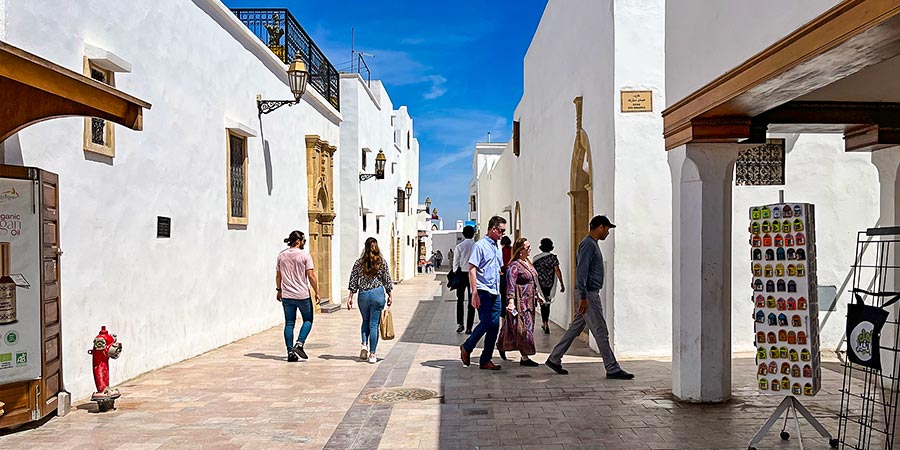
Hot and Sunny Summer in Algiers
|
Travel Tips:
1. Travelling in this hottest season, you are recommended to arrange outdoor visits in the early mornings and late afternoons when the temperature gets a little lower, and spend the noon indoors. To make full use of the daytime, you can choose to visit indoor attractions at midday, for example the museums like National Museum of Fine Arts to appreciate the oil paintings and sculptures.2. In this Islam country, girls in summer should avoid clothes with much skin exposed, such as shoulder-straps tops, shorts and skirts, in order to show respect and prevent troubles. But swim suits for having fun in the beach are acceptable. You may need to cover your hair as well when visiting mosques.
3. When conducting seashore activities, it is advised to choose high-SPF and ocean-friendly sunblock and apply them frequently to prevent sunburnt since the summer sunlight is intense, while the sunscreen cream is easily brought away by sea water.
Autumn: September - November
Weather
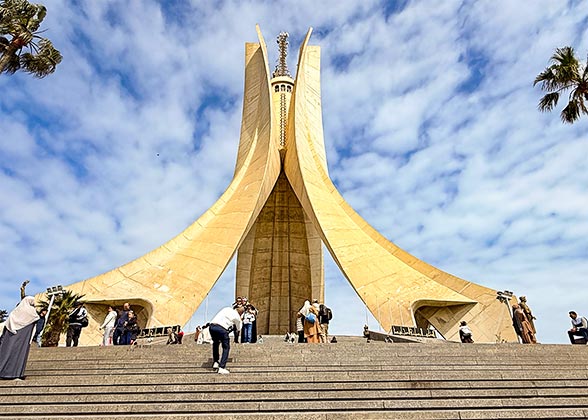
Martyrs’ Memorial Monument
|
The precipitation shows an increase trend from 32 mm in September to 79 mm (1.26 - 3.11 in) in October, rather sharp but it becomes gradual afterward. Algiers usually enters into local rainy season in November, endowed with high precipitation of 87 mm (3.43 in) on average. Both light but lingering drizzles and sudden but short-lasting downpour are possible, so raingear is strongly suggested.
Packing Lists:
T-shirts, long-sleeved ones, sunproof coat, jacket; long dress, shorts, jeans, sweatpants; slippers, sandals, light sneakers; umbrella, sunscreen products…
Winter: December - February
Weather
In winter, high and low temperatures at 14 - 20℃ (57 - 68℉) and 9 - 15℃ (48 - 59℉) respectively tell us that instead of pretty cold, the weather of Algiers is chilly. But the perceived temperatures might be slightly lower on rainy and windy days. In local rainy season, the precipitation is over 80 mm (3.15 in) each month and December receives the most, exceeding 100 mm (3.94 in). The rain might fall for consecutive days, but rarely last for the whole days. Rainfall in different intensity happens, but what might shock you is that hailstone and snow do occur, though quite rare. Moreover, during this season, Mediterranean cyclones blow across Algiers from time to time.
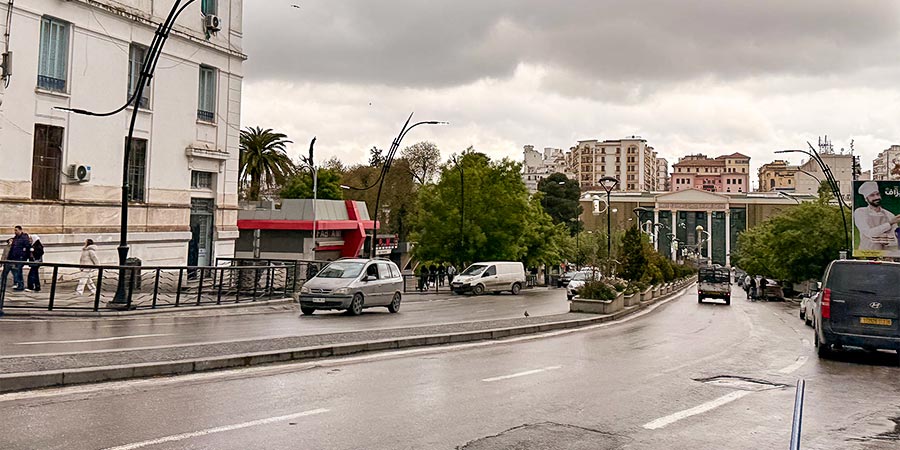
Rainy Winter in Algiers
|
Packing Lists:
sweatshirts, knit wear, long-sleeve shirts, woolen coats, 3-in-1 windbreakers; jeans, thick sweatpants, fleece-lined ones for night; anti-slippery sneakers, walking boots, rainproof shoe covers; umbrella or raincoat, warm accessories like scarves and hats to resist winds …
Travel Tips:
1. When heavy rainfall meets strong winds, outdoor sightseeing should be avoided for the sake of your safety since umbrella and raincoat might fail to work well as usual, nor to protect you from rainstorm. But outings in moderate or light rain are fine.2. Visiting Algiers in winter, one of the vital things is to monitor weather forecast closely so as to avoid rainy days to the largest extent. In addition, a plan B is necessary in case of rainstorms.