

Algeria Weather in April
With temperature rises, Algeria weather in April turns increasingly warm during the daytime and the nights in most areas become cozy as well. However, don’t slack off on the regional climate differences. This trend is a little fluctuating in mountain and desert areas. April also marks the end of rainy season in Algeria, but much rainfall still can be seen in northern coastal cities. As a whole, April is one of the good times to visit Algeria.
Obvious Temperature Rises, but Fluctuating
Most areas in Algeria experience large temperature rises in April, especially in the late half, but the trend is of drastic fluctuations and regional variations.For the northern and central Algeria like Tipasa and Constantine respectively, a large day-night temperature difference over 10°C (50°F) can be seen, with the daytime highs often in the range of 17 - 28 degrees Celsius (63 - 82 degrees Fahrenheit) and night lows lying between 7 and 15°C (45 - 59°F), so the northern and central parts have warm days and cool nights in April. Moreover, temperature fluctuations are usually seen. For these two parts, high temperatures around 15°C (59°F) might occur in early April or when it rains. Under extreme conditions, you could feel cold as winter with the max degrees around 11°C (52°F) or hot as summer with that of 31°C (88°F).
While, the southern Algeria climate in April transits gradually from warm to hot as its daytime high temperatures climb from 24°C (75°F) at the beginning to 34°C (93°F) in the end of April; some cities like Timimoun even sees heat waves over 36°C (97°F), a challenging level for long-time outdoor sightseeing. Meanwhile, nights in southern deserts are mostly warm and cozy with low values swaying between 13 and 21°C (55 - 70°F).
End of Local Rainy Season
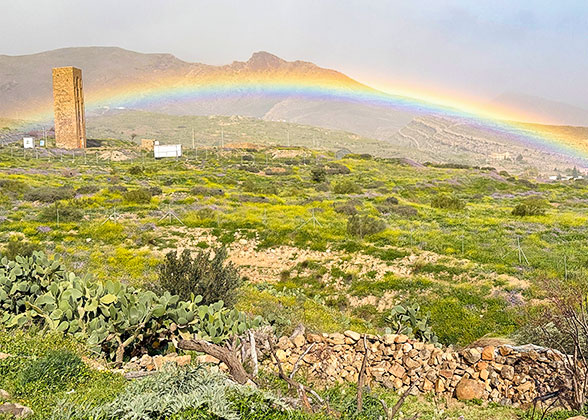
Beautiful Rainbow after Rain
|
They are from around 9 rainy days, so the amount distributed over every day is not high. In other words, the precipitation forms tend to be light rainfall or moderate shower; heavy downpour is very occasional. It may rain for consecutive days, but intermittently, seldom continuously without stops. Therefore, your travel schedule will not be disrupted largely. In mountain areas, there is a high possibility that rainbow appears when the day turns clear after rain.
The monthly rainfall in the southern desert is low as usual, only around 3 mm (0.12 in), too low to bother you.
Sufficient Daylight/ Sunlight Hours
In April, the northern Algeria witness earlier sunrise, later sunset and thus longer daytime than the south. For instance, the southmost In Guezzam sees sunrise time at 6:30 - 6:10 and sunset around 19:00, while the time in northern Algiers is about 6:30 - 5:50 and 19:10 - 19:40 respectively. In consequence, the northern part enjoys an average daytime over 13 hours in this month, about 0.5 hours longer than the south. But both are sufficient for visitors to explore the diverse landforms of Algeria.
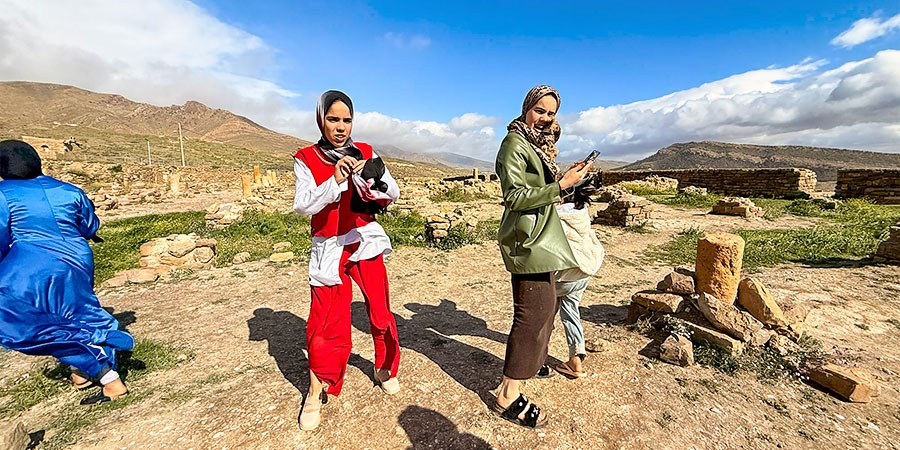
Sunny April of Algeria
|
At the same time, Algeria is endowed with abundant and strong sunshine in April. With scarce rainfall, the south has the sunlight time about 11 hours per day on average, 3 hours more than the north with some rainfall. Therefore, the climate of southern Algeria in April can be described as quite sunny. Meanwhile, the UV index gets higher. For instance, some southern cities like Djanet have seen the extremely high UV index of 11 in April, making it not suitable for visitors to conduct desert exploration. In the north where the UV index is lower, at around 7, you still need to take sun protection measures though.
Is April a Good Time to Visit Algeria?
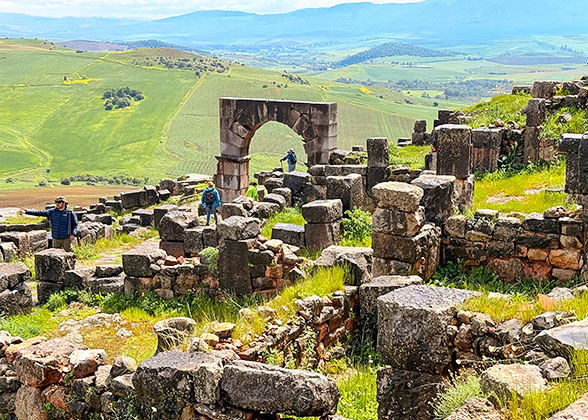
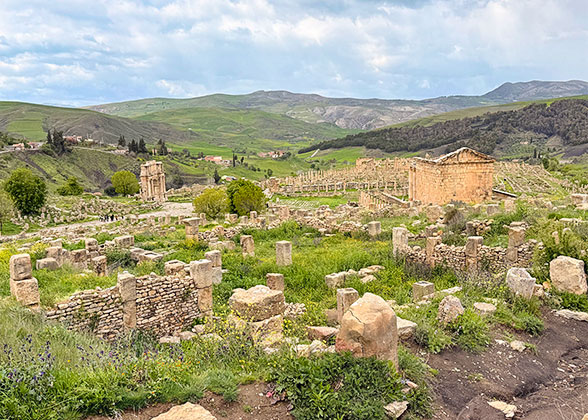
Luxuriant Tiddis Roman Site
|
Certainly yes! It is advisable to visit Algeria in April 2027 for the following reasons. First, the weather of Algeria in April is relatively warm and comfortable, free from extreme weather like intense heat, severe cold, strong winds and sandstorms.
In addition, the natural views also become vibrant as the mountains in central Algeria get increasingly luxuriant and the wild flowers in Tiddis Roman Ruins blossom. Besides, in April, you will not see crowded situations and long queues across Algeria, providing you a serene and wonderful trip.
Packing Lists for Algeria Trip in April
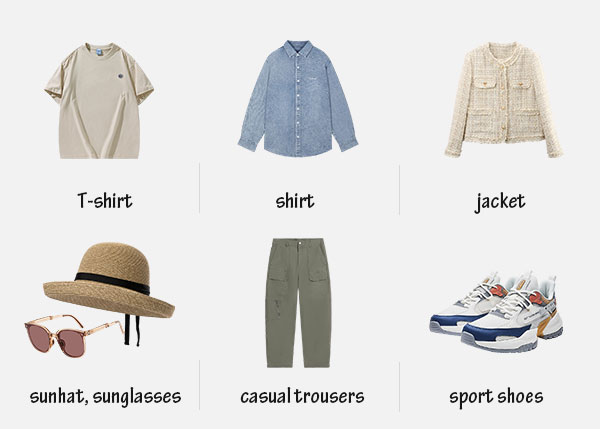
 Upper body: For northern and central cities like Algiers and Batna, it is recommended to wear T-shirts or shirts alone around noon and add a common jacket or 3-in-1 windbreaker after sunsets or when it rains. T-shirts with sunscreen coats or sleeves of light colors are good matches for southern Algeria during daytime; at night, thick coats are needed as well.
|
Lower body: You can wear casual trousers like jeans and sweatpants for most destinations; long dress for girls is also acceptable in hot days. Be sure to prepare both thick and thin trousers to wear in different areas and weather conditions.Shoes: Lightweight and breathable sport shoes are the top choices for various landforms of Algeria. You can bring some shoe covers both to deal with rainy days in the north and to prevent sand getting in your shoes in the southern desert.Others: Sunproof items including sunscreen cream, sunhats and sunglasses are undoubtedly necessary for Algeria trip in April, especially for the southern desert areas. An umbrella is useful to shield you from both rainfall and strong sunlight.Travel Tips and Recommendations for Algeria in April
1. If you plan to visit deserts, early April is more suggested when the temperatures haven’t climbed to the extremely high level. Parts of desert areas might be too scorching to visit such as the most southeast Djanet with strong sunshine. While, some desert cities like southwest Bechar and central Ghardaia still enjoy relatively low temperatures and UV index in April, suitable for paying a visit.2. If you have pollen allergies, be sure to wear masks and prepare relevant medicines just in case, as many flowers blossom in this month.