Day 1: Algiers Airport Pick-up
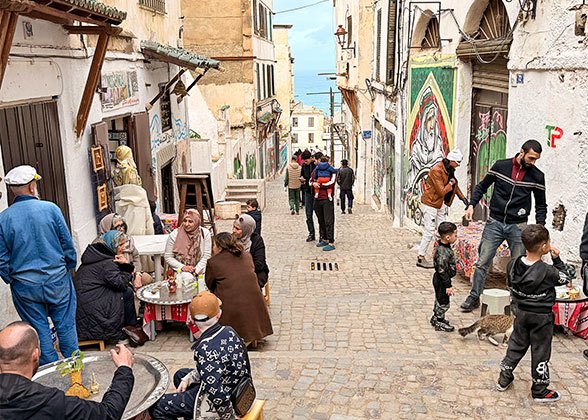
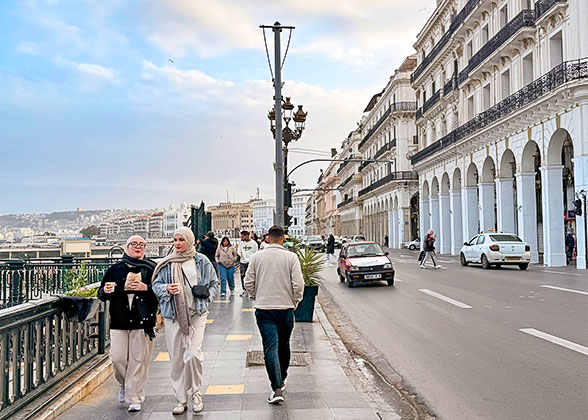
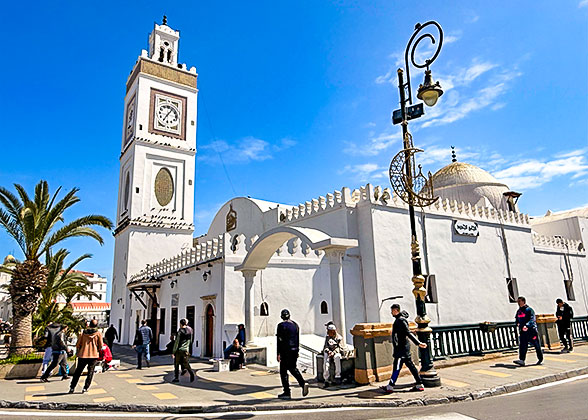
Welcome to Algeria! When you arrive in the capital Algiers, your private guide and driver will meet you at the airport and escort you to your hotel in the city center. Depending on your landing time, you’ll either take a guided city tour or enjoy your free time for the rest of the day. If time permits, after a short rest at the hotel, we’ll visit the Basilica de Notre Dame d’Afrique, a Catholic church with Arabic features, and the Bardo National Museum of Prehistory and Ethnography, which is housed in an 18th-century Moorish villa. ► Insider Tips You need to provide a detailed travel plan to apply for an Algerian visa, and the dates you are allowed to stay will be stated on your visa accordingly. This means you cannot arrive in Algeria early or depart late. Besides, foreign travelers may need to undergo multiple checks when traveling between cities, but don’t worry, your guide will assist in scheduling time. ► Tips on Buying a SIM Card in Algeria We recommend purchasing an Ooredoo SIM card. The operator provides the most reliable network and signal in northern Algeria, covering most of the areas in this itinerary. Most of Ooredoo’s popular prepaid plans for tourists are valid for either 15 or 30 days, so the most cost-effective choice is the 30-day plan with 30 GB of data for 1,500 DZD (11 USD). You can purchase one at an official store at Algiers Airport or in the downtown. Accommodation: Hotel El Aurassi, Algiers (4 stars) or similar Kasbah Ancient Town Algiers Promenade
|
Day 2: Algiers Round Trip to Cherchell Coastal Town & Tipasa Roman Ruins; Fly to Constantine
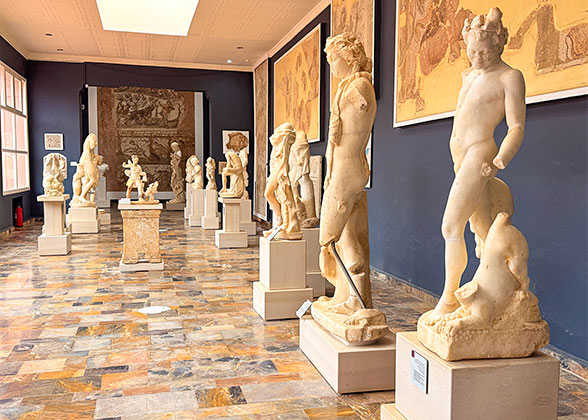
This morning, your private guide and driver will warmly greet you at your hotel, and then you’ll enjoy a 1.5-hour ride to Cherchell. It’s a hidden gem in North Africa, where there are orange-tiled, and blue-windowed buildings nestled quietly on the eastern coast of Mediterranean. However, 2000 years ago, it was a completely different story. As the capital of the Kingdom of Mauritania, a vassal state of the Roman Empire, Cherchell was once thriving with magnificent Roman buildings and works of art. We’ll visit the Archeological Public Museum of Cherchell, and be overwhelmed by art treasures spanning thousands of years, admiring the intricately detailed Roman mosaic of the Three Graces and lifelike white marble sculptures. Then, get ready to be awestruck by Tipaza Roman Ruins. As one of the best-preserved Roman ruins in Algeria, it can perfectly fulfill your imagination about the glorious Roman era. Let’s explore the amphitheater which can accommodate 3,000 people. The semi-circular seating area was where crowds cheered as they watched gladiators fight. It is said that when the Romans built their city, the amphitheater had to be able to accommodate at least a quarter of the city’s population, a hint to Tipasa’s impressive scale at its peak. Later, we’ll drive back to Algiers, and visit the Royal Mausoleum of Mauretania on the way. It is the final resting place of the greatest king and queen of the Kingdom of Mauritania, and also the background image on the Algerian 2,000-dinar banknote. Last, your guide and driver will escort you to Algiers Airport for a one-hour night flight to Constantine. Upon arrival, your local guide and driver will pick you up and accompany you to your hotel. Meals: Breakfast, Lunch Accommodation: Novotel Constantine (4 stars) or similar
|
Day 3: Constantine: Visit Tiddis Roman Ruins, Cirta Museum, Suspension Bridges & Old Town
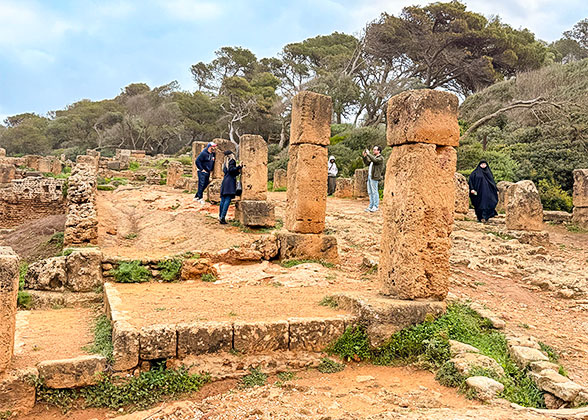
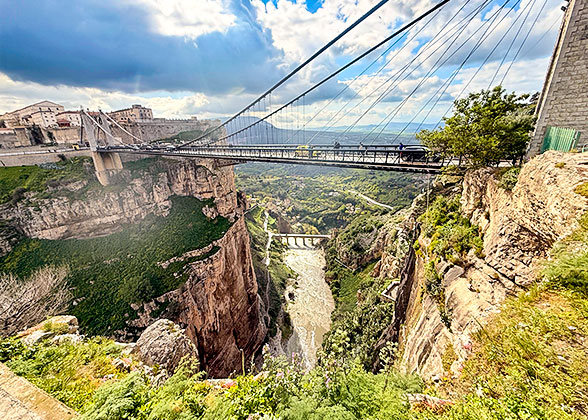
Constantine, perched on a cliff, is one of Algeria’s oldest cities, known as Cirta during the Roman era. This morning, your guide and driver will pick you up from your hotel for a 40-minute ride to Tiddis Roman Ruins, an important military settlement of Cirta. The entire city is built on a hillside, and you can get a panoramic view of the ruins scattered across the red earth. You can find a lot of ditches and large water tanks here, which prove the water shortage of Tiddis. Apart from the prominent Temple of Saturn, most of the stone pillars and architectural fragments are still buried in the soil. At Cirta Museum, which we’ll visit after returning to Constantine, you can see many ancient stelae and pottery unearthed from Tiddis. Then, let’s continue our Constantine sightseeing and see some of the spectacular suspension bridges, including the 175-meter (574 ft.) Sidi M’Cid Bridge spanning the Rhumel Gorge. It was built in 1912 during the French colonial period, and was once the world’s highest suspension bridge. Afterward, we’ll stroll through the bustling Constantine Old Town, and visit the over 200-year-old Ahmed Bey Palace, the residence of the last ruler of Constantine during the Ottoman period. The walls of the palace are decorated with murals depicting Ahmed Bey’s travel blogs, and with your guide’s explanation, you can gain a vivid understanding of his life before the French occupation. After that, your guide and driver will escort you back to your hotel. Meals: Breakfast, Lunch Accommodation: Novotel Constantine (4 stars) or similar
|
Day 4: Constantine - Madghacen Royal Mausoleum - Timgad & Lambaesis Roman Ruins - Batna
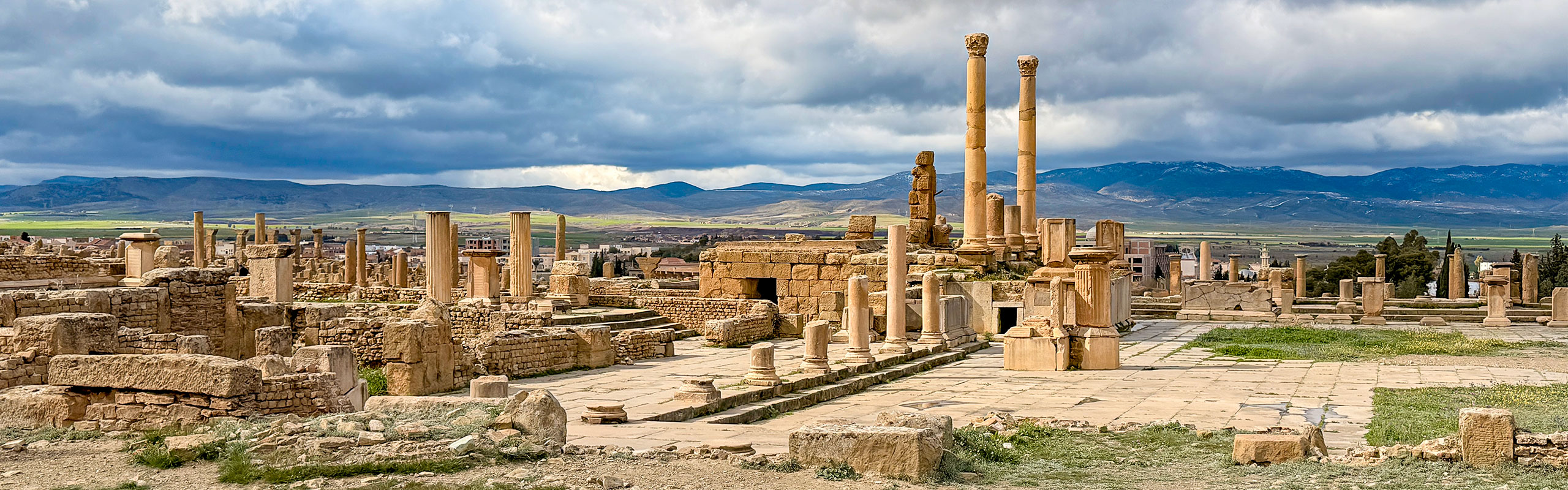
Amphitheater of Timgad Roman Ruins Today is the highlight of this tour! We’ll visit Timgad, one of Algeria’s most breathtaking Roman ruins.
In the morning, your guide and driver will wait for you at your hotel for your 1.5-hour comfortable ride to Madghacen Royal Mausoleum, a mysterious royal tomb in North Africa. The exact construction date and its owner remain unknown. However, it is almost certain that the tomb is over 2,000 years old, and belongs to the Numidian Kingdom. Your guide will further unveil the glorious past of this Berber tribal kingdom for you.
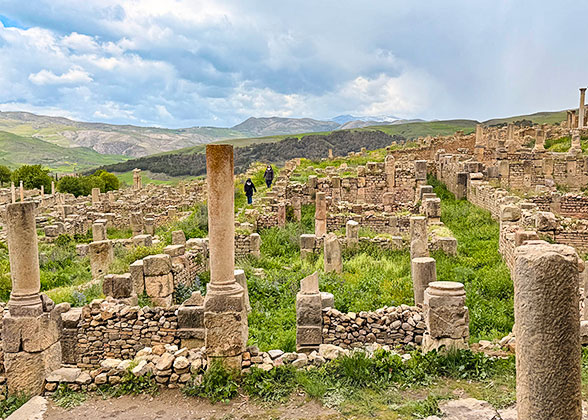
Then, let’s continue to drive for about 50 minutes to Timgad Roman Ruins, “the African Pompeii”, which may be the largest Roman ruins you’ve ever seen. At its peak, the city could accommodate approximately 60,000 people. It was built during the reign of the great Emperor Trajan (52-117 AD). He expanded the empire to its historical peak, with even the Mediterranean Sea an inland sea.
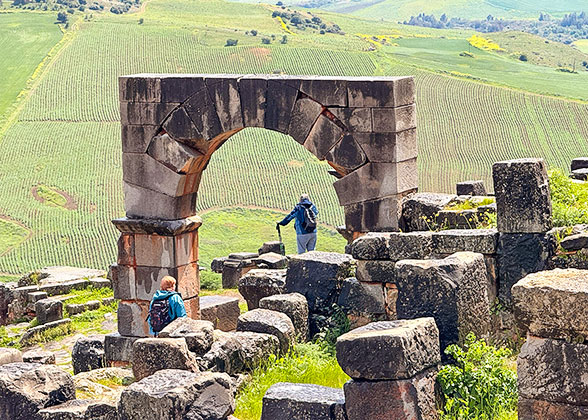
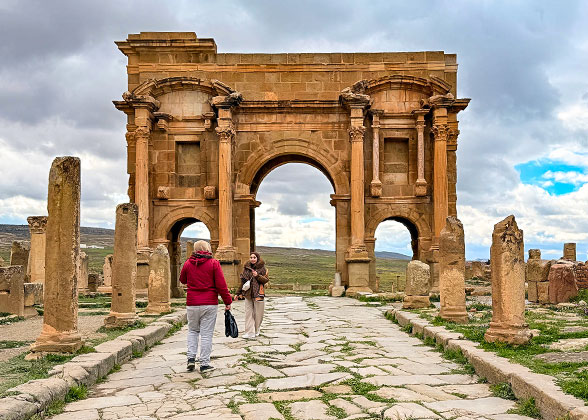
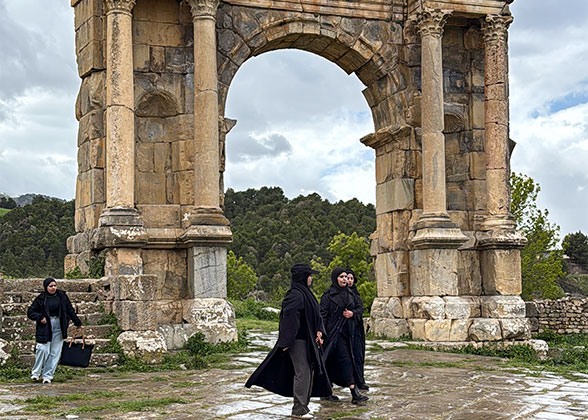
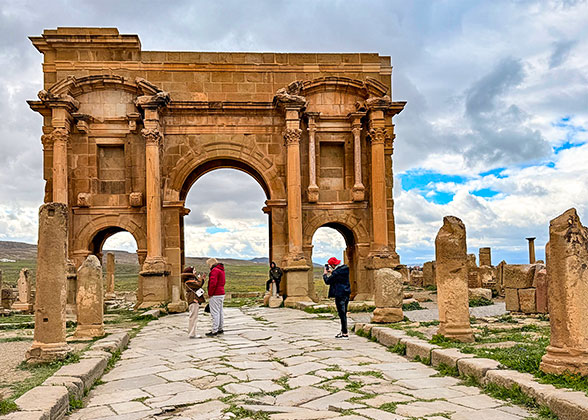
The best-preserved structure in Timgad is the three-vaulted Corinthian Arc of Trajan, standing 6 meters (20 ft.) high. Look closely at the main road beneath your feet, you can see high-quality stone slabs, which can only be found on the main roads of Roman cities, and you can clearly see the ruts left by ancient carriages.
Next, we’ll visit the Lambaesis Roman Ruins, which were once a Roman military camp. And at the nearby Lambaesis Museum, you can see an inscription recording Emperor Hadrian (78-138 AD) addressed his soldiers here in 128 AD.
Afterward, your guide and driver will escort you to your hotel in Batna.
Meals: Breakfast, Lunch
Accommodation: Timgad Hotel Hazem, Batna (4 stars) or similar Roman Mosaics, Timgad Museum Arc of Trajan, Timgad Roman Ruins
|
Day 5: Batna - Djemila Roman Ruins - Setif Archaeological Museum
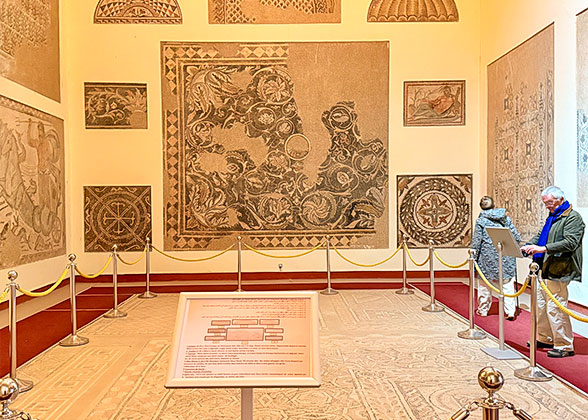
This morning, your guide and driver will pick you up from your hotel for a 3.5-hour journey to the Roman Ruins of Djemila, a UNESCO World Heritage Site nestled in a valley. It was originally called Cuicul. After being abandoned by the Romans, it was discovered by the Arabs in the 7th century AD and renamed Djemila, meaning “beautiful.” Compared to Timgad, Djemila is much smaller but more exquisite. Upon entering the ancient city, you can spot the Grand Baths. You might wonder why every Roman city, regardless of size, has more than one public bath. This is because the Romans, emulating the athletic spirit of the Greeks, valued physical exercise and thus there is a great need for bathing. The baths not only facilitated public hygiene, but were also important social spaces. Following your guide, you can find the ruins of the changing rooms, hot and cold rooms, and even a gymnasium. Next, let’s continue to drive for an hour to Setif and visit the Archaeological Museum of Setif, admiring its rich Roman treasures. The Roman mosaic called the “Triumph of Dionysus”, which is from the 4th to 5th centuries AD, covers an entire floor of the central court. It meticulously depicts scenes from Roman mythology, as well as tigers, elephants, camels, and a rare giraffe of the Roman period. After the visit, your guide and driver will accompany you to your hotel in Setif. Meals: Breakfast, Lunch Accommodation: Park Mall Hotel & Conference Center, Setif (4 stars) or similar
|
Day 6: Setif - Algiers: Visit Kasbah Ancient Town & Bastion 23
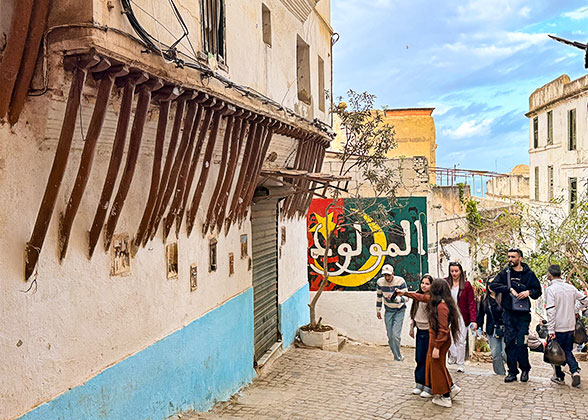
In the morning, let’s bid farewell to Setif and depart for Algiers by a 3.5-hour private ride. Your guide and driver will assist you with hotel check-in. After a short rest, we’ll explore the Kasbah Ancient Town and Bastion 23. The Kasbah is the prototype of Algiers. Stepping into the ancient town, you can soon discover the Islamic features through the hillside white houses, and doorways and lintels adorned with crescent and star patterns. Walking among the narrow, winding alleyways, you can encounter Muslims in robes and spice and fruit shops lining the streets. Two hundred years ago, the French painter Delacroix (1798-1863 AD) was deeply captivated by the Kasbah’s exotic atmosphere during his North African travel. He created the famous “Women of Algiers,” which brought the beauty of Algiers to the world, and also profoundly inspired later artists, including Picasso and Van Gogh. Bastion 23, or Rais Palace, was the residence of a 16th-century naval commander. The elegant building blends Ottoman and Moorish styles, with intricately carved wooden ceiling. After that, your guide and driver will escort you back to your hotel. Meals: Breakfast, Lunch Accommodation: Hotel El Aurassi, Algiers (4 stars) or similar
|
Day 7: Departure from Algiers; Airport See-off
Today marks the end of your tour. Your guide and driver will meet you at your hotel on time to escort you to Algiers Airport for your departure flight. Have a pleasant journey!
If you wish to extend your tour to central Algeria to delve into the mysterious Berber and Tuareg peoples of the Sahara Desert, or explore the architectural wonders of oasis towns, please contact us to customize an itinerary for you.
Meals: Breakfast
► Recommended Restaurant for Late Departure (at your own expense)
If time permits, you may take a walk to Benet Bladi, Yulmaz while enjoying the street views. Try the tagine and couscous, the staple food in North Africa invented by the Berbers. It is a kind of millet-like pasta made of semolina and water, usually steamed with vegetables and spices to create rich taste and favor.
Average Cost per Person: about USD 10
Address: Place Maurice Audin, 08 Rue Pichon, Alger Centre 16000
|