

Algeria Weather in March
With the arrival of spring, Algeria sees gradual temperature rises in March, but the trend is not stable. Generally speaking, Algeria weather in March is comfortable during daytime, but the nights are cool even chilly in some regions. The precipitation decreases a little in this month, but still in the local high level. One of the grandest festivals, Eid al-Fitr falls on March 9, 2027. It is actually a good month to visit Algeria, but be cautious of the dusty days and possible sandstorm.
Temperature: Generally Pleasant
During March, the whole Algeria enjoys relatively pleasant temperatures during daytime though with a few variations; the nights in different parts give visitors distinctive feelings.
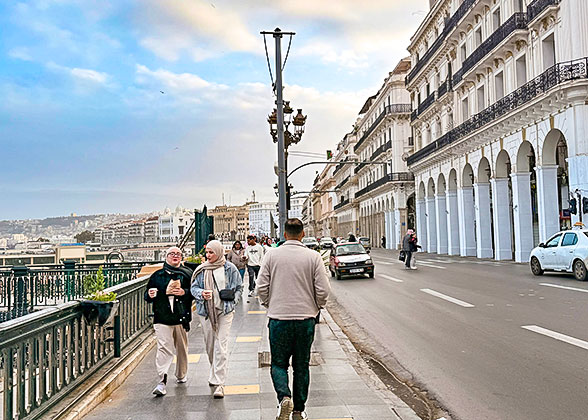
Visiting Algeria in March
|
In contrast, the mountainous cities like Batna are about 5°C (41°F) cooler than the coastal ones, thus making visitors feel a little cold most of the time in March. While, southern Algeria climate in March is usually warm and occasionally hot at daytime, then it turns pleasantly cool at night. For instance, the southeast Djanet in desert areas sees daytime high temperatures ranging from 22 to 31°C (72 - 88°F) and low degrees about 9 - 18°C (48 - 64°F); once in a while, the max temperatures went over 35°C (95°F) and the min ones stayed around 22°C (72°F).
Precipitation: Frequent but Mostly Light Rainfall
The total precipitation further drops in March in Algeria, but it is worthy to note that the rainy days increase. Taking the representative Algiers in the rainiest northern Algeria as an example, it has the precipitation of 66 mm (2.6 in) in this month which is distributed over 11 days on average. Therefore, the weather of northern Algeria in March is a bit rainy and humid. But the rainfall intensity is not high, usually light or moderate, which causes limited disruptions on your travel schedule.Surprisingly, there shows a slight increase of rainfall in mountain areas. For instance, Batna receives moderate precipitation of 41 mm (1.61 in) in March. The southern Algeria remains dry with low monthly rainfall, ie, around 4 mm (0.16 in) in Timimoun.
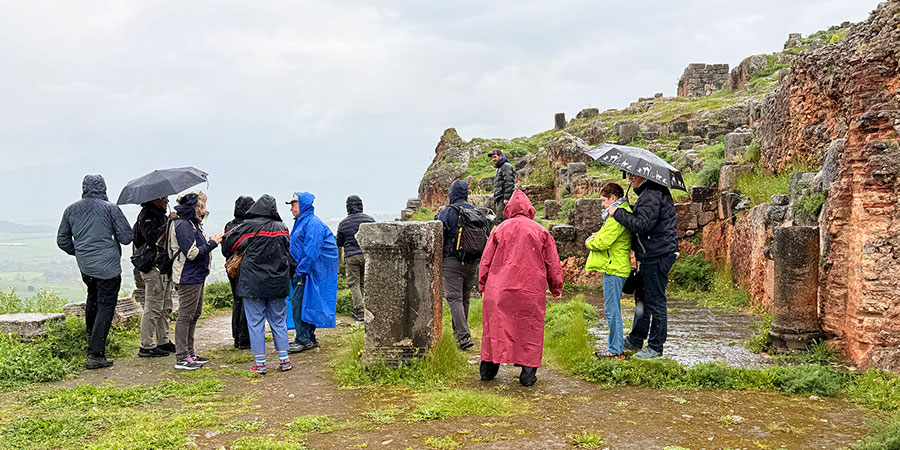
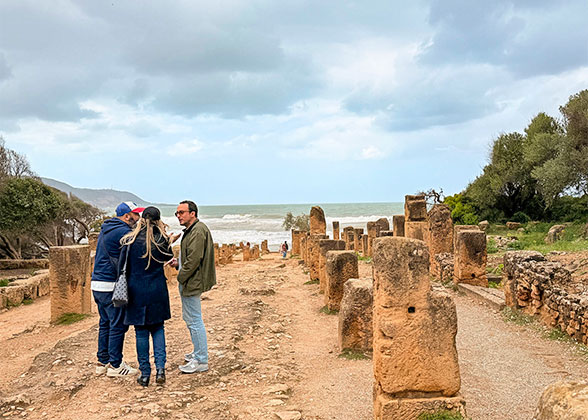
Tiddis Roman Site in Rain
|
Sometimes, heavy rain might occur, highly possible in coastal plateau areas and puddles of accumulated rainwater could be seen on roads. Fortunately, it is mainly in form of brief downpour that comes and goes in a hurry. After that, it gets overcast or clear and the air becomes refreshing.
Ample Daytime & Sunlight
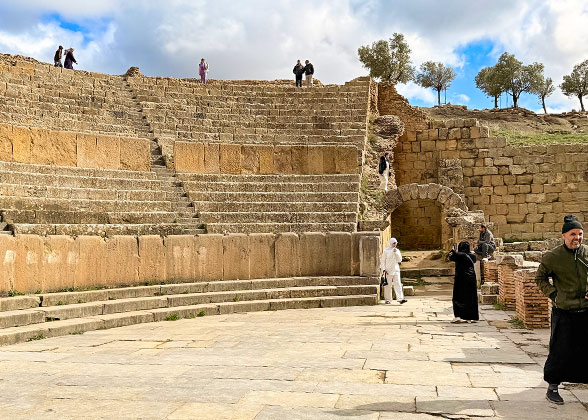
Clear Days in March
|
Despite that the sunlight time is not long, the intensity is actually strong in most regions. The UV index in coastal and mountainous regions is at level 5 - 6, not strong enough to cause sunburnt, but sunblock and sunglasses are needed if you don’t want to get suntanned face. While, the sunscreen products are indispensable for southern desert areas that have the very high UV index of 8 - 10.
Dusty Days and Possible Sandstorm
Affected by the Mediterranean cyclone, strong winds blow across Algeria in March, which could result in frequent dusty days. When it blows heavily, sandstorms are possible, often in the east and south, but other parts are also impacted to different degrees. The dusty climate of Algeria in March is neither suitable nor safe for outdoor visits because of the low visibility. Sometimes, this process is accompanied by moderate to heavy precipitation; the raindrops fall with dust and get everything dirty.Is March a Good Time to Visit Algeria?
Yes, March is not a bad time to visit most places of Algeria. From the perspective of climate, a lot of destinations experience pleasant temperatures, being warm or cool for the majority of the month. In mountain areas, you won’t shiver in the cold when walking on the Sidi M’Cid Bridge linking other parts of Constantine; neither will you feel unbearably hot if visiting characteristic Beni Isguen Town in southern Ghardaia.
|
|
|
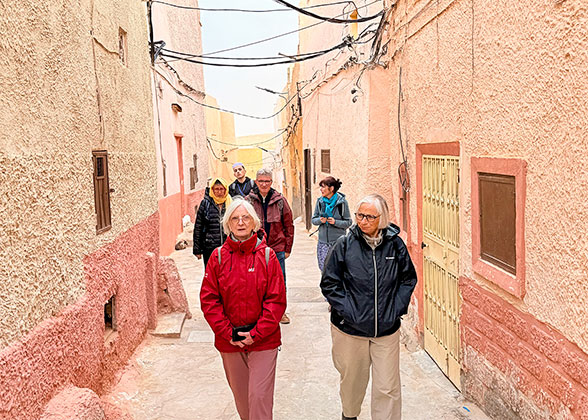
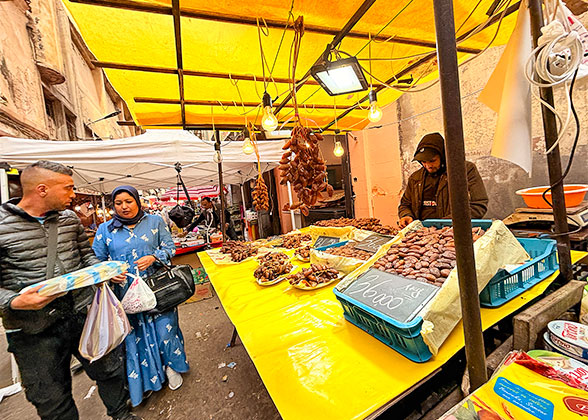
What’s more, during this month, Eid al-Fitr is held to celebrate the ending of fast, which is predicted to fall on March 9 in 2027. Visitors can see the local residents in traditional costume walking in the well-decorated streets, gathering in the mosques to pray and holding parades on the square. It is a good opportunity to experience the unique culture in person.
Packing Lists for Algeria Trip in March
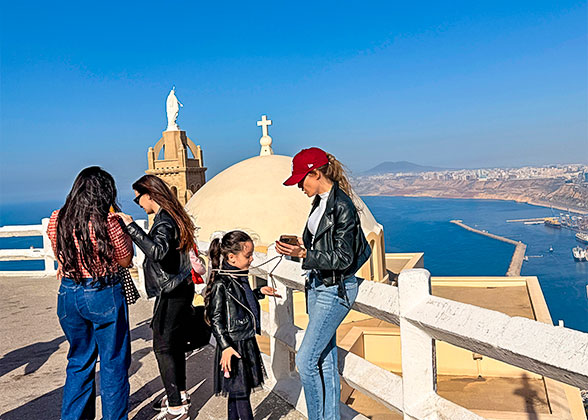
 Upper body: In the north, you can wear T-shirts or long-sleeved ones with trench coats. Wearing hoodies or knit alone is a good choice for daytime in mountain areas, but you need a thick coat like leather jacket when night falls. For desert areas, the night clothing is similar to that of the mountain area but the midday dressing could be light T-shirts with thin sunscreen sleeves or coats.

|
Lower body: Casual jeans and sweatpants suit the daytime in most areas, but in central and southern Algeria with large diurnal temperature variations, a pair of fleece-lined trousers or long johns should be prepared for low temperatures in the evening and early morning.Shoes: Any shoes comfortable for long-time walking like sneakers are suggested. It would be better if they are non-slip to deal with roads with accumulated water after rain in the north. Choose high-top ones for the southern desert trip to prevent sand getting in.Others: Be sure to prepare sun protective products like sunscreen cream, sunhats and sunglasses. Umbrella or raincoat are also in need especially in coastal cities.Travel Tips and Recommendations for Algeria in March
1. The time for Eid al-Fitr is based on the appearance of crescent and not settled every year, so it might be delayed or advance one day. You also need to know that Algerian people enjoy a 3-day holiday for the festival, thus some outdoor attractions see large crowds, like Grande Poste d’Alger. Also during this time, some shops, restaurants and scenic spots keep closed or shorten their service time. You had better check further before visiting.2. In dusty days, you are suggested to wear clothes of bright colors to make you more visible and be sure to wear protective masks. You could mainly visit indoor attractions like Cherchell Museum in Tipasa and Bardo Museum in Constantine. When sandstorm hits, do avoid going out for your safety.