


Hoi An Weather in November
Overall, the weather of Hoi An in November is not too bad: though the town sees substantial rainfall, this is not the rainiest time of the year; UV radiation is relatively strong, yet not at extreme levels; and the overall climate is warm and not oppressive. However, it is worth noting that typhoon risks remain.
Temperature
With temperatures rarely rising above 30 degrees Celsius (86 degrees Fahrenheit), Hoi An climate in November stays comfortably warm throughout most of the day and turns delightfully fresh and cool in the early morning and evening.During the day, high temperatures typically range between 25 - 29℃ (77 - 84℉) - mild and ideal for all kinds of outdoor activities. Even after long walks through the ancient town or cycling through the rice fields under direct sunlight, you will only break a light sweat. What’s more, when the strong sea wind blows, you may even want to put on a thin jacket for extra warmth.
Low temperatures hover between 22 - 25℃ (72 - 77℉), making it feel like a pleasantly cool, air-conditioned room in the early mornings and evenings. You can wander and sample local food at the night markets without losing your appetite due to the heat, nor will you sweat heavily from hot dishes.
|
|
|

Precipitation
The weather of Hoi An in November is rainy, with an average monthly precipitation of 363 mm and around 7 rainy days in total. Heavy downpours are mostly concentrated in the first half of the month, while rainfall gradually eases in the second half, usually bringing nothing more than scattered showers.If you travel to Hoi An in the first half of November, you are very likely to encounter successive heavy rains that often last all day with little break. Such persistent downpours can easily trigger severe flooding in the ancient town, submerging key attractions such as the Japanese Covered Bridge as well as shops along the streets. In severe cases, floodwater can even rise as high as rooftops. Accommodations you booked in advance inside the ancient town may also be closed involuntarily, disrupting your entire travel schedule.
If you choose to visit in the second half of the month, your experience may be far more pleasant. You will probably experience only a few short, fast‑passing showers. Low-lying areas along the Thu Bon River may see waterlogging, but higher ground will generally remain unaffected. You can flexibly arrange indoor activities during rainfall and head out to explore outdoor sites once the rain stops.
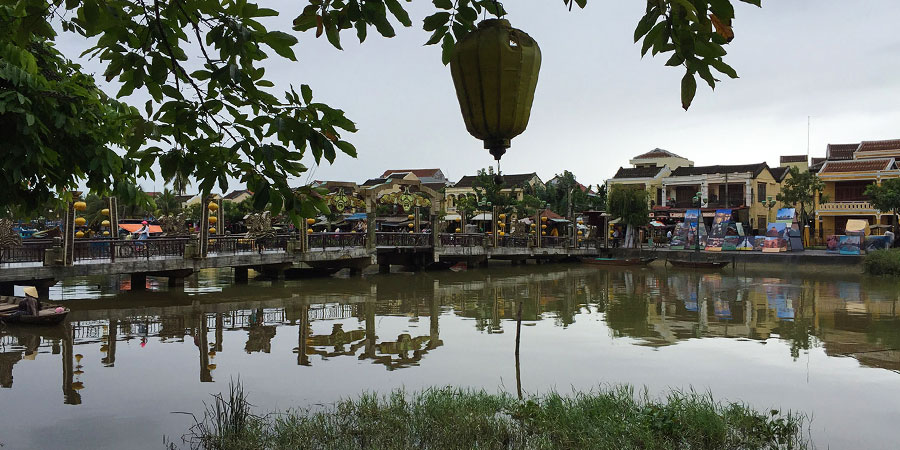
Thu Bon River After Rain
|
Typhoon Season
November falls within the typhoon season in Hoi An. On average, the region is typically hit by a strong typhoon during this month each year. When a typhoon hits, Hoi An faces torrential rain and violent gales. These extreme climate conditions uproot trees, tear off rooftops, trigger severe flooding and demolish homes, while widespread power outages bring local daily life to a complete standstill. In addition, huge waves surge along the coast, even resulting in ship sinkings. During such periods, flights are extensively canceled, attractions fully closed, and all tourism and cultural activities suspended. Travel to Hoi An is highly discouraged at this time.Sunrise, Sunset & Length of Day
In November, Hoi An enjoys 11 to 11.5 hours of daylight, with sunrise at around 5:50 and sunset at roughly 17:13. In addition to the short daylight, frequent rains further reduce the effective time for outdoor sightseeing. Therefore, we recommend checking the weather forecast in advance and visiting Hoi An on fine days. If you plan to cover all attractions, speed up a bit and make efficient use of rain-free periods to explore more.The good news is that Hoi An’s UV index drops to 9 in November, reaching its lowest level of the year. At this intensity, short periods of sun exposure will not cause immediate severe sunburn. However, you should still not let your guard down - if you plan to stay outdoors for long stretches by the coast or in mountainous areas such as the My Son Sanctuary, full sun protection remains necessary.
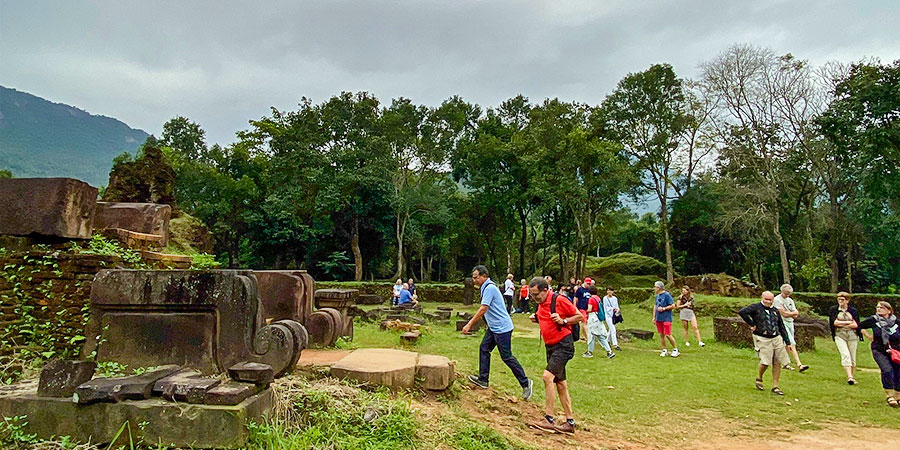
My Son Sanctuary
|
What to Pack for Hoi An Tour in November?

|
Shoes: Non-slip sports sandals are the best choice - they are stable to wear and dry quickly after getting wet. If you are worried about feeling cold and prefer sneakers or hiking shoes, that is also fine, but be sure to pair them with waterproof shoe covers.
Requisites: Umbrella, raincoat, waterproof bags, waterproof pouches, sunscreen, and sun hat.
What to Do If You Plan to Visit Hoi An in November?
First, be sure to closely monitor typhoon warnings and real-time flood forecasts before your trip, and avoid periods of typhoon landfall and intense rainfall as much as possible. It is better to schedule your visit in the second half of November, when rainfall eases noticeably, the risk of extreme weather falls sharply, and your trip will be far smoother.
Second, avoid packing your schedule too tightly, and make sure to leave flexible downtime each day so you can adjust your plans according to the real-time climate of Hoi An in November. On sunny days, you can take your time exploring the ancient town’s key attractions, visiting the iconic Japanese Covered Bridge, and strolling along the beach. When it rains, you can shift to indoor activities: visit the Chinese Assembly Hall to admire its traditional Chinese stone carvings, or enjoy fun local experiences such as making Hoi An-style lanterns and coffee roasting.
Finally, if you happen to encounter a typhoon or flooding during your trip, there is no need to panic. Follow official safety guidelines and seek shelter in designated safe areas right away. Hoi An regularly faces such harsh climate and has built a highly mature emergency response system. Severe conditions typically subside within one to two days. When the rain eases and floodwaters recede, you may catch the unique scene of tourists wearing Vietnamese conical hats taking photos and floating lanterns in the water. Once the water clears, you can also join the locals in cleaning the streets, making for a truly unforgettable travel memory.
Other Tips
Booking Tips: November poses risks from typhoons and heavy downpours. When booking hotels and flights, try to choose options allowing free cancellation and flexible changes whenever possible.
Accommodation Tips: Flooding may occur in November, so staying at higher elevations effectively avoids this risk. Choose accommodation on higher ground and away from low-lying areas along the Thu Bon River, and try to book rooms on the second floor or higher.
You May Like
-
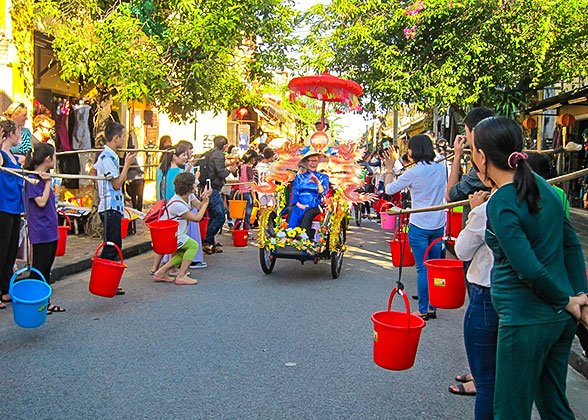 9 Days Private Tour to Ho Chi Minh City - Mekong Delta - Ben Tre - Hoi An - Hue - Hanoi - Ha Long Bay from USD1521
 -
 12 Days Long Private Tour to Explore Vietnam with Hoi An from USD1811
 -
 14-Day Vietnam Private Tour of Hanoi - Lao Cai - Sapa - Ha Long Bay - Hue - Hoi An - Ho Chi Minh City and more from USD2137