

Osaka Castle
History of Osaka Castle
Toyotomi Hideyoshi, the founder of Osaka Castle, was the ruler who achieved the full unification of Japan and stood as a formidable leader amid turbulent times. In 1583, he ordered the construction of this massive fortress and turned it into the political center from which he governed the whole nation. Once completed, Hideyoshi resided here for many years and used Osaka Castle as his power base to consolidate his rule, maintaining a long period of peace and stability across Japan.
Osaka Castle Photos ( 48
 ) )
|
After Hideyoshi’s death, governing power gradually fell to Tokugawa Ieyasu, another pivotal figure in Japanese feudal history. He once fought alongside Toyotomi Hideyoshi as an ally and later founded the Tokugawa Shogunate. This regime maintained stable rule over Japan for more than two centuries throughout the Edo Period (1603 - 1868). Even with their former alliance, serious disputes arose between the two families after Hideyoshi passed away. These tensions grew into two decisive military conflicts known as the Sieges of Osaka. The wars concluded in 1615 with the Toyotomi clan’s final defeat, and the original wooden Osaka Castle Main Keep was completely burned down amid the fighting.
Later, local authorities rebuilt the Main Keep. Unfortunately, the structure was struck by lightning and destroyed by fire once more in 1665. The Main Keep you see today was rebuilt in 1931 with public donations from Osaka residents, carefully modeled on the structure from Toyotomi Hideyoshi’s era.
Must-see Attractions inside Osaka Castle
1. Osaka Castle Main Keep
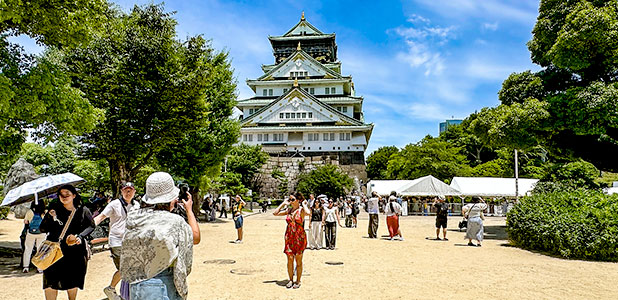
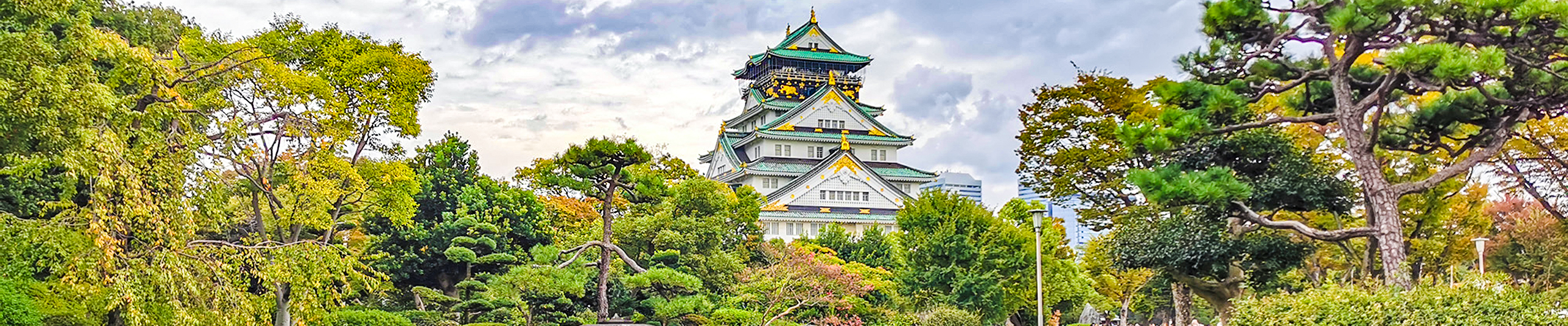
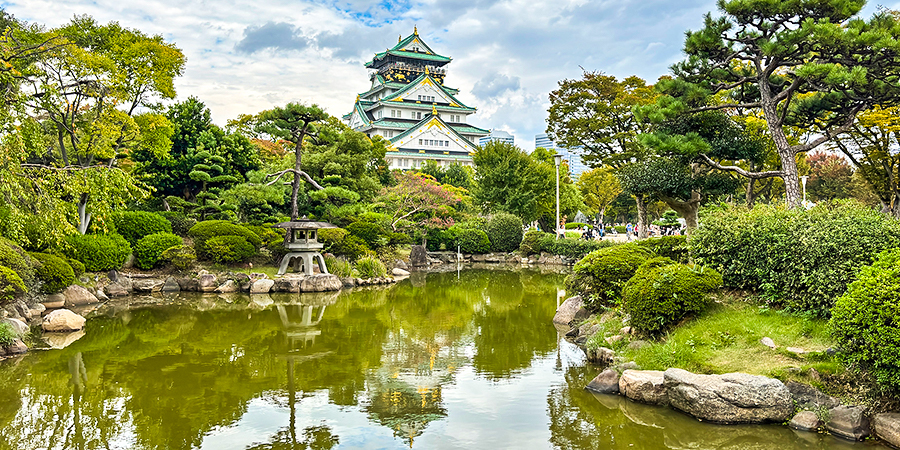
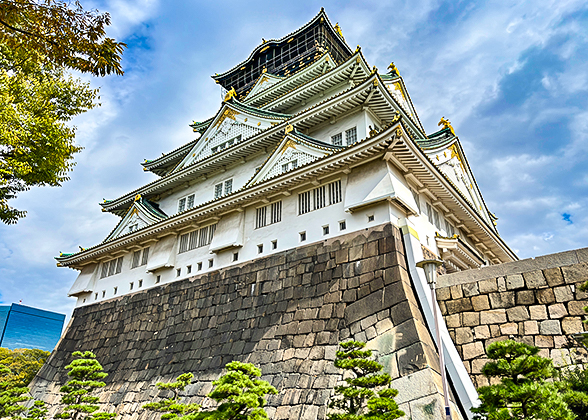
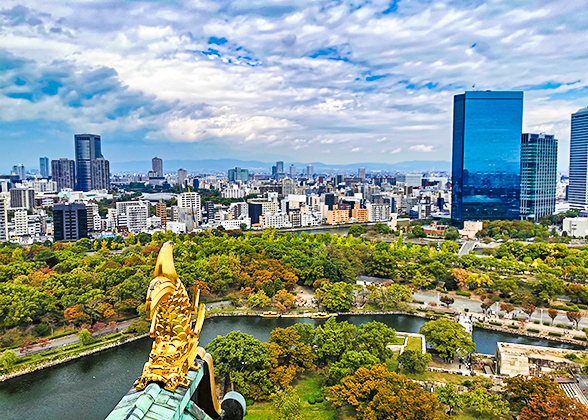
As the central landmark of the park, the Osaka Castle Main Keep stands as Osaka’s most well-known city symbol. It boasts a striking appearance with signature white walls, dark green multi-tiered roofs and eye-catching gilded mythical beasts decorating the eaves. Inside sits a modern history museum, where visitors can follow exhibition routes and learn about Toyotomi Hideyoshi’s rise to power, the fate of his family and the Sieges of Osaka.The Main Keep spans eight floors. An elevator takes tourists straight to the fifth floor, and a brief stair climb leads onward to the open viewing platform on the eighth floor. On clear days, you can overlook the whole of Osaka, with Mount Ikoma and Mount Rokko in view.
|
|
|
On the second floor lies an interactive zone where visitors may wear replica samurai helmets and surcoats and take photos against recreated battlefield backdrops to get a feel for being a Sengoku-period warrior.
The third and fourth floors hold precious national cultural relics, the core highlights inside the keep, and the fifth floor features a special exhibition hall. Don’t miss these three key displays:
a. Scale model of Osaka Castle in Toyotomi’s era - Third Floor
It reconstructs the castle at the height of Hideyoshi’s rule. The original fortress was four times larger than the surviving remains, with miniature models showing inner citadels, outer citadels and layered defensive structures to illustrate its comprehensive defense layout.
b. Complete combat samurai armor - Permanent exhibit on Third & Fourth Floor
This full set of gear once used by garrison soldiers includes helmets, full body armor and samurai swords. Visitors can observe delicate metalwork and appreciate traditional armor-making techniques up close.
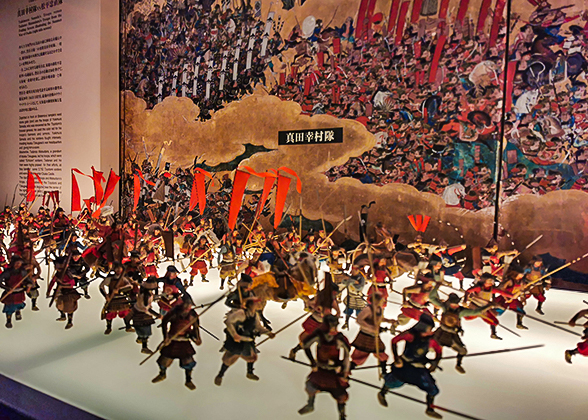
c. Screen painting of the Summer Siege of Osaka - Fifth Floor
The painting depicts the decisive battle of 1615, clearly showing troop formations and samurai troops charging into battle, and documenting the Toyotomi faction’s ultimate downfall.
|
|
|

2. Nishinomaru Garden
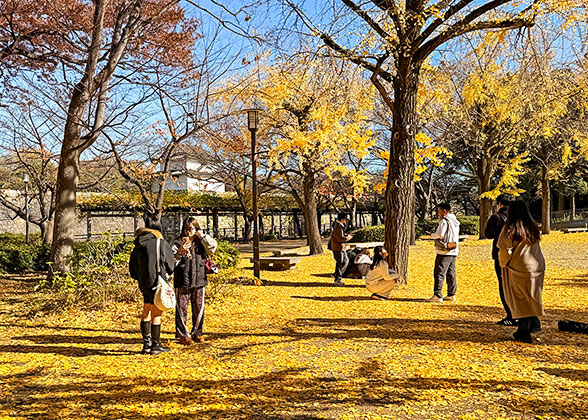
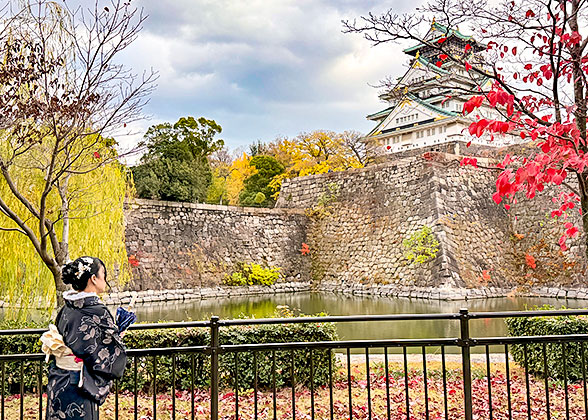
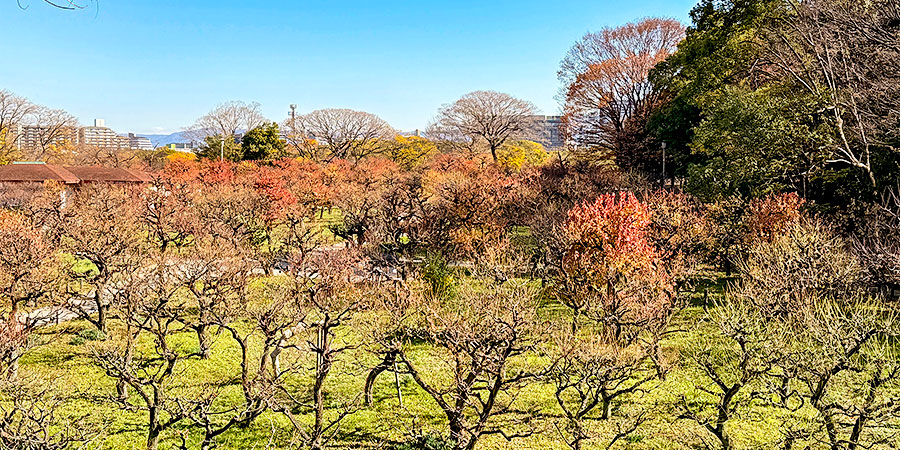
Nishinomaru Garden sits to the west of the Osaka Castle Main Keep. Built on former defensive grounds of the fortress, this Japanese-style garden counts as one of Kansai’s well-known flower viewing spots. Wide open lawns spread across the site, planted with more than three hundred cherry blossom trees. When cherry blossoms arrive in spring, soft pale pink and white blossoms frame the distant white-and-green Main Keep. Light-up events are held after dark, casting gentle warm light over blossoms and historic structures, while shimmering reflections on the moat create a breathtaking view. It also brings distinct views all year round. Lush leaves create cool shade in summer, while ginkgo and maple trees glow with warm hues in autumn.
|
|
|

3. Giant Stone Walls & Moats
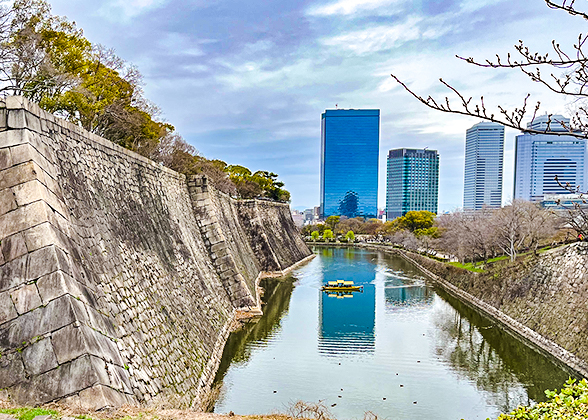
These imposing stone walls and moats help Osaka Castle stand out among Japan’s historic castles. Its granite walls rise more than 20 meters (about 65 feet) high and work with the double-layer moat to form advanced Sengoku-era defensive works. Builders utilized countless massive raw stones to erect the walls, and standing nearby lets visitors truly appreciate the ingenuity and determination of ancient craftsmen. The moat stretches 70 to 90 meters (about 75 to 100 yards) wide. You can stroll along waterside paths to gaze level at the imposing stone walls and observe the texture of stacked boulders up close.For a rarely seen viewpoint, you can board the golden replica royal pleasure boat. The cruise loops around the inner moat for roughly twenty minutes. While on board, you can look upward to admire the grand fortress and pass popular photo spots including Gokuraku Bridge and the Human-Faced Stone. It is worth noting that the boat operates solely for sightseeing.
See more: Osaka Water Bus/Sightseeing Cruise
|
|
|
4. Hokoku Shrine
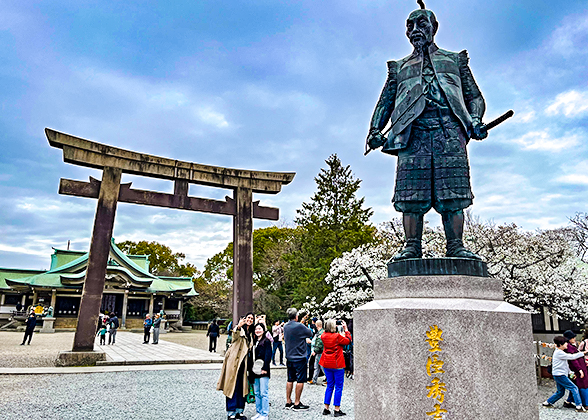
Hokoku Shrine stands south of the Osaka Castle Main Keep and was built to honor Toyotomi Hideyoshi. An antique vermilion torii gate marks its entrance. Within the precinct sits a large bronze statue of Hideyoshi, and the main hall holds a collection of historical relics linked to his life.The shrine maintains a quiet, serene atmosphere, perfect for slowing your pace after touring the crowded Main Keep. There is no need to allocate extensive time for this attraction, and it serves well as a brief stop along your main sightseeing itinerary.
|
|
|

When to Visit Osaka Castle?
Late March through early April, and November to December, are ideal times to visit. Spring cherry blossoms and evening illuminations bring out the beauty of old stone fortifications, and bright autumn leaves create wonderful historic scenery.Both seasons enjoy mild and comfortable weather, allowing visitors to fully enjoy the scenery and historic sites. These popular periods attract large visitor numbers. If you want to skip busy peak hours, visit on weekdays or arrive right at opening time at 9:00.
Opening Hours and Tickets
The Osaka Castle Park is open 24 hours a day and free of charge. Separate admission fees apply to three paid attractions inside, including the Main Keep, Nishinomaru Garden and the inner moat cruise. You can buy tickets for the main Keep and cruise via online platforms in advance; simply show your QR code for direct entry to skip long queues, which saves plenty of time during peak tourist seasons. Tickets and operation details are as follows:
|
Attraction |
Adult Fare |
Opening Hours |
|
Osaka Castle Main Keep |
1,200 yen (about $7) |
Daily 9:00 - 18:00, last entry at 17:30 |
|
Nishinomaru Garden |
300 yen (about $2) |
Mar-Oct: 9:00 - 17:00 Nov-Feb: 9:00 - 16:30, entry stops 30 minutes early |
|
Inner Moat Royal Cruise |
1,800 yen (about $11) |
10:00 - 16:30, departs every 15 to 30 minutes |
Special Closure Notes:
Osaka Castle Main Keep closes annually from December 28 to January 1; Nishinomaru Garden is closed every Monday, as well as December 28 to January 4; The Inner Moat Royal Cruise is suspended during rain or snow, with boarding located on the north side of Gokuraku Bridge.
How to Get to Osaka Castle?
1. JR Osaka Loop Line: Get off at Osakajokoen Station or Morinomiya Station and walk for about 5 to 10 minutes2. Osaka Metro Nagahori Tsurumi-ryokuchi Line: Get off at Osaka Business Park Station and take Exit 1, then walk for 3-5 minutes to the park. Alternatively, get off at Morinomiya Station and take Exit 3-B, where you will find the park entrance is just across the street.
3. Osaka Metro Chuo Line: Get off at Tanimachi 4-chome Station and take Exit 9, then walk for 10-15minutes to the park entrance; or get off at Morinomiya Station and take Exit 1 or 3-B, and the park entrance is just across the street from Exit 3-B.
4. Osaka Metro Tanimachi Line: Get off at Tanimachi 4-chome Station and take Exit 1-B, then walk for about 10 to 15 minutes, or get off at Temmabashi Station and take Exit 3, and take a 10-minute walk to the park.
Note: Osaka Business Park Station and Morinomiya Station are generally the closest metro stations to the park entrance.
How to Tour Osaka Castle?
1. Quick Visit Route - 1 Hour
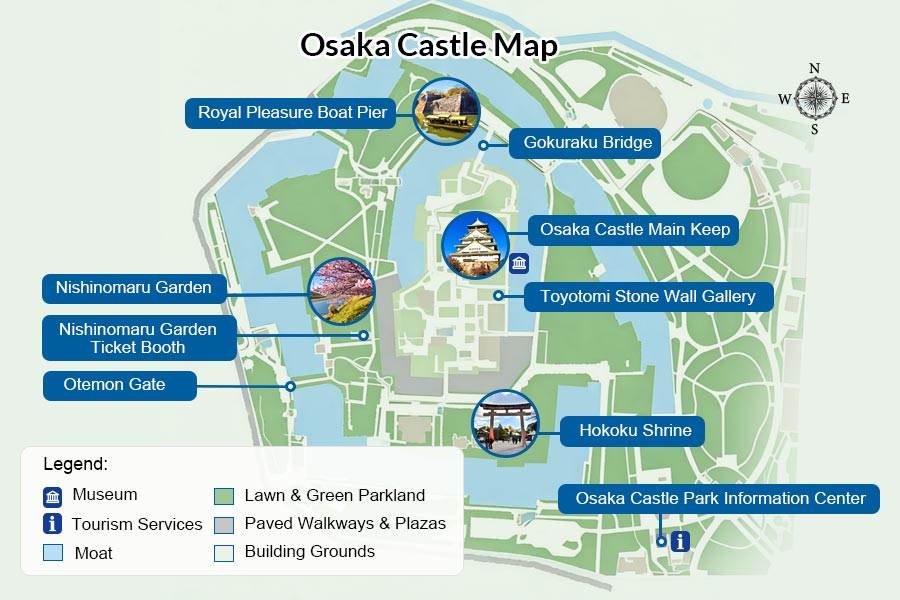
Enter the park via Otemon Gate at Tanimachi Yonchome. First, enjoy full views of the Osaka Castle Main Keep from Gokuraku Bridge. Afterwards, take a short walk beside the moat and stone walls. You can pause briefly at Hokoku Shrine and catch distant glimpses of Nishinomaru Garden before leaving. This route focuses on free outdoor landmarks without paid indoor exhibitions, which saves time and works well for visitors with tight travel plans.
Map of Osaka Castle
|
2. Classic Sightseeing Route - 2.5 Hours
Start your trip walking along the moat and stone walls. Next, head to Gokuraku Bridge for the 20-minute inner moat cruise. Then tour the museum inside the Osaka Castle Main Keep and visit its observation platform. Afterwards, stroll through Nishinomaru Garden and stop at Hokoku Shrine before exiting the park. This itinerary includes unique cruise experiences, historical displays and natural landscapes, covering nearly all key sights most travelers want to see.
Autumn Leaves in Osaka Castle
|
Transport within the Park
The Osaka Castle Park spans over 105 hectares (1.05 square kilometers). A full walking circuit takes more than three hours and demands plenty of energy. Two shuttle services are available to accommodate seniors, families and visitors with limited mobility.
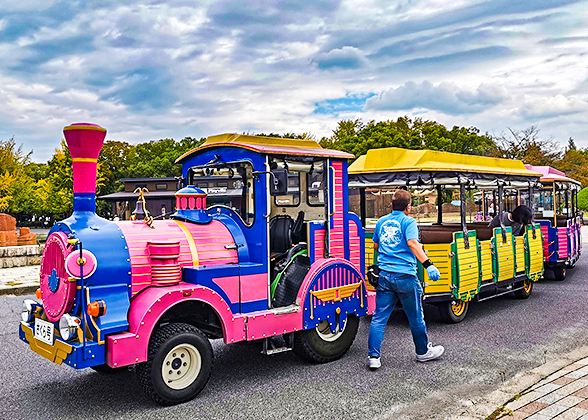
1. Park Road Train
This vintage-style shuttle connects major stops including Sakuramon, Hokoku Shrine and Otemae, cutting long walks across vast lawn areas. The one-way fare for adults is 400 yen (about $2.5), and services run from 9:30 to 17:00.
|
|
|
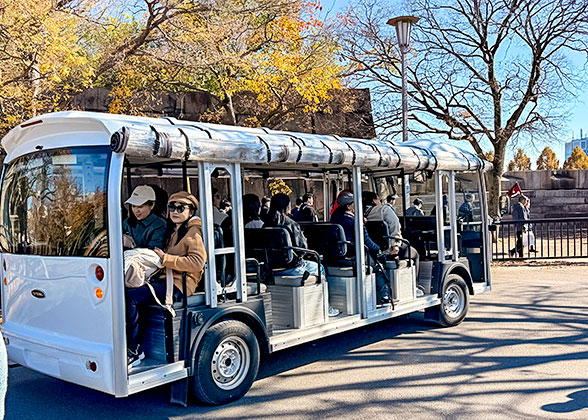
2. Park Electric Shuttles
Stops are spread widely around the park, and shuttles leave roughly every ten minutes, offering flexible transport for short-distance travel. The single-trip fare for adults stands at 300 yen (about $2).
Note: If you plan to travel across the park many times, consider buying the adult one-day unlimited pass for 1,000 yen (about $6). It allows you ride both shuttle services as often as you like and offers good value for longer visits.
See More: Osaka Photos