

- Kansai International Airport
- Itami Airport
- Osaka Metro
- City Bus
- Express Bus
- Sightseeing Bus
- Water Bus
- Osaka Taxi
- Osaka Station
- Namba Station
- Umeda Station
- Shin-Osaka Station
- Metro & Bus Pass
- Kansai Railway Pass
- Kansai One Pass
- JR-West Passes in Kansai
- JR West Passes – Kansai Plus Neighboring Areas
- Kansai Airport to Osaka
- Kansai Airport to Kyoto
- Osaka to Kyoto
- Kansai Airport to Nearby Cities
Midosuji Line
Midosuji Line runs through the heart of the city, linking nearly all of the major commercial and sightseeing districts such as Umeda, Shinsaibashi, Namba, Tennoji, and beyond. Whether you’re out shopping, hunting down local specialties, taking in a night view from atop a skyscraper, or simply exploring an urban park, this single line has you covered.With 20 stations in total, 15 of them offer connections to JR lines, Hankyu, Hanshin, Kintetsu, Nankai, and other Osaka Metro lines, while Shin-Osaka Station also provides access to the Shinkansen.

Line Identification & Through Services
Within the Osaka Metro network, the Midosuji Line is designated as Line 1, with red as its identifying color and the route symbol M. Station codes all begin with M, Umeda Station, for instance, is M16. The line is easy to recognize: route maps, station signage, and even the train cars themselves all feature red as the primary color. The line itself runs as a straight corridor through the city, and both platform signs and onboard announcements clearly indicate the direction of each train.
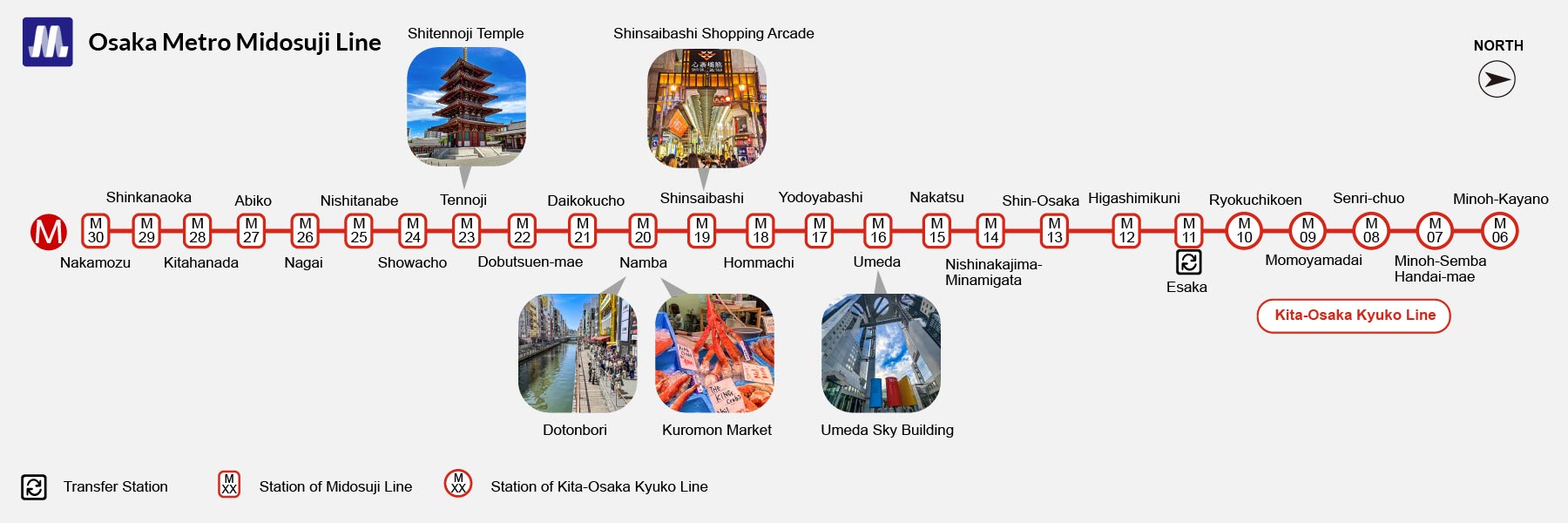
Osaka Metro Midosuji Line (Click to Enlarge)
|
Operating Hours and Frequency
The first trains depart from around 5:00, and the last services run at about 24:00. Services are highly frequent: during peak hours, trains arrive every 2 to 3 minutes, and during off‑peak periods, roughly every 4 to 5 minutes.
First and Last Train Times at Major Stations
|
Station |
Southbound (towards Nakamozu) |
|
|
First |
Last |
|
|
Shin‑Osaka |
5:08 |
23:31 |
|
Umeda |
5:15 |
23:55 |
|
Yodoyabashi |
5:19 |
23:54 |
|
Hommachi |
5:19 |
23:52 |
|
Shinsaibashi |
5:21 |
23:50 |
|
Namba |
5:23 |
23:49 |
|
Dobutsuen‑mae |
5:25 |
23:46 |
|
Tennoji |
5:03 |
23:42 |
|
Station |
Northbound (towards Shin-Osaka / Esaka / |
|
|
First |
Last |
|
|
Shin‑Osaka |
5:25 |
24:01 |
|
Umeda |
5:18 |
24:19 |
|
Yodoyabashi |
5:16 |
24:21 |
|
Hommachi |
5:14 |
24:23 |
|
Shinsaibashi |
5:12 |
24:25 |
|
Namba |
5:10 |
24:26 |
|
Dobutsuen‑mae |
5:08 |
24:28 |
|
Tennoji |
5:03 |
24:28 |
Note: Timetables may vary between weekdays and holidays, so it’s advisable to check the latest schedules through the Osaka Metro official website or a navigation app before heading out.
Fares
Fares on the Midosuji Line are calculated by distance traveled, typically ranging from 190 to 390 yen (about 1.2 to 2.5 USD) for adults. Children aged 6 - 11 ride at half price, and children under 6 travel free when accompanied by an adult.Key Stations and Surrounding Attractions
1. M13 Shin‑Osaka Station
Shin‑Osaka is the only station in Osaka served by the Shinkansen. The immediate neighborhood is mainly a business district, but inside the station you’ll find a good selection of restaurants and souvenir shops.From here, you can board trains to:
(1) Tokyo, Nagoya, Kyoto, Hiroshima, and Fukuoka, all reachable via Shinkansen services.
(2) Osaka Station, which is located in the heart of the Umeda area, as well as Kyoto, Kobe, and other destinations in the Kansai region, all served by JR trains.
2. M16 Umeda Station
Umeda is the most vibrant commercial hub in northern Osaka, surrounded by a wealth of large shopping complexes. Nearby, the Umeda Sky Building’s floating garden observatory offers panoramic views of the city skyline, particularly stunning at sunset and after dark. The HEP FIVE Ferris wheel, with its 360‑degree views from the top, is another romantic landmark in the district.From here, you can board trains to:
(1) Shin‑Osaka, Tennōji, Universal Studios Japan, and other destinations across the Kansai region, all served by JR lines
(2) Kyoto and Kobe, by Hankyu or Hanshin Railway
Tip: The Umeda district contains three separately named Metro stations, including Umeda, Higashi‑Umeda, and Nishi‑Umeda. Transfers between them must be completed within 30 minutes; otherwise, a new fare will be charged.
3. M17 Yodoyabashi Station
This station is surrounded by civic landmarks such as the Central Public Hall. The famous Midosuji Boulevard runs above it, turning golden with ginkgo trees in autumn, perfect for a stroll or photos. Nearby, Nakanoshima Park features a rose garden with hundreds of varieties, best seen in May and October, and hosts a Christmas illumination event in December.From here, you can travel to Kyoto by the Keihan Electric Railway.
4. M18 Hommachi Station
It lies in the heart of the city. Within walking distance is Kitamido, a historic temple that offers free admission. The name “Midosuji” - Osaka’s main thoroughfare - comes from this temple and its counterpart, Minamido. The area around the station also includes the Osaka Science Museum.From here, you can board trains to:
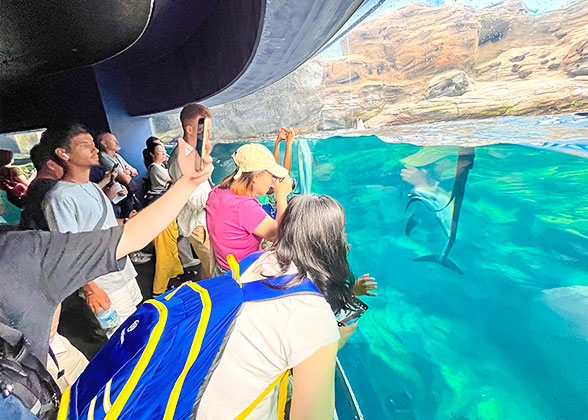
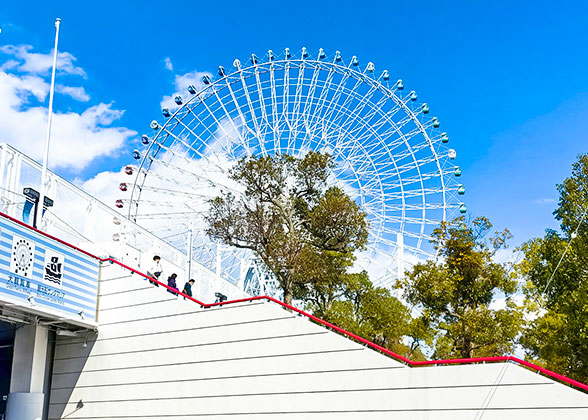
(1) Kaiyukan Aquarium, Tempozan Giant Ferris Wheel, and Osaka Castle Park - via the Chuo Line.
(2) Nishi‑Umeda and Namba - via the Yotsubashi Line.
|
|
|
5. M19 Shinsaibashi Station
Shinsaibashi is one of Osaka’s most vibrant shopping districts. Right outside the station, the Shinsaibashi‑suji shopping arcade is lined with department stores, drugstores, fashion boutiques, and eateries. A short walk south brings you to Dotonbori, Osaka’s food culture epicenter, where giant neon signs, including the famous Glico running man, have become iconic city landmarks.From here, you can travel to Tsurumi‑ryokuchi and beyond via the Nagahori Tsurumi‑ryokuchi Line.
6. M20 Namba Station
Namba is the primary transport hub and commercial center of southern Osaka. Major shopping facilities such as Namba Takashimaya and Namba Parks are just outside the station. A brief walk south leads to Dotonbori, where the Glico sign, Ebisu Bridge, and dazzling neon billboards together define Osaka’s vibrant nightscape.From here, you can board trains to:
(1) Kansai International Airport - by the Nankai Electric Railway.
(2) Nara - by the Kintetsu Railway.
(3) Kobe - by the Hanshin Electric Railway.
(4) Awaza, Tsuruhashi, and Minami‑Tatsumi - by the Sennichimae Line.
(5) Nishi‑Umeda and Suminoekōen - by the Yotsubashi Line.
7. M23 Tennoji Station
The area around Tennoji features Tennoji Park and Tennoji Zoo, making it a great spot for families. The most prominent landmark is Abeno Harukas, Japan’s tallest skyscraper, whose Harukas 300 observation deck on the top floor offers 360‑degree views of Osaka, especially breathtaking at night.From here, you can board trains to:
(1) Shin‑Osaka, Osaka Castle Park, and Universal Studios Japan - via the JR Osaka Loop Line.
(2) Higashi‑Umeda and Toyomizu, as well as Yao and Daitō - via the Tanimachi Line.
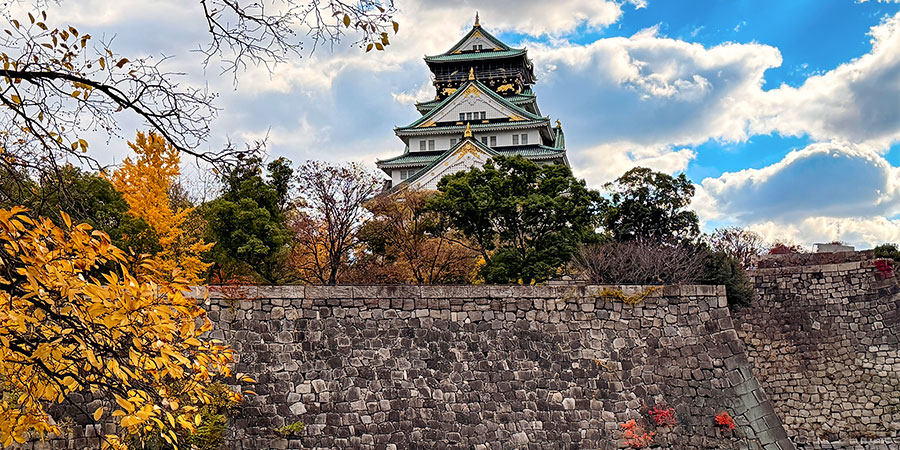
Osaka Castle Park in Autumn
|
8. M22 Dobutsuen‑mae Station
This is the closest station to Tennoji Zoo, about a five‑minute walk away. The station’s platforms are decorated with colorful ceramic animal murals, a quirky photo spot. From here, you can also walk to Shin‑Sekai and the Tsutenkaku Tower, an iconic Osaka landmark with an observation deck offering views over southern Osaka.From here, you can travel to Kuromon Market, Tenma‑bashisuji‑Rokuchōme, and Kishiri via the Sakaisuji Line.
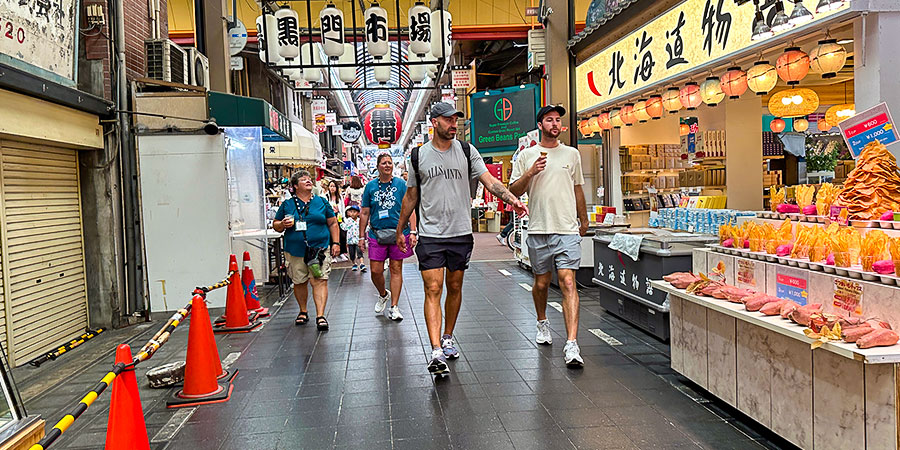
Kuromon Market
|
Tips
1. All trains stop at every station
Every train on the Midosuji Line calls at all stations along the route and there are no rapid or express services. You never have to worry about accidentally skipping your stop.2. Avoid peak‑hour crowds (7:30 - 9:30 & 17:00 - 19:00)
The Midosuji Line is Osaka’s busiest subway line, and trains become extremely crowded during weekday morning and evening rush hour, as well as on holidays. If possible, plan your trips outside these times.
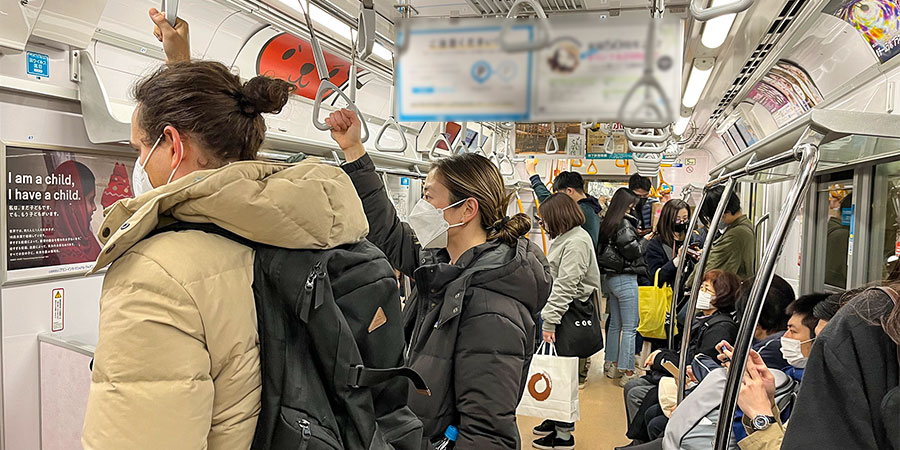
Crowded Carriage during Peak Hour
|