

- Kansai International Airport
- Itami Airport
- Osaka Metro
- City Bus
- Express Bus
- Sightseeing Bus
- Water Bus
- Osaka Taxi
- Osaka Station
- Namba Station
- Umeda Station
- Shin-Osaka Station
- Metro & Bus Pass
- Kansai Railway Pass
- Kansai One Pass
- JR-West Passes in Kansai
- JR West Passes – Kansai Plus Neighboring Areas
- Kansai Airport to Osaka
- Kansai Airport to Kyoto
- Osaka to Kyoto
- Kansai Airport to Nearby Cities
Osaka Metro
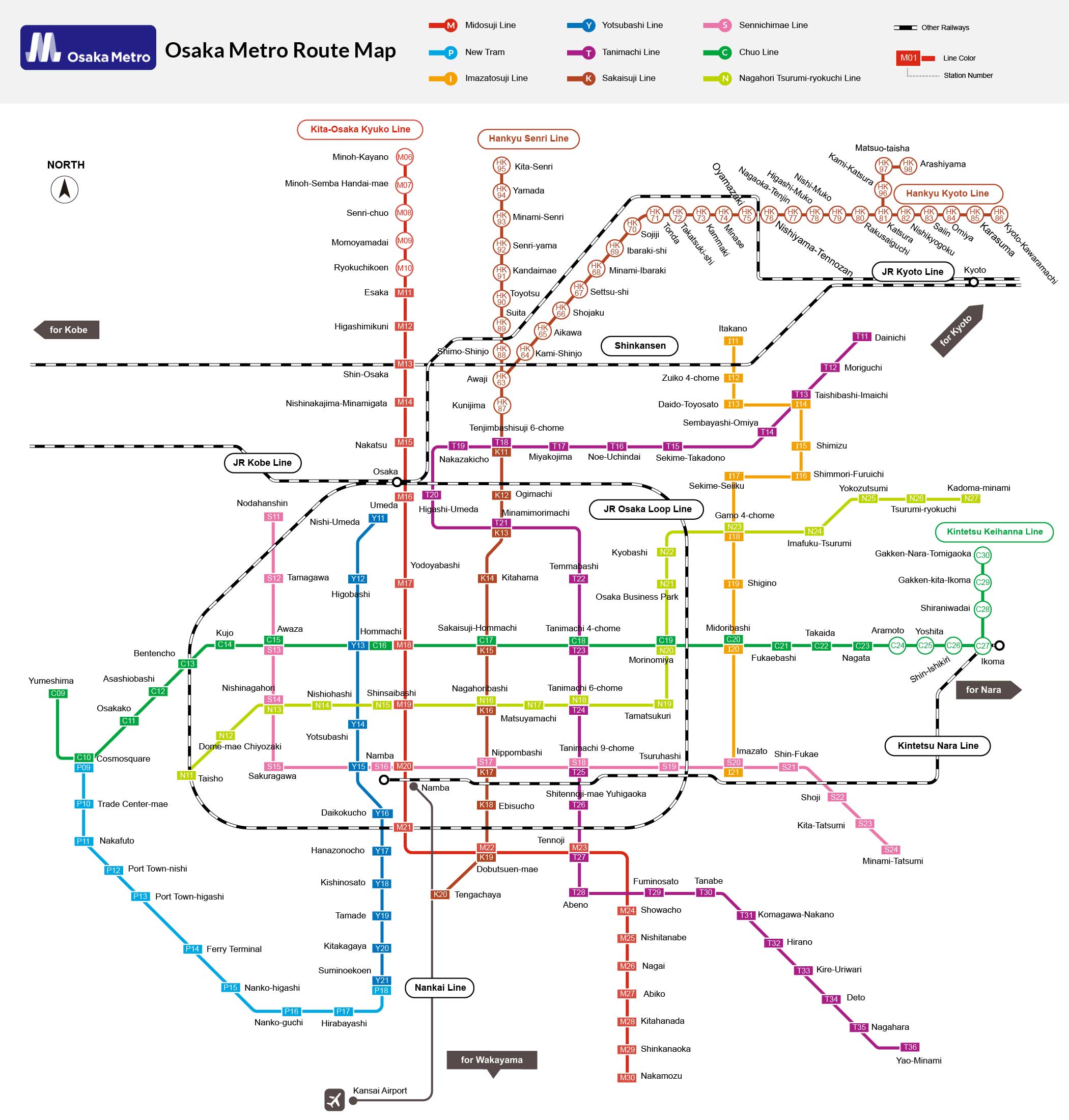
Osaka Metro Route Map
|
As the primary transportation backbone of Osaka, the Osaka Metro operates 9 main lines that weave through the city’s core commercial districts and major attractions, making it the most convenient and essential way for visitors to get around.
Whether you’re shopping in Umeda, exploring Dotonbori, or heading to Osaka Castle, the Metro will get you there efficiently and without hassle.
9 Main Subway Lines in Osaka
Osaka’s 9 subway lines each serve different areas and functions. Based on how frequently visitors use them, they fall into three categories: frequently used lines, supplementary lines, and lines that are rarely needed.
Frequently Used Lines – Covering Most of Your Travel Needs
1. Midosuji Line (Red, M) – The Busiest Arterial Route
This line connects five core hubs: Shin-Osaka, Umeda, Shinsaibashi, Namba, and Tennoji, making it the most frequently used line for visitors. It runs through Osaka’s largest commercial district, its most vibrant shopping and entertainment areas, and the southern hub, with Shinkansen connections to Kyoto, Tokyo, and Hakata, and an important interchange with other Metro lines at Hommachi.
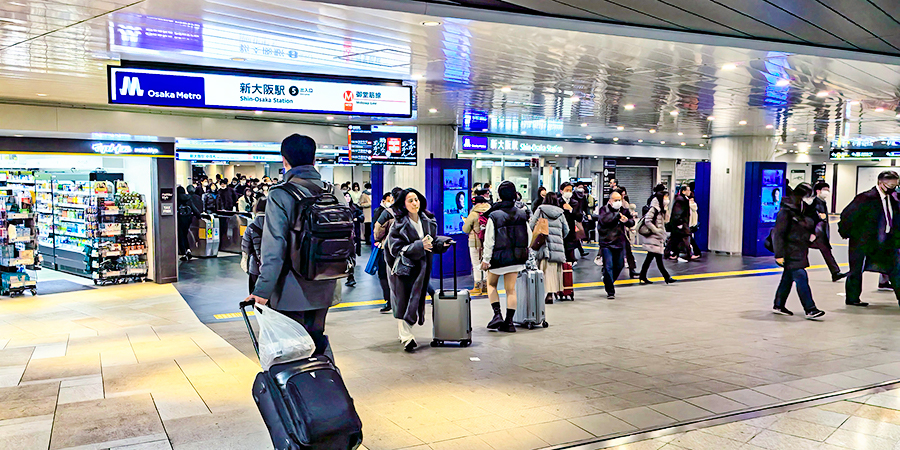
Shin-Osaka Subway Station
|
2. Tanimachi Line (Purple, T) – The Cultural Attractions Line
Lined with historical and cultural sites including Osaka Castle and Osaka Tenmangu Shrine, this line is the top choice for history-focused itineraries. You can transfer at Tenmabashi or Tanimachi 4-chome for Osaka Castle Park, at Shitennoji-mae Yuhigaoka for Shitennoji Temple, and at Tennoji for JR and Kintetsu line connections.
3. Chuo Line (Green, C) – The Eastern Coastal Line
This route links Osaka Castle, Osaka Port, and Yumeshima in one journey, ideal for cross-district day trips. Its major interchange stations include Tanimachi 4-chome and Morinomiya for Osaka Castle Park, Osakako for the Kaiyukan Aquarium and Tempozan Ferris Wheel, and Hommachi for convenient transfers to the Midosuji, Yotsubashi, and Nagahori Tsurumi-ryokuchi lines.
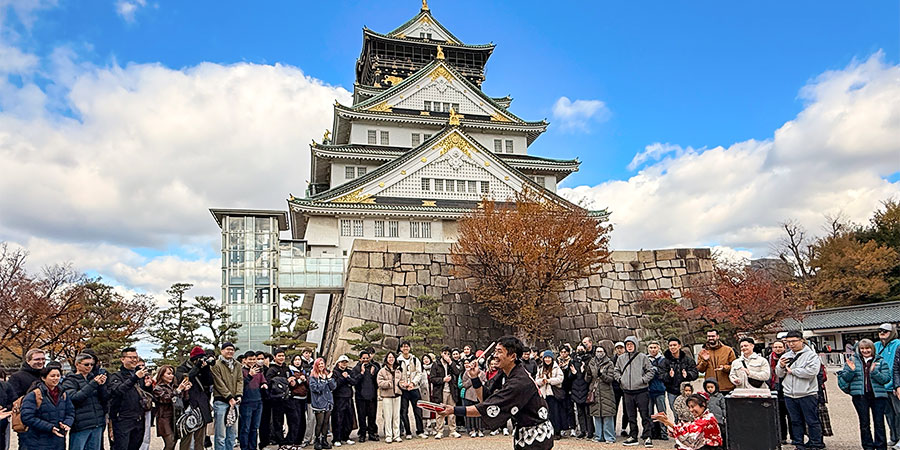
Osaka Castle Park
|
4. Sennichimae Line (Pink, S) – Connecting the Namba District
Running east-west through Osaka’s south side, this line links Namba, Nipponbashi, and Tsuruhashi, key areas for experiencing the vibrant local culture of the southern districts. Namba is the city’s busiest transport hub; Nipponbashi puts you next to Kuromon Market; and Tsuruhashi is famous for its yakiniku restaurants, with connections to the Nankai Electric Railway, Kintetsu, and JR lines.5. Sakaisuji Line (Brown, K) – Route Through Central Osaka with Direct Access to Kyoto
Running through central Osaka and connecting directly to the Hankyu Railway at its northern end, this line is one of the most convenient routes for traveling to Kyoto. It gives you access to Japan’s longest covered shopping street at Tenjimbashisuji 6-chome, the retro architecture of Nakanoshima near Kitahama, and Kuromon Market at Nipponbashi, with Keihan Electric Railway connections for travel to Uji in Kyoto.
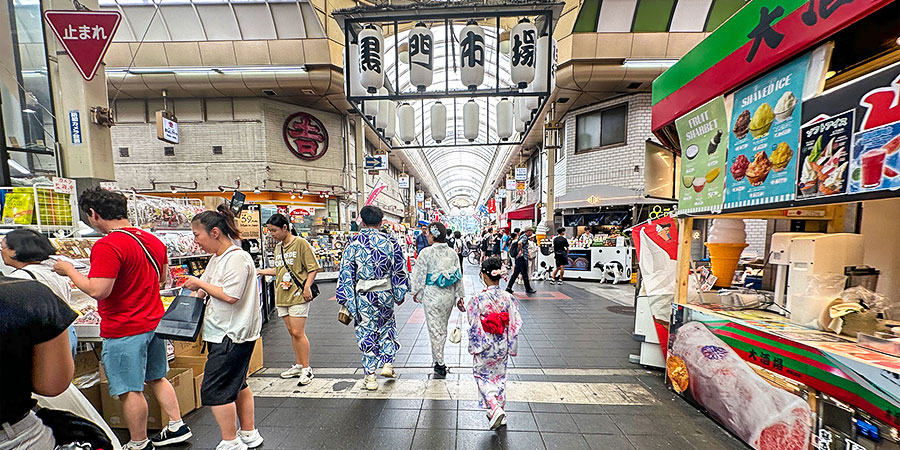
Kuromon Market in Osaka
|
Supplementary Lines – Less Frequently Used but Convenient in Specific Situations
6. Yotsubashi Line (Blue, Y)
This line runs parallel to the Midosuji Line and serves as a good alternative during peak hours. You can transfer at Nishi-Umeda for the Umeda shopping district or at Hommachi for connections to several major lines. It’s also more convenient than the Midosuji Line for reaching the Osaka Science Museum, the National Museum of Art, or the Namba Hatch live music venue.

7. Nagahori Tsurumi-ryokuchi Line (Yellow-Green, N)
Looping around the city center and extending eastward to Tsurumi Ryokuchi Park, this line is especially useful for reaching Kyocera Dome Osaka for sports events or concerts. Shinsaibashi connects you to the shopping street and Dotonbori, while Morinomiya offers transfers to the Chuo Line and JR Loop Line near Osaka Castle Park.
Lines That Visitors Rarely Use
8. New Tram (Sky Blue, P)
This driverless elevated tram runs along the coastline of Osaka’s Nanko area. Most visitors only use it when attending events at the INTEX Osaka international exhibition center or concerts in the Nanko area, rather than for regular sightseeing.9. Imazatosuji Line (Orange, I)
This line primarily serves residential areas and schools as a commuter route for local residents, with virtually no tourist attractions or hubs along its route.
Operation Hours & Fares
Osaka Metro trains run from approximately 5:00 until midnight, with services arriving every 3 to 5 minutes during peak hours and every 5 to 10 minutes at other times. The frequency is reliable enough that you rarely need to check schedules in advance; just pay attention to last train times if you’re planning a late night out.
Fares are determined by distance and divided into five tiers: 190 yen (USD 1) for up to 3 km (2 mi), 240 yen (USD 1.5) for 3 - 7 km (2 - 4 mi), 290 yen (USD 1.8) for 7 - 13 km (4 - 8 mi), 340 yen (USD 2) for 13 - 19 km (8 - 12 mi), and 390 yen (USD 2.5) for over 19 km. Children aged 6 to 11 pay half price.
How to Pay - Tickets, Cards or Passes?
1. IC cards - The Most Hassle-free Option
Nationally compatible IC cards, including ICOCA, Suica, and PASMO, are the simplest way to pay. Just tap your card at the ticket gates when you enter and exit, and the fare is automatically deducted. You can pick one up and recharge it at any subway station’s ticket machine or convenience store, so you’re never far from a top-up point. If you already have one, you can use it here without buying a new one.
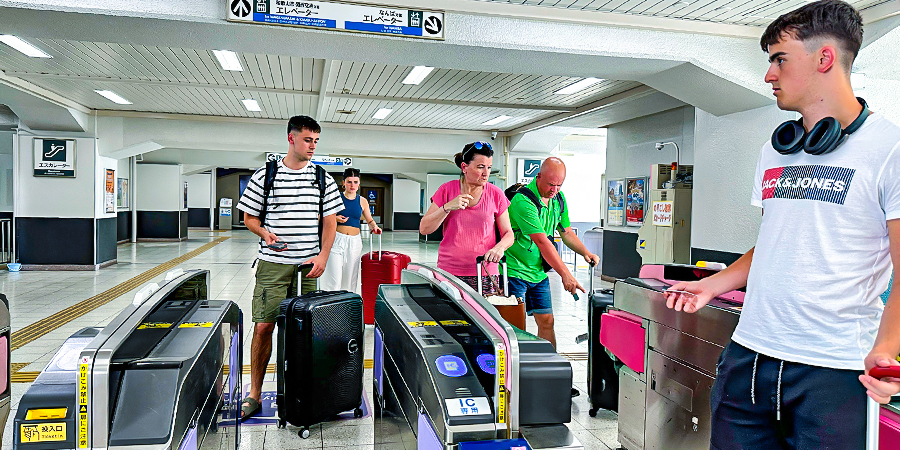
An Osaka Metro Ticket Gate
|
2. Contactless Credit Cards – Convenient but Not Yet Universal
If you have a Visa, JCB, UnionPay, or other major credit card with contactless payment functionality, you can tap it directly at many Osaka Metro gates, no ticket purchase and no pre-charging required. It’s nearly as quick as using an IC card. To check if your card supports this, look for the wave-like icon on the back or front: Visa uses “payWave,” JCB uses “Contactless,” and UnionPay uses “QuickPass”. You can also use Apple Pay with a supported credit or debit card linked to your phone or smartwatch; simply hold your device near the reader and it works just like tapping a physical card. However, not every station supports it yet, so it’s wise to keep an IC card as a backup, especially if you’re traveling outside central Osaka.3. Single-Journey Tickets – A Simple Fallback
Single-journey tickets can be bought from ticket vending machines in every station. These machines have English-language menus and accept both cash and certain IC cards for payment. However, buying a paper ticket for every ride tends to be tedious, especially if you’re making multiple trips in a day. It’s best kept as a fallback rather than your primary payment method.
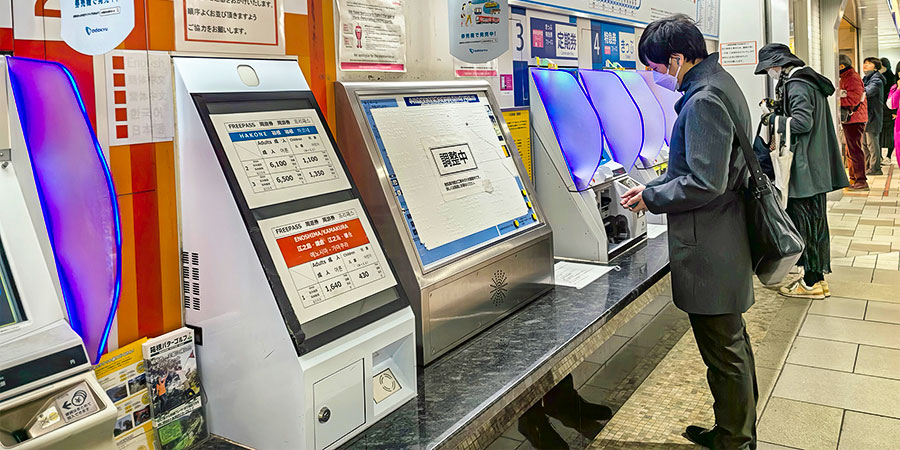
Metro Ticket Vending Machines
|
4. Metro Passes – Better Value for Frequent Riders
If you plan to ride the metro four or more times in a single day, a pass will save you both money and the hassle of paying per ride. You can easily pick one up at the ticket vending machines in any Osaka Metro station, or at the commuter pass sales counters at major stations like Umeda, Namba, and Tennoji.
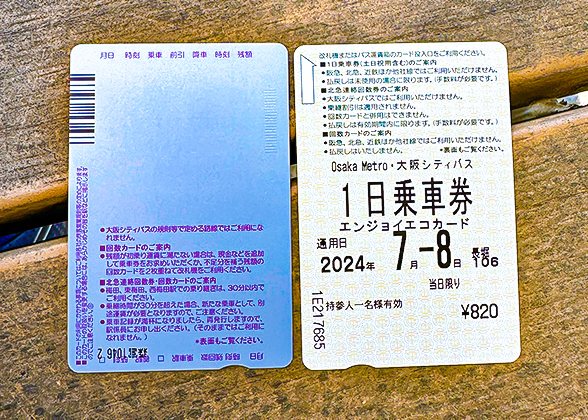
Osaka Metro 1-Day Pass
|
b. 26-Hour Pass (1,000 yen / USD 6) / 48-Hour Pass (1,700 yen / USD 11): It’s suitable if you’re staying for multiple days or arriving in the afternoon and want to stretch your pass across two days.
c. Osaka Amazing Pass: 3,500 yen (USD 22) for 1 day, 5,000 yen (USD 31) for 2 days. It includes unlimited Metro rides and free entry to about 40 attractions. If your itinerary includes three or more paid sights in a day, this pass often works out cheaper than paying for transport and entry separately.
How to Ride the Osaka Metro?
1. Plan your route in advance
Before heading out, use Google Maps or Yahoo Maps to search for the most convenient and time-saving route. The app will show accurate timetables, fares, and transfer stations, and its top recommendation is usually your best bet, factoring in both time and convenience.2. Enter the station and find the right platform
Follow the exit number suggested by your app to enter the station, which helps you avoid unnecessary detours above ground. Once you’re through the gates, check the electronic display on the platform to confirm the destination of the next train. Be sure it matches the direction you need, rather than just the line color, since each line runs in two opposite directions.3. Find your carriage
Markings on the platform floor show where each carriage will stop, so you can choose to wait near the part of the train that will be closest to your exit at the destination. This is entirely optional, but can save you time when getting off during busy periods.
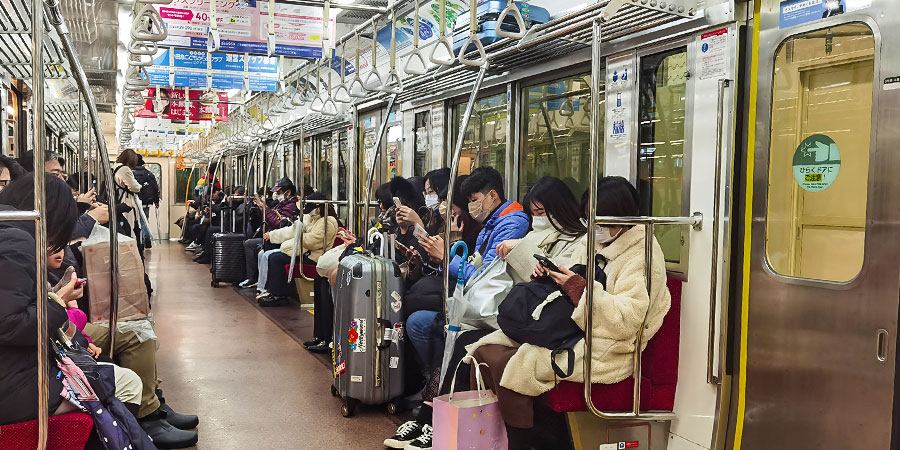
Osaka Metro's Carriage
|