

Togakushi Shrine
Togakushi Shrine is an ancient shrine complex tucked away in the mountains of Nagano, with over 2,000 years of history. It is made up of five subsidiary shrines. Deeply connected to Japan’s sun goddess, the site has long been regarded as a place where deities descend to earth. Whether you come to pray or go hiking, Togakushi Shrine is a classic cultural and leisure destination in Nagano.
The Thousand-Year Legend of Mount Togakushi
The story of how Mount Togakushi come to be begins with one of Japan’s best-known myths - the tale of sun goddess.Legend has it that after being angered by her brother, the sun goddess hid inside a cave sealed by a stone door, and the world was instantly plunged into darkness. To bring back the light, the other gods held a feast and danced outside the cave. Their laughter was so lively that the sun goddess couldn’t resist cracking the door open to take a look. A powerful god waiting nearby seized the moment and threw the entire stone door aside, and sunlight flooded the world once again. It is said that this door flew all the way to the deep mountains of Nagano and became what is now Mount Togakushi - the name literally means “the door hidden by the god”.
There’s another interesting local legend that has been passed down for years: most rivers in the Togakushi area flow south, but one stream near the Okusha flows in the opposite direction - northeast. It is said that once you cross this river, you step from the human realm into the realm of gods. The tale also adds to the mystery of these woods.
View More Videos
Togakushi Shrine in Nagano
Visiting the Five Shrines: A Sacred Path from Mountaintop to Foot
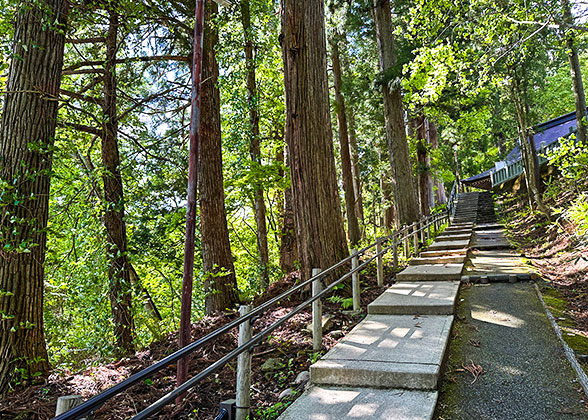
The five shrines of Togakushi are spread out along the mountainside, each one tied to a key character from the sun goddess myth. A lot of visitors figure they should start at the lowest shrine, Houkosha, and hike all the way up to the innermost one, Okudsha, like walking straight into the legend. But the full route is roughly 8 - 10 kilometers (5 - 6 miles), with 1 - 2 kilometers (0.6 - 1.2 miles) between each shrine. The trails are narrow mountain paths with uphill climbs and stone steps, so it’s pretty physical demanding. We suggest that you do it backwards: catch a bus from Nagano Station to the mountaintop, then stroll down at your own pace. You don’t have to see every shrine in one trip - three of them are the real must-sees.
Togakushi Shrine ( 12
 ) )
|
Okusha Shrine
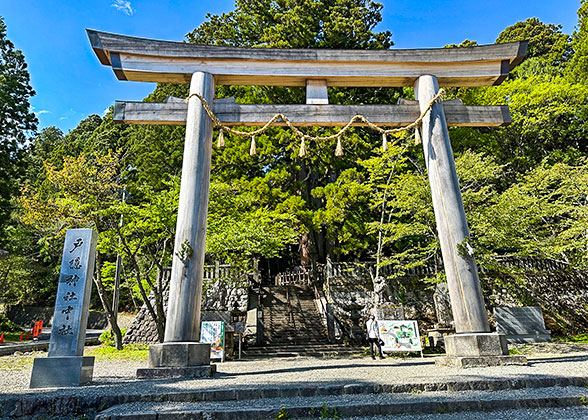
Okusha is the first stop on the route. At the entrance, you’ll see a vermilion gate with a thatched roof, rustic and hard to miss. Step through it, and a stone-paved path unfolds, lined with over 200 giant cedar trees, each over 400 years old. Their thick canopy shades the whole walkway, and you’ll feel how small you are standing underneath it. Light filters through the branches in patches, making it feel like you’ve wandered into a forest scene from a movie. This is Togakushi’s most iconic view.At the end of the path stands Okusha itself, the main shrine among the five. It’s dedicated to the powerful god who threw open the stone door in the legend. People come here to pray for their wishes to come true and for good luck in sports and competitions. Plenty of visitors make the hike specially to reach this spot, believing that finishing the mountain trail makes their prayers more likely to be answered.
Kuzuryusha Shrine
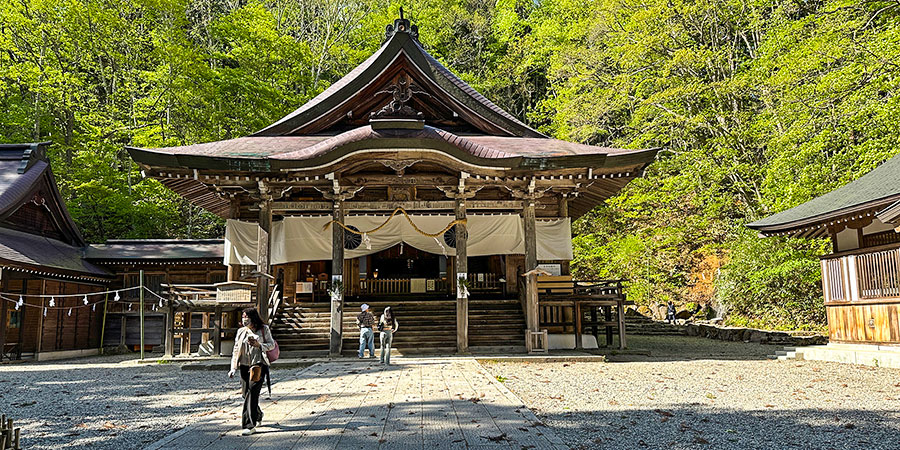
A short walk down the path from Okusha brings you to Kuzuryusha, whose worship predated even the Togakushi mythology. Its all-wood main hall is small and finely made, hidden in the deep green forest, quiet and unassuming in style.The shrine honors Kuzuryu Okami, the region’s most ancient deity and a traditional water god. Worshippers often stop by to ask for plentiful water supplies and happy marriages.
Chusha Shrine
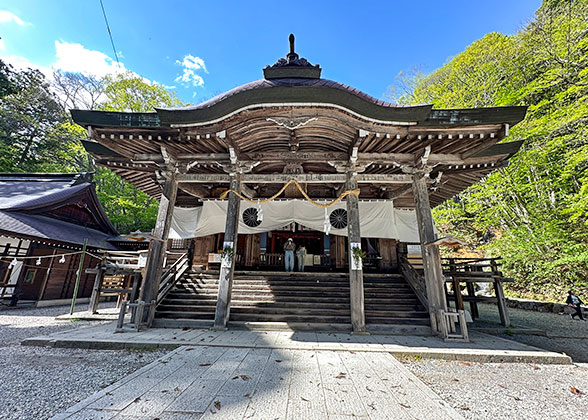
Keep heading down, and you’ll reach Chusha, the heart of the entire shrine complex. The first thing that catches your eye is an 11-meter (36-foot) gate tower. The whole structure uses not a single nail - wooden pieces lock together through joinery alone, a fine display of traditional Japanese carpentry. On the grounds stand three giant cedars over 800 years old; each one needs 5 - 6 people linking arms to encircle it. They’ve been designated as Japanese Natural Monument. Inside the main hall, you can also admire a dragon painting on the ceiling. Around Chusha, a cluster of Togakushi soba shops makes it the ideal place to rest and refuel.Chusha pays tribute to the wisdom god who, in the sun goddess legend, devised the plan to restore the light. Most visitors come here to seek better grades and smooth career paths.
|
|
The last two shrines are more modest in size, perfect for travelers with time to spare who prefer a slower, deeper stroll. Feel free to work them into your schedule as you please:
Hinomikosha Shrine
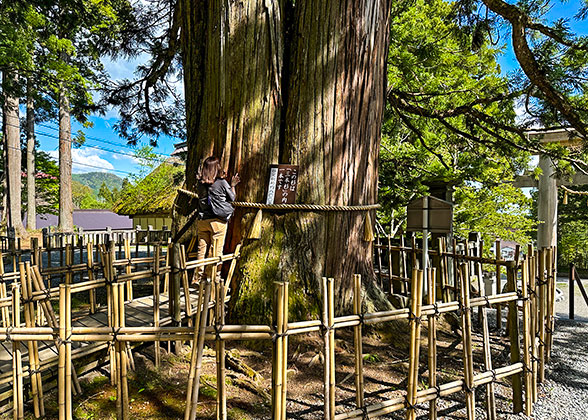
This shrine’s biggest draw is its “Couple Cedar Trees” - two massive cedar trees over 500 years old growing side by side, like a long-married couples. It also enshrines the goddess whose dance, according to the legend, coaxed the sun goddess out of her cave. Travelers come here to wish for growth in the arts and performing skills, plus smooth development in romance.Houkosha Shrine
Finally, you’ll get to Houkosha, right at the mountain’s base. Founded in 1058, its building is the oldest surviving structure among the five shrines, but it also boasts the most ornate, detailed carvings. Look up under the eaves and you’ll spot dragons, kylins, and other motifs, all beautifully worked. The shrine is devoted primarily to the daughter of the wisdom god, and worshippers usually come here to ask for safe deliveries and strong academic results.
|
|
Activities to Try
 Collect stamp seals from all five shrines to redeem exclusive souvenirs Pick up lucky amulet tailored to your wishes Taste the local specialty - hand-cut soba noodles Take a side trip and hike to Mirror Pound to see the mountains reflected in the water Visit the ninja museum, navigate the trick house, and test your aim with ninja darts Try to weave small bamboo crafts by hand
Useful Information
Admission: FreeOpening Hours: All day. Some shrines close in winter, so it’s best to check the official website before your trip.
How to Get There?
Togakushi Shrine sits about 25 kilometers (16 miles) from the Nagano Station - roughly an hour by bus. The recommended route is to catch the Togakushi Line sightseeing express bus from the bus stop 7 at Nagano Station. It runs straight to the mountaintop Okusha entrance; from there, a 20-minute walk brings you to the vermilion gate. Just keep in mind this service requires an advance booking: it’s assigned seating only, no standing, so reserve your spot ahead of time.Tips
1. The mountains around Togakushi are cooler than the city. Pack a light jacket in summer, and bring plenty of warm layers in winter. In winter especially, it gets dark quickly after 3 PM and the temperatures drop fast, so heading into the mountains at that point is not recommended.2. Mosquitos are common in the woods during the summer. Long pants and sleeves are advisable, and don’t forget insect repellent.
3. Most of the route is stone-paved paths and dirt trails, so comfortable, non-slip flat shoes are your best choice. In winter, slip on a pair of crampons for extra grip.
4. There are no convenience stores up in the mountains, and most restaurants close by mid-afternoon. Bring your own water and snacks.