


Hustai National Park Weather
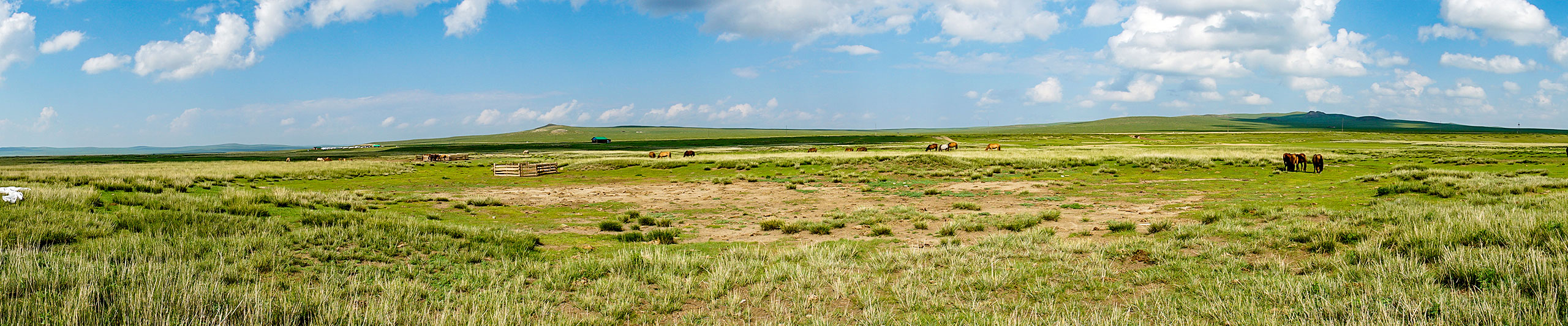
About 100 km (62 mi) west away from Ulaanbaatar, capital of Mongolia, Hustai National Park is situated in the temperate continental climate zone, with four distinct seasons. The weather of Hustai National Park is pleasantly warm in summer from June to August and becomes freezing cold in winter from November to next March. The weather is somehow changeable and extreme weather conditions like strong winds and sand storm might occur, which further deteriorates in transitional season of spring and autumn. The precipitation is low, collectively distributed over summer. In general, Hustai National Park receives plenty of sunshine throughout the year and the air is thus dry.
Fluctuating Temperatures
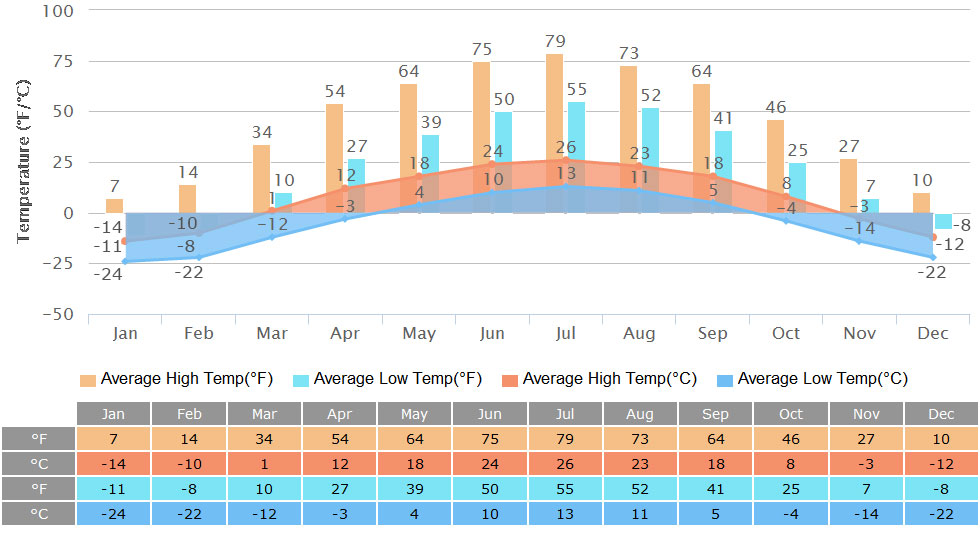
Exceptionally large temperature differences can be observed in Hustai National Park. It spans a wide range from -35 to over 30 degrees Celsius (-31 to 86 degrees Fahrenheit) yearly. It also fluctuates drastically in a few days and visitors might feel like experiencing different seasons within those a few days, especially in May and October the transitional months between seasons. The temperature variation between day and night is also large, as large as 10°C (50°F), even about 20°C (68°F) at approximately.
Average High/Low Temperatures of Hustai National Park
What is the Coldest Month in Hustai National Park?
Seeing the lowest temperatures of the year, January is definitely the coldest month in Hustai National Park. How cold is the Hustai weather in January? It is rather frigid, with daytime highs mostly ranging from -18 to -10°C (1 - 14°F) and the night lows from -28 to -19°C (-18 - -2°F). On occasions, it drops further, with the max temperatures around -25°C (-13°F) and min ones about -35°C (-31°F) or even lower; but it seldomly lasts for over 3 days consecutively.What is the Hottest Month in Hustai National Park?
July in peak summer is regarded as the hottest month. But it is never scorching since the daily high temperatures usually swing between 19 and 28°C (66 - 82°F) and the low values between 10 and 16°C (20 - 61°F). For several days in this month, the highest degrees might reach 30°C (86°F), but rarely goes beyond 35°C (95°F). Visitors could feel only a little hot when conducting long-time visits around noon. After sunsets, the climate of Hustai National Park remains pleasant for various night activities.Low Precipitation
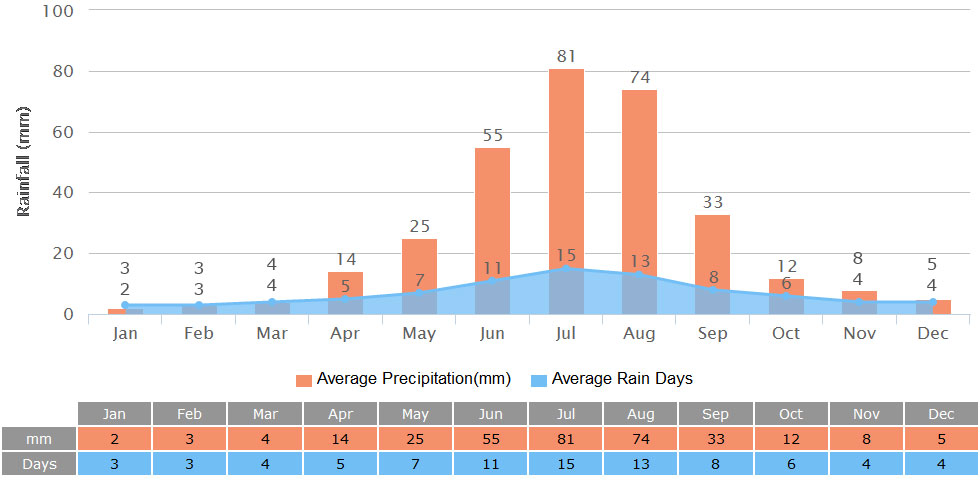
Hustai National Park receives the annual precipitation of about 228 mm (8.98 in) on average, which is unevenly distributed. Rainfall in summer accounts for about two thirds of the annual total precipitation, thus June to August is considered the local rainy season. But from a global perspective, the amount is low still and its negative influence limited. Meanwhile, it brings moderate humidity and visitors feel neither dry nor moist in summer.Other months see very low precipitation, of which winter is the driest with least precipitation no more than 8 mm (0.32 in) per month. During winter, it usually falls as snow drizzles. In spring and autumn, the precipitation trend transits progressively, but its form becomes multiple so that rainfall, snowfall, sleet and hailstone are all possible.
Average Rainfall of Hustai National Park
Abundant Sunlight
Sunny Hustai in Summer
|
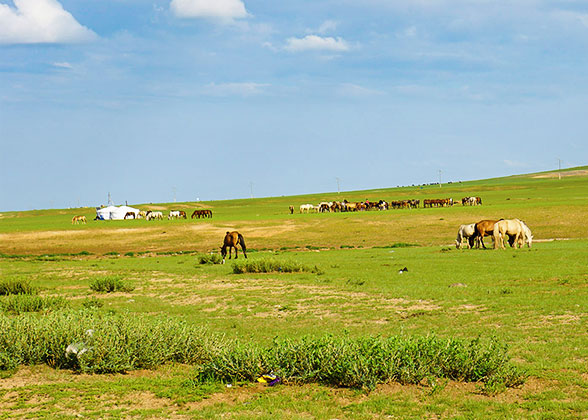
However, the ultraviolet rays are fairly strong and its index reaches the maximum level 8 during June to July. Even in spring and autumn, because of the high altitude and few clouds, the UV index stays between level 3 - 6. It by no means implies that sunscreen products are unnecessary. In winter whose UV index is as low as level 1, you don’t need to worry much.
Best Time to Visit Hustai National Park
June to August is absolutely the best time to visit Hustai National Park for the following reasons.First of all, its weather during this period is relatively stable with pleasant temperatures and moderate humidity, thus offering visitors the most comfortable feelings. It is also of higher possibility that wild animals like famous Przewalski’s Horse (or Takhi), red deer, Mongolian gazelles and marmots can be spot. In consideration of natural scenery, the grasslands, forest steppes and mountains have grown vibrantly green, serving as great banquets for visitors’ eyes. Besides, rich festival activities are held for tourists to have fun, for example Naadam Festival involving archery and wrestling, Sheep Party and visiting nomad families.
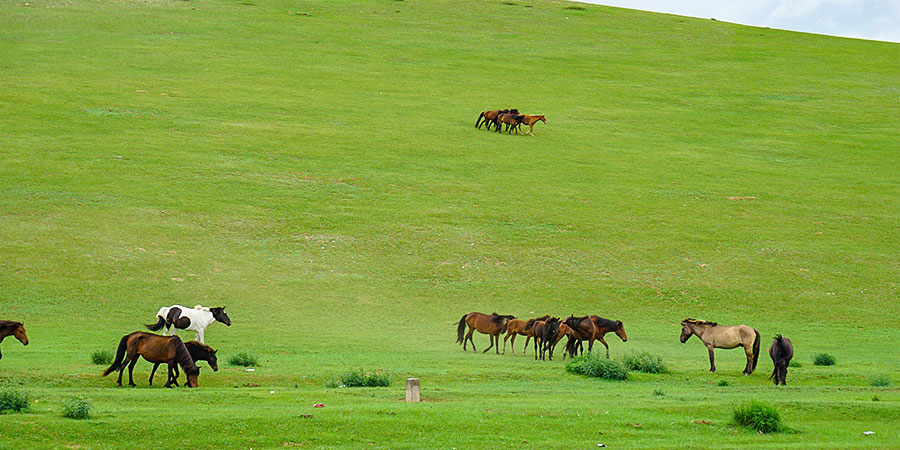
Hustai Green Grassland
|
Hustai National Park Weather by Month and Travel Recommendation
| Month | Weather | Peak / Low Season | Recommendation |
| January | Harsh, Quite Dry | Low Season |

|
| February | Freezing Cold |
|
|
| March | Cold Still, Sunny |
|
|
| April | Slightly Cold, Unstable |
|
|
| May | Getting Warm, Rainy Season |
|
|
| June | Pleasantly Warm, Rainy Season | Peak Season |
|
| July |
|
||
| August |
|
||
| September | Cool to Chilly, Less Rain | Shoulder Season |
|
| October | Turning Cold, Occasional Snow |
|
|
| November | Fairly Cold, Dry | Low Season |
|
| December | Frigid, Little Snowfall |
|
Hustai National Park Climate - Seasons & Travel Advice
Spring: April - May
Weather
In spring, Hustai National Park experiences significant temperature rises. The high degrees rise from 6 - 15°C (43 - 59°F) in April to 14 - 24°C (57 - 75°F) in May. In terms of the night lows, April often sees the values below freezing, but which can be hardly seen in May. By middle May, thanks to warm enough weather, grass starts to sprout and the landscape turns green little by little. One thing to note is that the temperature is not stable and sudden drops or rises often occur. Hustai climate in spring can be described as changeable.Increasing from 14 to 25 mm (0.55 - 0.98 in), the monthly precipitation remains quite low and leads to dry air. It may fall as light rainfall, snow drizzles and sleet, but neither large ponds of waters are formed nor snow is accumulated.
Strong winds also blow across the park frequently in spring. Sometimes, it rolls up the dust of the land with little plant vegetation, thus resulting in dusty days even sand storms.
What to Bring
Clothes: bottoming shirts, long-sleeved T-shirts, hoodies, knit wear; thin down coats, cotton coats, woolen coats, trench coats; long johns, thick sweatpants, jeans…Shoes: any comfortable shoes like sneakers and hiking boots…
Others: sunglasses, sunscreen cream; hats, masks…
Tip
Be sure to wear protective masks and glasses to prevent the dust getting in your mouth and eyes when visiting Hustai National Park in dusty days of spring. For those visitors who already suffer from respiratory diseases like asthma, please prepare relevant medicines just in case.Summer: June - August
Weather
Summer weather of Hustai National Park is warm and cozy during daytime as the high temperatures fluctuate between 15 and 28°C (59 - 82°F). Even in the warmest July, the highest degrees hovering around 32°C (90°F) is very occasional, which means it is free from scorching hot in most time. When night falls, the temperatures normally drop to 8 - 17°C (46 - 63°F) and the climate turns a little cool, but it remains generally pleasant for night activities like campfire party and watching the Milky Way.
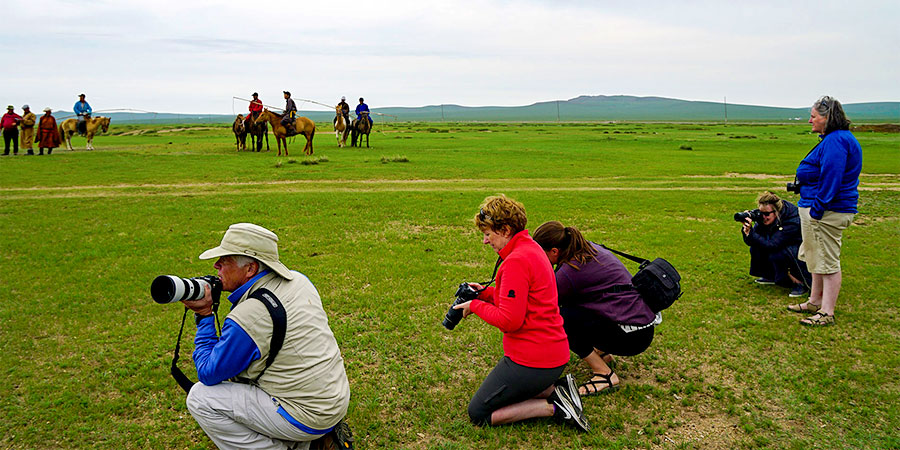
Summer Dressing in Hustai
|
June to August is also the rainiest period all year round with the monthly precipitation of about 50 - 80 mm (1.97 - 3.15 in). Except for lower perceived temperatures in rainy days, it causes limited other bad influences because it often rains lightly for a short time. Sporadically, heavy but brief downpour happens as well.
What to Bring
Clothes: T-shirts, sunblock sleeves, blouses; sunscreen coats, jackets, trench coats; sweatpants, loose jeans, thin jacket pants…Shoes: breathable and non-slip sport shoes; portable waterproof shoe covers…
Others: sun protective products like sunblock, sunhats and sunglasses; umbrella or raincoat, portable fan, mosquito repellent pastes or spray…
Travel Recommendations and Tips
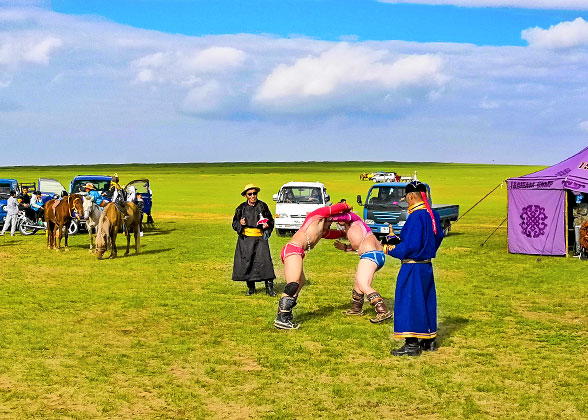
Hustai Mini-Naadam
|
2. If pre-ordered, Hustai National Park will hold Mini-Naadam Festival for tourists in July. For some visitors who prefer large-scaled ones, to engage in the national one in Ulaanbaatar is a good choice. Ulaanbaatar Naadam Festival in 2026 is held on July 11 -15.
See also: Ulaanbaatar Weather in July
3. To enhance the possibility of seeing wild animals like Takhi, you can visit the park in the early morning and dusk since they tend to have a rest around midday to escape heat in summer. In addition, you are recommended to bring telescopes and long-focus camera so as to better observe the animals.
Autumn: September - October
Weather
As the temperatures falls obviously, Hustai National Park weather turns from crisp and chilly in September to rather cold in October. It is during this time that grassland turns yellow, brown and finally barren step by step. The two months witness the daytime high temperatures decreasing from 12 - 18°C (54 - 64°F) to 3 - 10°C (37 - 50°F) and the low degrees from 3 - 9°C (37 - 48°F) to -8 - -1°C (18 - 34°F). Sudden temperature drops are also commonly seen in autumn, probably by 5 - 10°C (41 - 50°F). If wearing no thicker clothes, it is easy to catch a cold.
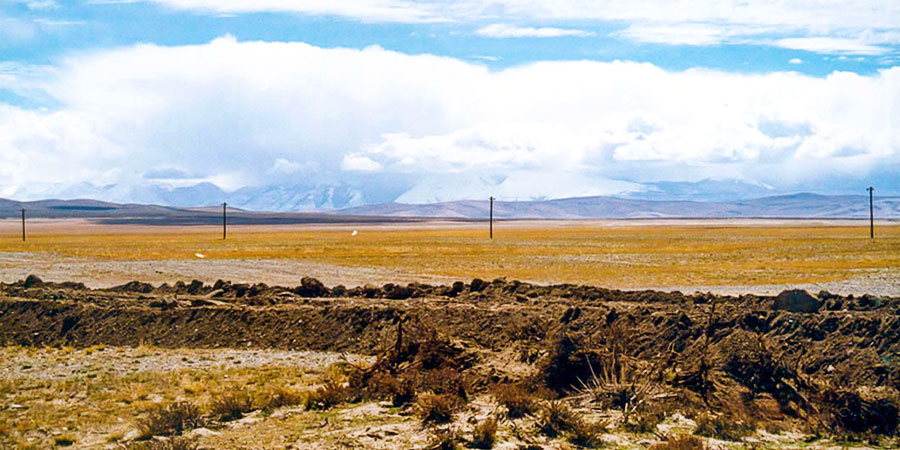
Bleak Hustai in Late Autumn
|
The already low monthly precipitation further decreases from roughly 33 to 12 mm (1.3 - 0.47 in) which is distributed over 6 - 9 days per month on average. But it also means lots of clear and sunny days with high visibility. The primary precipitation form during autumn is light rainfall and snow showers become possible since late September. The snow usually melts after falling down in one or two days, leaving only thin snow cover on mountain peaks.
What to Bring
Clothes: thermal underwear, hoodies, sweaters, padded shirts; woolen coats, fleece-lined leather coats, 3-in-1 windbreakers, cotton coats, down coats; long johns, jeans, fleece sweatpants …Shoes: sneakers, walking boots, thick socks…
Others: skin-care products, sunscreen products; hats, scarves …
Winter: November - Next March
Weather
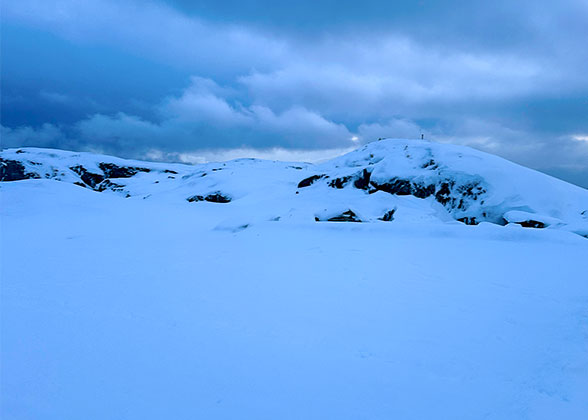
White Landscape in Winter
|
Winter receives quite low precipitation, fluctuating around 5 mm (0.2 in) monthly on average from three or four days. That is why the climate there is so dry that skin-care products are indispensable to keep your skin moisturized. Though it mostly falls as light snow, snow view is available and all white landscape can be seen from December to early March thanks to the snow accumulations.
What to Bring
Clothes: high-top thermal underwear, padded hoodies, heavy sweaters, down vests; 3-in-1 windbreakers, thin down coats, long and heavy ones, mink coats; woolen long johns, fleece-lined jeans, thick windproof jacket pants, down trousers…Shoes: non-slippery and waterproof shoes like padded walking boots, high-top snow boots…
Others: warm accessories including woolen hats, gloves and scarves; body oil, hand cream, lip pomades; protective glasses, warm pastes…
Tip
During winter, Takhi and other distinctive animals move to the deep valley and visitors can hardly find them. If your primary concern is to see the wild animals, it is not advised to go in this period.You May Like
-
 8 Days Private Tour to Experience Nomadic Gobi & Nature with Hustai National Park Highlights from USD1521
 -
 10 Days Private Tour of Mongolia Highlights & Gobi Desert in Central and Southern Mongolia Including Hustai National Park from USD2507
 -
 12 Days Private Tour to North & Central Mongolia with Highlights of Lakes, Deserts and Grasslands from USD2797