Day 1: Ulaanbaatar Arrival, Airport or Railway Station Pick-up
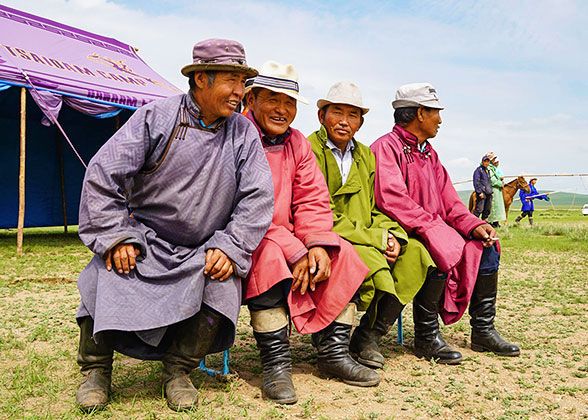
Greetings from Ulaanbaatar, Mongolia’s capital and largest city! Our private guide and the driver will meet you at Chinggis Khaan International Airport or Ulaanbaatar Railway Station, and escort you to your downtown hotel. The rest of the day is at your disposal. You can rest to recharge your energy for the upcoming journey, or explore the city on your own.
► Recommended Activities (on your own expense)
Bokh, or Mongolian wrestling, is one of Mongolia’s national sports, and you can watch thrilling matches at the Wrestling Palace on Peace Avenue, which holds wrestling competitions regularly, usually from 1:00 pm to 7:00 pm. Check the competition times beforehand! On-site tickets cost about MNT 140,000 (USD 40) per person. Alternatively, consider touring the last Mongolian monarch's residence at the Bogd Khan Palace Museum, with a ticket fare of MNT 15,000 (USD 4).
► Warm Tips
1. Mongolia features erratic weather and extreme daily temperature swings, so pack rain gear and layer up with a windproof jacket. Wear a thick down jacket during winter (Nov.-Feb.), when temperatures can drop to -20 to -30°C (-4 to -22°F).
2. The tugrik (MNT) is the predominant local currency; dollars and credit cards are only accepted in Ulaanbaatar’s big malls and restaurants, so it’s best to exchange some tugrik cash in Ulaanbaatar’s city center.
3. Ulaanbaatar faces severe traffic congestion; walking is preferable for distances of 1 to 2 km. If you want to hail a car, use the local ride-hailing app, UBCab, which requires registration with a local phone number, such as a MobiCom card.
Accommodation: Grand Hill Hotel Ulaanbaatar (4 stars) or similar
|
Day 2: Fly to Dalanzadgad; Drive to Eagle Valley (Yolyn Am)
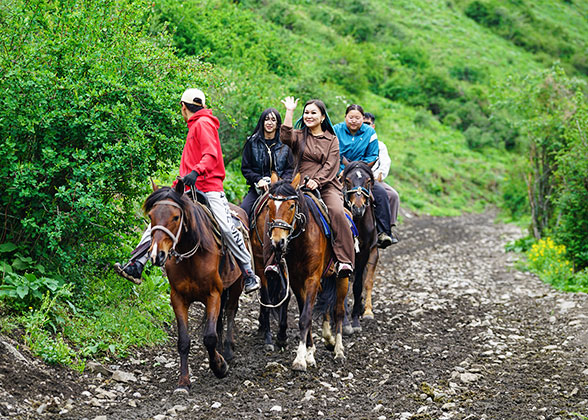
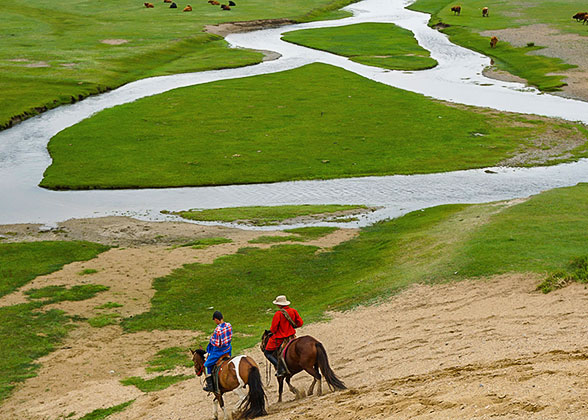
After breakfast, enjoy a private transfer to the airport to catch the flight to Dalanzadgad Airport. Upon arrival, your local guide and the driver will pick you up and escort you to Eagle Valley, aka Yol Valley or Yolyn Am, so named for its abundance of vultures. Follow your guide to hike for about 2 hours through the valley, or on horseback, if you think walking is challenging. Proceed along the tranquil creek that meanders through lush green meadows dotted with purple, yellow, and white wildflowers. Along the way, you may also come across little wild creatures like pikas. Please be careful on the last 500 meters (1,640 feet), as the trail can be a bit rocky and challenging. What makes the valley truly amazing is the spectacular thick glaciers, which even exist in the early summer months of May and June! It's surreal to walk on the ice. Make sure you wear waterproof boots and a windproof jacket. However, it now takes a bit of luck to see the stunning blue glacier after July due to global warming. After the hike, your guide and the driver will escort you to today’s ger camp. Stay overnight here and experience the exotic atmosphere in the round nomadic dwelling, decorated with brightly colored tapestries, exquisite leather goods, and cozy wool rugs. ► Tips: During camp stays, traditional Mongolian dishes will be served, such as steamed dumplings and hot stone barbecue, and the Western buffet is available as well during the peak season. As most Mongolian cuisine is meat-based, please inform us in advance if you are a vegetarian so that we can adjust the menu for you. Meals: Breakfast, Lunch, Dinner Accommodation: Juulchin Khan Bogd Ger camp or similar
|
Day 3: Drive 5 Hours to Khongor Sand Dunes, Enjoy a Bactrian Camel Ride
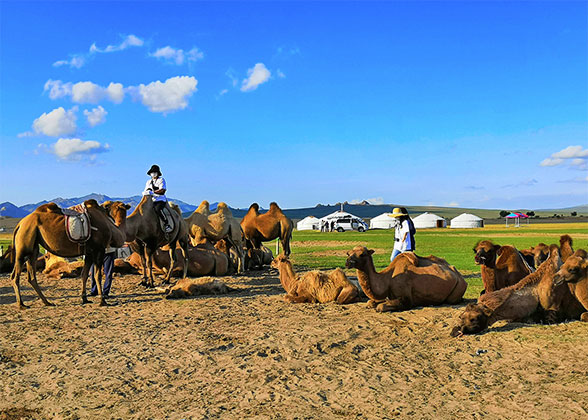
Today, your private guide and the driver will accompany you to Khongor Sand Dunes, one of Mongolia’s most spectacular sand dunes in the Gobi Desert. They stretch 180 kilometers (112 miles) long, resembling a sand strip nestled along the mountain ranges, with the highest dunes of 800 meters (2,600 feet)! They are also known as the Singing Sand Dunes because they make a loud humming sound when the wind blows through them.
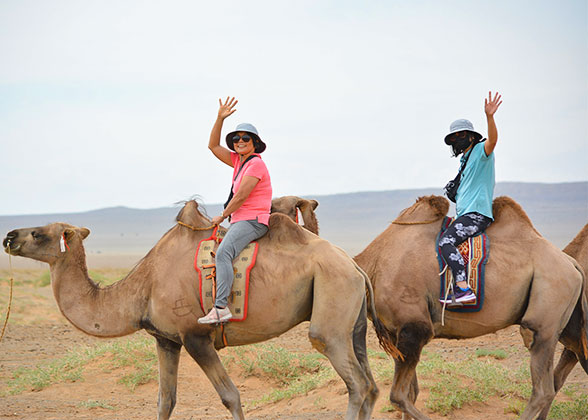
★ Classic Gobi Experience: Riding a Bactrian CamelHow can a desert trip be complete without riding a camel? In the late afternoon, sit between the gentle camel's humps and proceed slowly under the herder’s guidance. Please avoid sudden movements or noises, as they may startle the camel. While traveling through the desert, you’ll see how the sand dunes’ charming curves gradually shift with the wind and how the sunlight turns them pale yellow, silver, and slightly reddish over time. Reach the summit of a dune to admire the magnificent sunset, and take in the breathtaking view of the sea of sand dunes.
► Tips:
1. Due to the strong sandy wind and intense UV rays, please wear a headscarf, sand-proof shoe covers, and sunglasses, and use sunscreen. For ladies, it’s advisable to tie up your long hair and avoid wearing skirts.
2. Please use dedicated sand-proof covers to protect your camera from sand.
At last, your guide and the driver will escort you to your ger. As night falls, relax around a campfire under the twinkling Milky Way and listen to the herder’s old stories.
Meals: Breakfast, Lunch, Dinner
Accommodation: Gobi Discovery Ger camp or similar
|
Day 4: Visit a Local Herder's Family; Drive to Bayanzag (Flaming Cliffs)
Today, your guide will first accompany you to visit a local herder's family. Sit by the stove in the simple and cozy ger and drink a steaming cup of homemade milk tea. You might also learn how to milk and feed their camels, and take some precious photos. Camels are considered the king of the five major livestock, and there is a unique “camel coaxing ritual”. When a mother camel is frightened after giving birth and refuses to let her calf nurse, the herders will sing soothing melodies and play the horsehead fiddle to calm her down. After that, we’ll drive to Bayanzag, a world-renowned paleontological site. The first dinosaur egg fossil was unearthed here in 1923, and a fossil indicating a prehistoric fight between a Velociraptor and a Protoceratops was uncovered in 1971! Here, a large area of fossil deposits is still retained, and the cracks are clearly visible, revealing changes over different geological ages. Our guide will accompany you on a stroll to admire the beautiful yet bizarre rocks, which resemble mushroom clouds rising above the earth. Bayanzag is also called Flaming Cliffs, as it’s particularly astonishing at sunset, when the rocks are coated with orange light, resembling burning flames. The desolate Gobi Desert contrasts sharply with the reddish cliffs, making you feel as if you were on an alien planet. Please stay away from the edges when encountering strong winds. As the day ends, your guide and the driver will escort you to your ger camp. Meals: Breakfast, Lunch, Dinner Accommodation: Mongol Gobi Ger Camp or similar
|
Day 5: Drive 4 Hours to Ongi Monastery
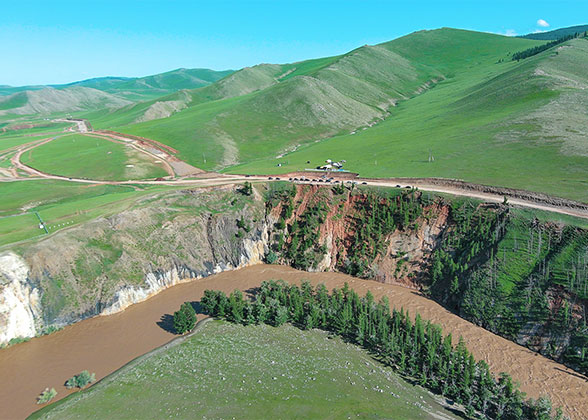
After touring the vast South Gobi, today, we’ll drive 4 hours north to Ongi Monastery, aka Ongiin Khiid, a vital Tibetan Buddhist site in the area. It was once a religious complex with nearly 30 temples and 4 large monasteries standing along the Ongi River banks, and housed over 1,000 monks during its heyday in the 18th century! Unfortunately, it suffered severe damage during a widespread anti-religious movement in the 1930s. On the ruins, there are only signs showing the sites of the old temples and structures, a newly erected small temple and a white stupa, echoing their former glory. In the small ger museum, browse old photos and past ritual objects. Additionally, you can enjoy a leisurely hike along the winding Ongi River. After the visit, your guide and the driver will escort you to today’s ger camp.
Meals: Breakfast, Lunch, Dinner
Accommodation: Secret of Ongi Tourist Camp or similar
|
Day 6: Drive 6 Hours to Karakorum; Visit Karakorum Ruins & Erdene Zuu Monastery
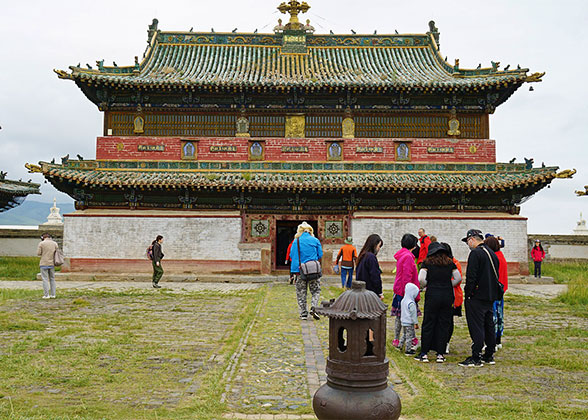
Today, let’s bid farewell to the Middle Gobi and head to the Orkhon Valley Cultural Landscape, one of Mongolia’s UNESCO World Heritage Sites. Your guide and the driver will pick you up at your ger and drive 6 hours to Karakorum, the ancient capital of the Mongol Empire (1206-1368 AD) in the 13th century. It also served as the center of the world at that time, with its influence extending throughout Asia and much of Europe! After Genghis Khan unified Mongolia, he realized that his original political center, Khodoe-aral, located in the east, could no longer satisfy his ambition for westward expansion. He then chose Karakorum, closer to the west, as the new capital. Then his son, Ogedei Khan, officially ordered the construction of the city in 1235, including the city walls and the grand imperial palace. Although it was then destroyed during wars in the late 14th century, many of the remains of the burned-down city walls, palaces, streets, and houses were rediscovered in the 1940s. In the Karakorum Museum, you’ll see a prominent model of the ancient capital and its archaeological findings, including a brick kiln site, Buddhist statues and porcelain. Afterward, we’ll visit Erdene Zuu Monastery, the country's oldest and biggest Tibetan Buddhist temple, ending the status of shamanism as the official state religion before the late 16th century. The temple features Tibetan-style stupas engraved with Soyombo patterns, the country’s symbol, composed of the sun, moon, and fire. There are also 3 large Chinese-style halls with green roofs and red walls. After the visit, you can stroll around the area, and your guide and the driver will escort you to the nearby ger camp for rest. Meals: Breakfast, Lunch, Dinner Accommodation: Urgoo Tourist Camp or similar
|
Day 7: Visit Elsen Tasarkhai Sand Dune, Drive 3 Hours to Hustai National Park
After breakfast, your guide and the driver will accompany you to the Elsen Tasarkhai Sand Dune, which stretches 700 kilometers (435 miles) from north to south, with the narrowest section being only 800 meters (2,625 feet) wide. The Tarna River meanders through the dune, dotted with trees, creating a distinctive and lovely sight.
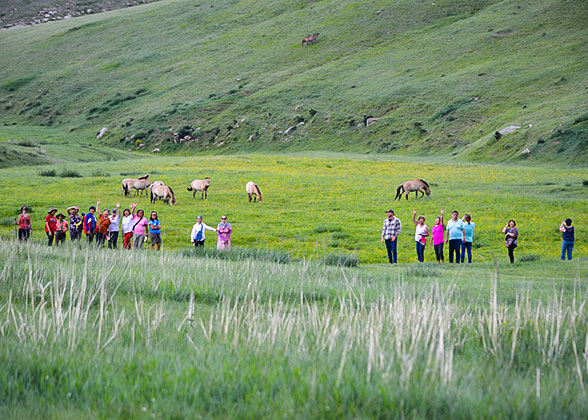
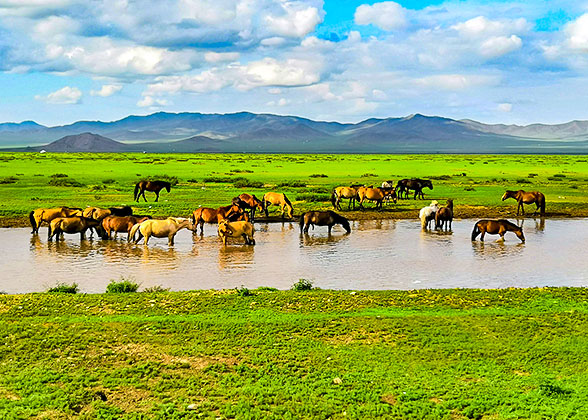
★ Spot the Endangered Przewalski's Horses at Hustai National ParkAfter checking into your ger in the afternoon, we’ll accompany you on a drive to the only Przewalski's horse center in Mongolia to observe wild horses, and they are most likely to be out in the evening. As a pure-bred indigenous to the arid desert steppes of Mongolia and China, they rarely explore or wander far, and thus have never been domesticated or interbred with other horse breeds. They were once on the verge of extinction due to extensive hunting, but now Hustai is home to nearly 500 wild horses. Take your binoculars, as you may have a chance to spot a group of Przewalski's horses running down from the hills, sipping water, or galloping. However, wild horses are not easily spotted in summer because they frequently seek the shade in the forest.
Hustai is also a paradise for other wild animals, birds, and amphibians, such as deer, golden eagles, and Siberian marmots. See how many species you may find! Autumn is the breeding season for deer, making them easier to spot at that time. There are also marmot burrows in the park, so be cautious when walking. After the exploration, your guide and the driver will escort you back to your ger.
Meals: Breakfast, Lunch, Dinner
Accommodation: Hustai Ger Camp or similar
|
Day 8: Drive 4.5 Hours to Terelj National Park: Visit Ariyabal Meditation Temple and Turtle Rock
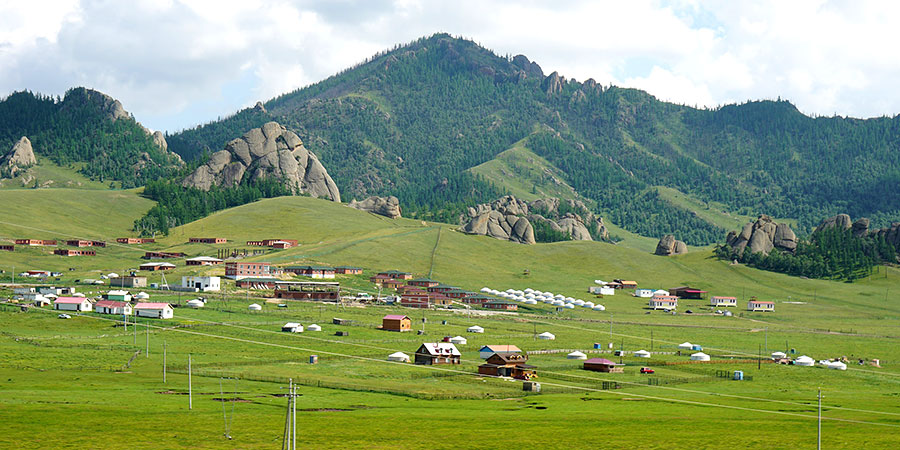
Today, lose yourself in the Terelj National Park, whose undulating meadows, giant rocks, meandering rivers, and free-roaming horses seem to transport you to a real-world Hayao Miyazaki animation! In summer, the expanding greenery speckled with blooming wildflowers turns the entire meadow into a natural palette, while in winter, the park and the scattered white gers are blanketed with snow. We’ll admire the Ariyabal Meditation Temple, a Tibetan Buddhist temple nestled on a mountain slope in the park. The 108 stairs leading to the top symbolize overcoming earthly desires. The row of scripture-painted prayer wheels along the corridor may pique your interest. For Buddhists, turning the prayer wheel once is akin to reciting the scriptures once. You can mingle with the locals and turn them to pray for good luck. Then, proceed to the iconic Turtle Rock, which rises 24 meters (79 feet) tall. Ascend along the strewn stones on its north side and crawl through a cramped cave for a broad view of the entire park. At last, your guide and the driver will escort you to your ger camp. Meals: Breakfast, Lunch, Dinner Accommodation: Terelj Lodge Ger Camp or similar Hustai National Park Terelj National Park
|
Day 9: Terelj National Park - Genghis Khan Statue Complex - Ulaanbaatar
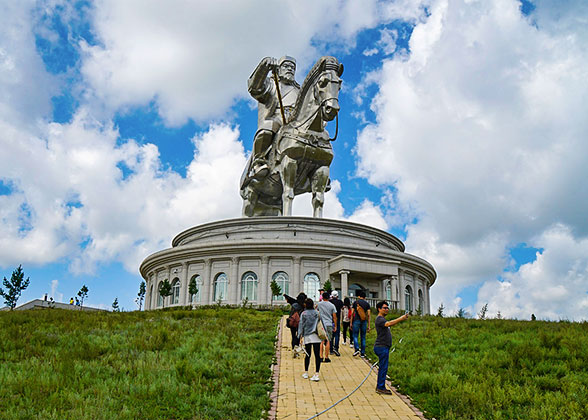
Today, enjoy a private transfer back to Ulaanbaatar. En route, we’ll stop at the Genghis Khan Statue Complex, one of Mongolia’s most representative landmarks. Here stands the world's largest equestrian statue of Genghis Khan, about 40 meters (131 feet) tall! The founder of the Mongol Empire fought throughout his life and won over 60 battles, with only one retreat due to being outnumbered. He eventually unified the various tribes and conquered parts of Central Asia. He once said, "If you can hold it, the world is yours!” Europeans later called him and his Mongol army "the Scourge of God." Take the escalator to the horse's head, and enjoy the magnificent views of the surrounding grasslands. After the visit, we’ll continue the drive to Ulaanbaatar and have a farewell dinner at a local restaurant. Your guide and the driver will then escort you to your hotel. ► Recommended Activity (at your own expense) If you want to do some last-minute souvenir purchasing, consider visiting Ulaanbaatar’s biggest mall: the State Department Store located on the Peace Avenue by yourself. Here you can find high-quality Mongolian cashmere products, leather wine flasks, traditional rugs, hats, and more. Meals: Breakfast, Lunch, Dinner Accommodation: Grand Hill Hotel Ulaanbaatar (4 stars) or similar
|
Day 10: Ulaanbaatar Departure, Airport See-off
Today marks the end of your holiday in Mongolia. Your guide and the driver will pick you up at your hotel and escort you to the airport at the appointed time. Wish you a nice journey!
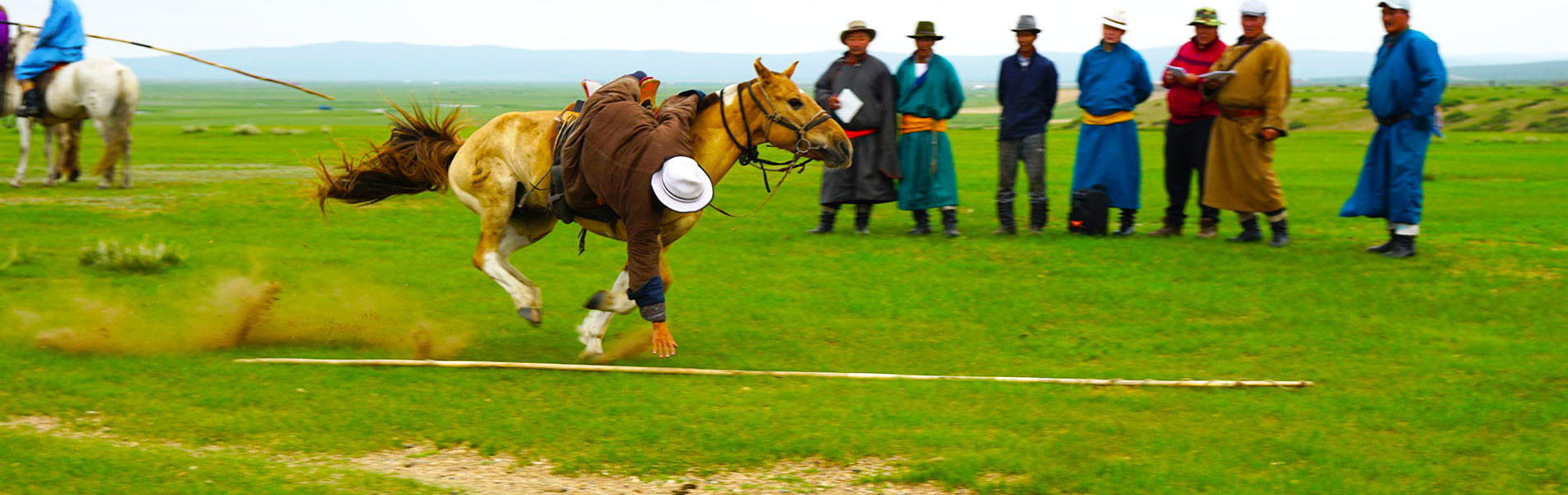
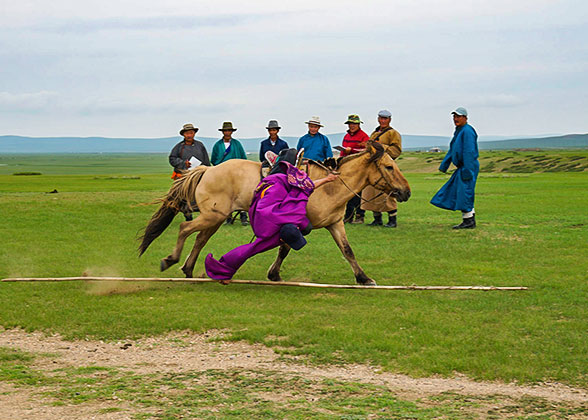
We also provide specialized itineraries for Mongolia's major ethnic events, such as the Nadam Festival, which takes place annually in July and August, including horse racing, wrestling, and shamanic rites. You may even prolong your trip to explore the Pamir Plateau in Tajikistan, visit Charyn Canyon in Kazakhstan, or go trekking in Nepal. All our itineraries can be customized. Feel free to contact us!
Meal: Breakfast
|