

Kyoto Subway
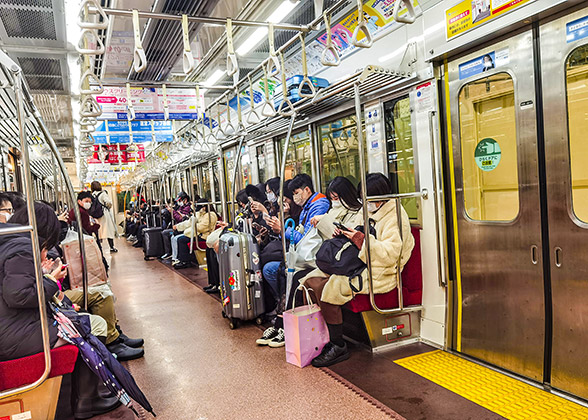
Passenger Sitting in Kyoto Subway
|
Two Subway Lines in Kyoto
You can use the two core subway lines for different travel purposes: the Karasuma Line is ideal for connecting major transport hubs and traveling to business districts, whereas the Tozai Line is better suited for visiting historic sites and making suburban transit transfers.Karasuma Line - Most Frequently Used Subway Line for Tourists
Basic Overview:
Route: North-south route running from Kokusaikaikan Station to Takeda StationLength: Around 13.7 kilometers (8.5miles) with 15 stations
Color & Line Code: Green / Line K

Operation Hours:
First train: Kokusaikaikan 5:20; Takeda 5:18
Last train: Kokusaikaikan 23:40; Takeda 23:39
Frequency:
Peak hours (7:00 - 11:00, 16:00 - 20:00): departures every 4 to 7 minutes
Off-peak hours: every 10 minutes
Key Stops:
1.Kyoto StationAs Kyoto’s busiest transport hub, Kyoto Station is the first stop for most visitors arriving in the city, with direct links to JR lines, the Tokaido Shinkansen, the Kintetsu Kyoto Line and an extensive city bus network - your main gateway for travel in and out of Kyoto.
Several popular local attractions are just a short walk away, ideal for squeezing in a quick visit right after your arrival: Kyoto Tower is just a 5-minute stroll from the station, Higashi Hongan-ji Temple lies an 8-minute walk away, and the Kyoto Railway Museum and Kyoto Aquarium are both reachable on foot in 10 to 12 minutes.
2.Shijo Station
Right in the heart of downtown Kyoto, this station connects to Hankyu Karasuma Station by an underground walkway, so the transfer takes just 4 to 5 minutes on foot. From here, you can ride the Hankyu Line to Osaka Umeda and Arashiyama.
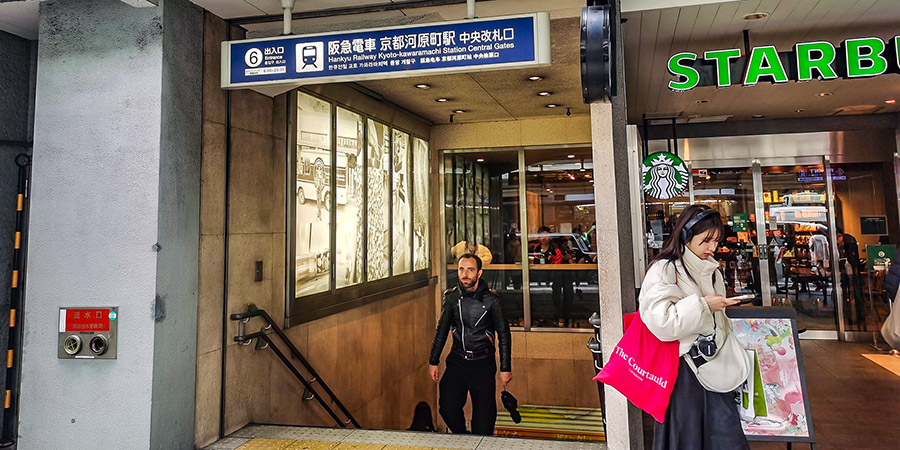
Hankyu Railway's Station
|
3.Karasuma-Oike Station
This is the only interchange station where the two subway lines intersect. You can switch lines directly inside the station in just 2 to 3 minutes.
4.Imadegawa Station
This station is your go-to transfer hub for exploring northern Kyoto - you can catch multiple local buses here to reach sights across the region, such as Kinkaku-ji, Ryoan-ji and Kitano Tenmangu Shrine.
5.Takeda Station
As the southern terminus of the Karasuma Line, this stop is your direct transfer point for Nara, with seamless connections to the Kintetsu Kyoto Line.
Tozai Line - Serves Nijo Castle, Eastern Temple Districts & Suburban Transfers
Basic Overview:
Route: Runs eastward from Uzumasa Tenjingawa Station to Rokujizo StationLength: About 17.5 kilometers (10.9 miles) across 17 stops
Color & Line Code: Red / Line T
Operation Hours:
First Train: Uzumasa Tenjingawa Station 5:15; Rokujizo Station 5:20
Last Train: Uzumasa Tenjingawa Station 23:28; Rokujizo Station 23:45
Frequency:
Peak hours (7:00 - 11:00, 16:00 - 20:00): 4 to 7-minute intervals
Off-peak hours: Around 10 minutes per departure
Key Stops:
1.Uzumasa Tenjingawa StationAs the western terminus of the Tozai Line, this station is just a short walk from the Arashiyama Tram. Hop on, and you’ll ride straight to iconic spots like the Bamboo Grove and Tenryu-ji Temple.
2.Nijo-jomae Station
Located in Kyoto’s historic western district, this station is your most convenient access point for Nijo Castle - it’s just a 2-minute walk from the exit to the castle grounds.
3.Sanjo Keihan Station
The Kamogawa River banks and Pontocho District are just an 8-minute walk from the station - perfect for a leisurely stroll to soak up Kyoto’s authentic local charm. From here, you can transfer to the Keihan Main Line, which runs directly to Fushimi Inari Taisha, Uji’s Byodoin Temple and central Osaka.
4.Higashiyama Station
It is the nearest subway station to Yasaka Shrine and the Gion district. You can reach these two scenic spots on foot in 10 to 15 minutes. For a faster journey, take a city bus to get there within just 3 minutes.
5.Keage Station
Tucked in eastern Kyoto, this station puts you steps from a cluster of serene historic sights. The Keage Incline is just a 3-minute walk from the exit, and Nanzen-ji Temple is an 8 to 10-minute stroll away. From here, you can easily explore the area’s many ancient temples at a relaxed pace.
6.Yamashina Station
This station in eastern Kyoto is your gateway to day trips beyond the city limits. Hop aboard the JR Kosei Line or Keihan Keishin Line here for direct access to Lake Biwa, Otsu City and Mount Hiei.
7.Daigo Station
Hop off here for easy access to Daigo-ji Temple - it’s just a 3-minute walk from the station exit. It’s an ideal stop for seasonal sightseeing, as the temple is one of Kyoto’s top spots for cherry blossoms and autumn maple foliage.
Ticket Fare
Your fare is calculated by travel distance - longer trips cost slightly more. For adults, single-ride tickets start at 220 yen (1.3 US dollars) for journeys within 3 kilometers (1.9 miles), and cap at 360 yen (2.2 US dollars) for the longest routes across the network.Age-based pricing is straightforward. Passengers aged 12 and up pay full adult fare; children aged 6 to 11 enjoy a 50% discount; kids under 6 ride free when accompanied by a fare-paying adult.
How to Pay for Kyoto Subway?
1.Single-journey Paper TicketsThis ticket is ideal for short-stay tourists who ride the subway infrequently. You can only buy single tickets with Japanese yen cash at station vending machines, which support English settings.
2. IC Cards
All major IC cards - including ICOCA, Suica and PASMO - work seamlessly across Kyoto’s entire subway network. For physical IC cards, you can only top up with Japanese yen cash at subway vending machines - credit cards are not accepted. Note that out-of-station transfers between the subway and private lines like Keihan and Hankyu are billed separately - no combined IC fare applies.
3.Subway Pass
The Kyoto Subway & Bus One-Day Pass is the top pick for most travelers. Priced at 1,100 yen (6.8 US dollars) for adults, it covers all subway lines and the vast majority of city bus routes - it pays for itself after 4 or more transfers in a single day.
Three additional combined passes are available, but they’re not universally cost-effective - they only pay off on days with heavy, targeted travel. These include the Subway & Randen One-Day Pass for Arashiyama excursions, the Subway & Eizan Railway One-Day Pass for northern spots like Kurama and Kibune, and the Nara Ikaruga One-Day Pass covering full round-trip travel between Kyoto and Nara. If you only ride the corresponding lines once or twice that day, buying single tickets usually works out cheaper. The subway-only one-day pass offers the worst value and is not recommended as a first choice.
Related Link: Kyoto Subway Pass
Tips for Riding the Kyoto Subway
1.The two subway lines in Kyoto only allow in-station transfers at Karasuma-Oike Station, with no other interchange stops available. If you take the wrong direction on the same line, you can simply get off at any intermediate stop and switch to the opposite platform to head back with no extra fare. If you need to switch between the two lines, you have to go back to Karasuma-Oike Station.
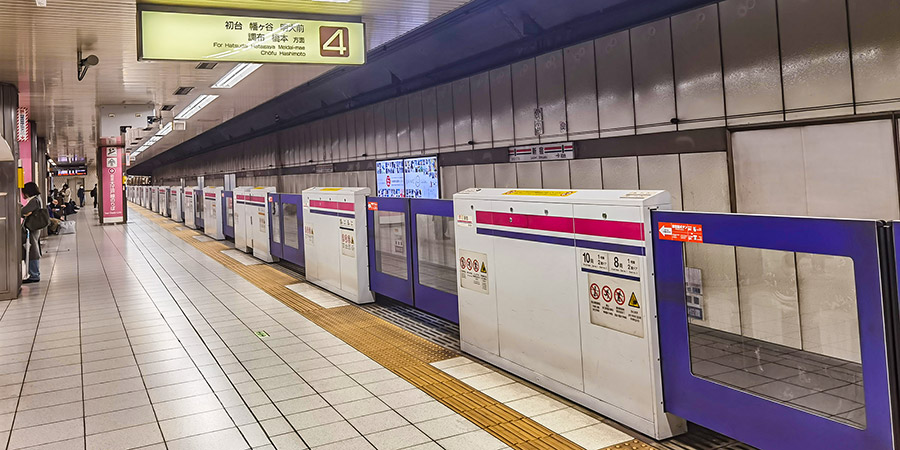
Clean Subway Platform in Kyoto
|
2. There are no gate-connected in-station transfers between Kyoto’s subway and other rail lines. Even at stations sharing the same name, you’ll need to exit the subway fare gates first, walk over to the connecting line’s ticket barriers, and tap in again. The walk takes 2 - 5 minutes, so be sure to leave enough transfer time when planning your itinerary.