

- Subway
- Local Bus
- Sightseeing Bus
- Kyoto Station
- Kawaramachi Station
- Sagano Romantic Train
- Eizan Electric Railway Kurama Line
- Bus Passes
- Subway Pass
- Kansai One Pass
- Kansai Railway Pass
- JR-West Passes in Kansai
- Ultimate Guide on JR-West Pass
- JR West Passes – Kansai Plus Neighboring Areas
- Transport from Osaka
- Transport from Kansai Airport
Eizan Electric Railway Kurama Line
The Eizan Electric Railway Kurama Line is a leisurely train ride that winds from Kyoto city into the mountains, heading toward Kifune Shrine and Kurama-Dera Temple. In late autumn, the train passes through a tunnel completely covered in red and orange leaves, making it one of the most atmospheric journeys of Kyoto’s fall season.
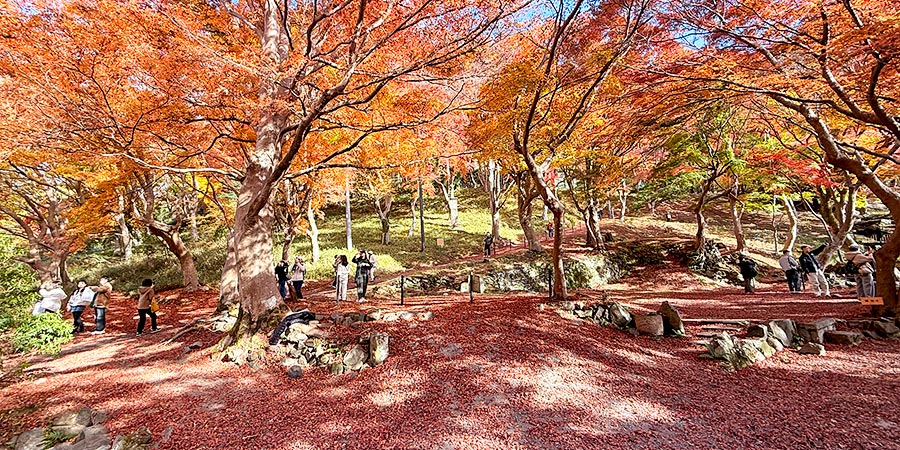
Kurama Autumn Scenery
|
What Makes This Train Special?
Most trains on this line consists of just a single car, fitted with extra-large panoramic windows. In the middle of the car, you’ll find eight swivel seats facing outward, allowing you to enjoy unobstructed views of the forests and valleys along the way, as if sitting in a moving observation deck.
The highlight of this train journey is a maple tunnel hidden in the mountains, stretching about 250 meters (820 feet). Located between Ichihara and Ninose stations, more than 280 maple trees line the tracks, forming a natural canopy overhead. When the autumn leaves reach their peak, the train enters this tunnel wrapped in warm red hues. Sunlight filters through the leaves, casting dancing specks of light inside the car, and time itself seems to slow down. While in summer, the same stretch becomes what locals call the “Green Light Tunnel”, as dense green leaves cover the railway completely. The train deliberately slows down when entering, and the interior lights are turned off, allowing the lush greenery to unfold before your eyes like a secret scene from an animated film.
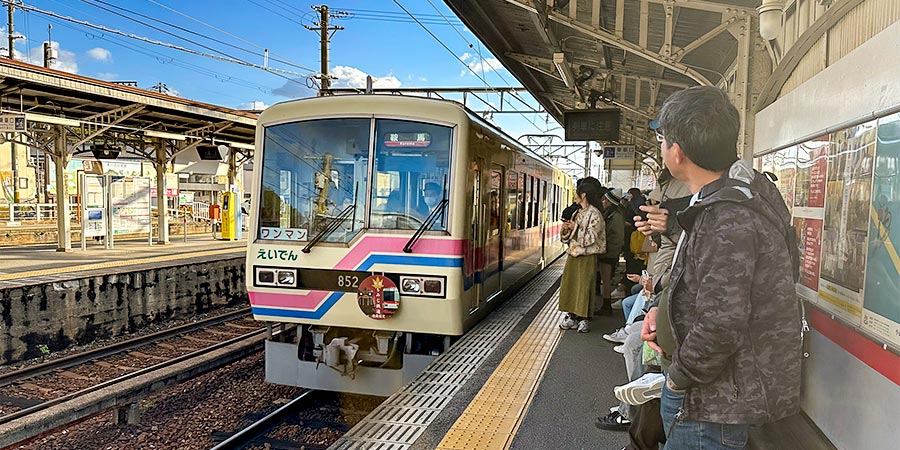
Eizan Electric Railway Kurama Line
|
How to Ride the train?
The Eizan Electric Railway departs from Demachiyanagi Station, which is a 10-minute walk north from the Kawaramachi shopping district in downtown Kyoto. Once there, follow the signs to the Kurama Line platform and find the train heading toward Kibuneguchi or Kurama. You can ride by tapping an IC card, such as Suica or ICOCA at the gate, or simply buy a ticket at the machine on the spot, with no need to book in advance.The fare from Demachiyanagi to Kibuneguchi is 470 yen (3 USD), and reaching the final stop at Kurama may cost an extra 1 USD. The ride takes about 25 minutes to Kibuneguchi Station and 30 minutes to Kurama Station. Trains generally run every 15 to 20 minutes, with slightly fewer services on Wednesdays and Thursdays. The last train departs around 23:00 PM.
During the peak autumn foliage season, the trains can get very crowded, and if you can’t board one, you may have to wait for the next one or two. It is recommended to go as early in the morning as possible to avoid the busiest crowds.
How to plan your trip with Kurama Line?
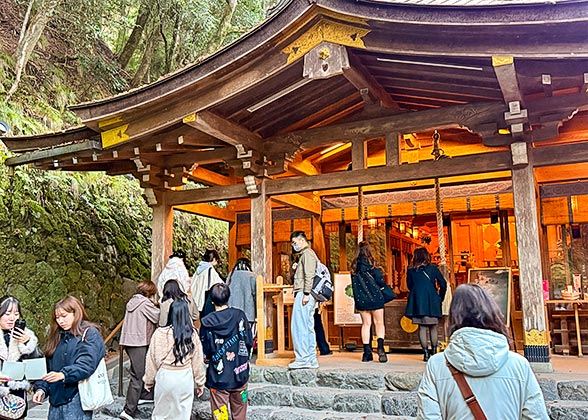
It is best to combine Kifune Shrine and Kurama-dera Temple into the same day trip.You can leave Demachiyanagi Station in Kyoto between 8 and 9 AM, take the Eizan Electric Railway, and arrive at Kibuneguchi Station in about 40 to 50 minutes. After getting off, take a 10-minute shuttle bus or walk 20 to 30 minutes to reach Kifune Shrine. Spend about an hour exploring the shrine at a relaxed pace, walking along the stream-side paths, and admiring the open-air decks built over the water. You can also try the water omikuji, where you dip your fortune slip into the stream to reveal your prediction. Around noon, stop at a nearby restaurant to try local cold noodles served in flowing water. Strands of noodles slide down a bamboo chute in the running stream, and you catch them with your chopsticks and dip them in a light broth. The tables are set right beside the stream, with cool running water at your feet, making for a refreshing meal.
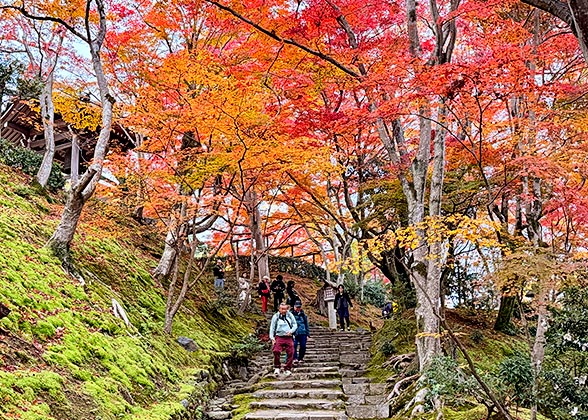
Around 13:00 PM, start hiking along the mountain trail toward Kurama, following the stream for about 1.5 hours until you reach the entrance of Kurama-dera. The path winds through quiet, shaded woodland, so you won’t be exposed to direct sun, and it feels like walking through a natural forest retreat. At Kurama-dera, take your time climbing up, explore the temple grounds, and see the famous Daitengu statue before heading back down. After your visit, simply take the train from the nearby Kurama Station back to Demachiyanagi Station.
|
|
Tips
1. During autumn foliage season, the section between Ichihara and Ninose stations is illuminated after around 4:30 PM. Taking an evening train through the lit-up maple tunnel feels even more atmospheric than riding in daylight.2. This train has no reserved seats, and seating is limited. Window-facing seats can only be secured by boarding early. During peak periods, the cars can get crowded, which may affect your viewing experience.
3. The hiking trail from Kifune to Kurama is not easy. It includes muddy paths and loose gravel, so it is recommended to wear comfortable, non-slip hiking shoes. Additionally, those with average fitness are advised not to attempt it, and can instead travel by train.