

- Subway
- Local Bus
- Sightseeing Bus
- Kyoto Station
- Kawaramachi Station
- Sagano Romantic Train
- Eizan Electric Railway Kurama Line
- Bus Passes
- Subway Pass
- Kansai One Pass
- Kansai Railway Pass
- JR-West Passes in Kansai
- Ultimate Guide on JR-West Pass
- JR West Passes – Kansai Plus Neighboring Areas
- Transport from Osaka
- Transport from Kansai Airport
Kyoto Station
Kyoto Station is the main gateway to Kyoto and one of the key transportation hubs in the Kansai region. The Shinkansen, JR lines, Kintetsu, the municipal subway, and buses all converge here. No matter how you arrive in Kyoto, your first stop is almost always Kyoto Station. The station is massive with multiple floors, and first-time visitors can easily get lost. This guide gathers the most practical information and routes to help you navigate with ease.
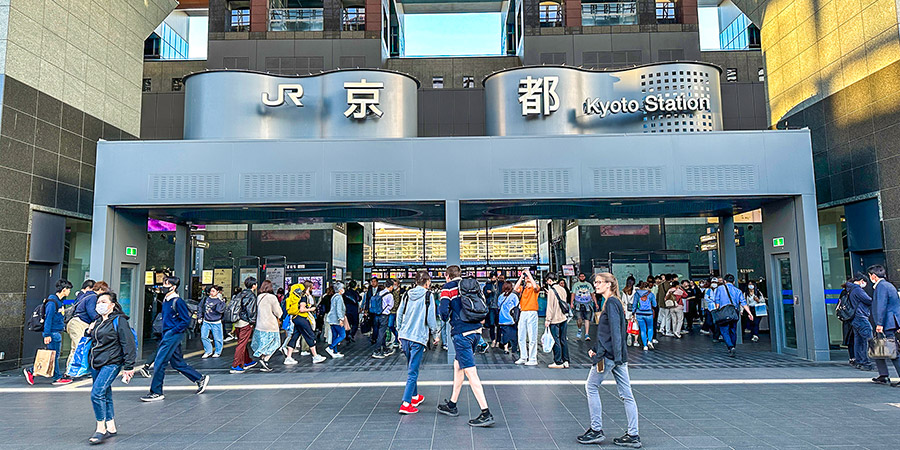
Crowds at Gate of Kyoto Station
|
Which Exit Should I Use?
When you arrive at Kyoto Station, don’t rush off dragging your luggage, as the station has many exits. Don’t worry though, as visitors mainly use just two: the Karasuma Gate on the north side and the Hachijo Gate on the south side. These two exits serve different purposes and lead to different areas, so it’s best to figure out where you need to go before setting off.
The Karasuma Gate on the north side is the main exit for tourists. If you are heading to downtown or staying around Shijo-Karasuma or Kawaramachi, use this exit. Right across from it stands Kyoto Tower. The plaza in front serves as the main bus terminal, where buses to popular spots like Kiyomizu-dera, Kinkaku-ji, and Gion mostly depart. Underground, you’ll find the entrance to the Karasuma subway line.
|
|
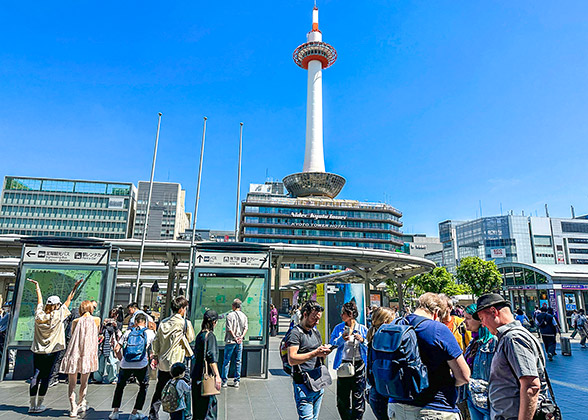
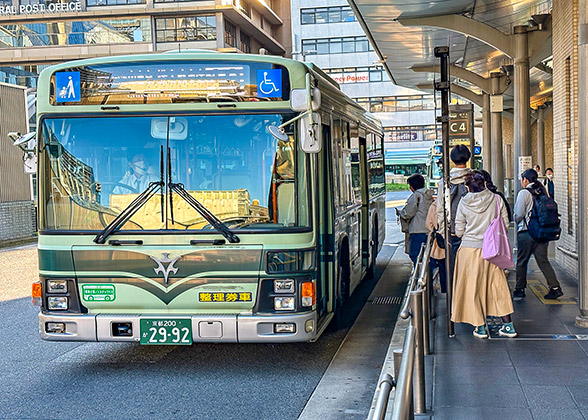
The Hachijo Gate on the south side is the transportation hub exit. If you arrive by Shinkansen and plan to transfer to Kintetsu for Nara, catch an airport bus, or are staying near the Hachijo Gate area, use this exit.
How do you find these two exits? It’s simple: just follow the English signs inside the station. If you head the wrong way, don’t panic. There is a Pedestrian Walkway on the second floor that lets you cross to the other side without going through the ticket gates, and it takes about 5 - 10 minutes on foot.
How to Transfer Within Kyoto Station?
Most lines at Kyoto Station can be transferred directly inside the station. Only Kintetsu requires you to exit and re-enter. The transfer points are mainly on the second floor, where you’ll find the JR transfer gates, the Shinkansen ticket gates, and the Kintetsu ticket gates. Below are transfer guides for some popular destinations. The platform numbers are generally information for reference only, as there may be temporary changes. It’s best to follow the electronic signs on sites.
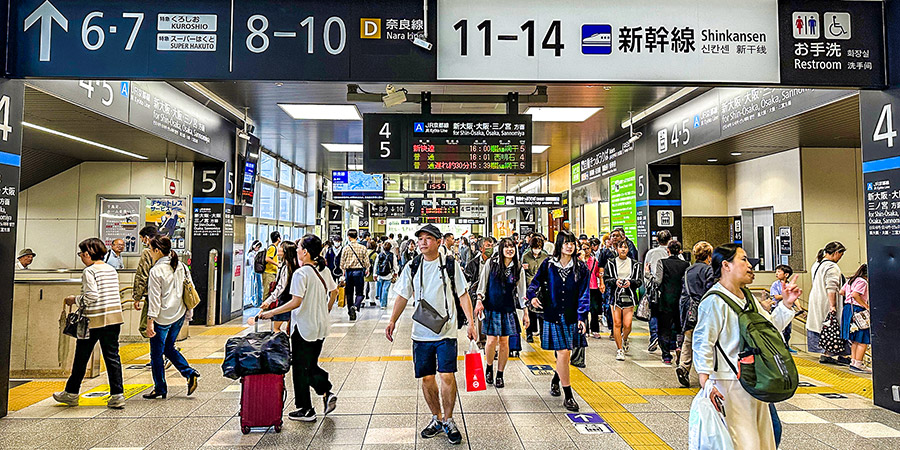
Clear Signs of Train Lines
|
For Fushimi Inari Taisha and Uji, take the JR Nara Line. Enter through the JR transfer gate on the second floor, then take the elevator down to the first floor, where platforms 8 to 10 are located.
Heading to Arashiyama? Hop on the JR Sagano Line. Go in through the JR transfer gate and make your way down to platforms 31 to 33 at the far end of the station. These platforms are quite a walk from the entrance, so give yourself a few extra minutes to get there.
Nara is reachable by both JR and Kintetsu, but Kintetsu is the better choice since Kintetsu Nara Station is closer to the Nara Park area. You’ll find the Kintetsu ticket gates on the second floor, right across from the Shinkansen Central Gate. If you have a JR Pass and want to use it for free, the JR Nara Line works too. Just enter through the JR transfer gate and head down to the platforms 8 to 10 on the first floor.
For Osaka, the JR Kyoto Line is your ride. Enter via the JR transfer gate, then go down to the platforms 4 and 5 on the first floor.
You have two options for getting to Kansai International Airport. The JR Limited Express Haruka is one: enter through the JR transfer gate and go down to platform 30 at the far end. The other choice is the airport bus, which departs from the Hachijo Gate on the south side of the first floor.
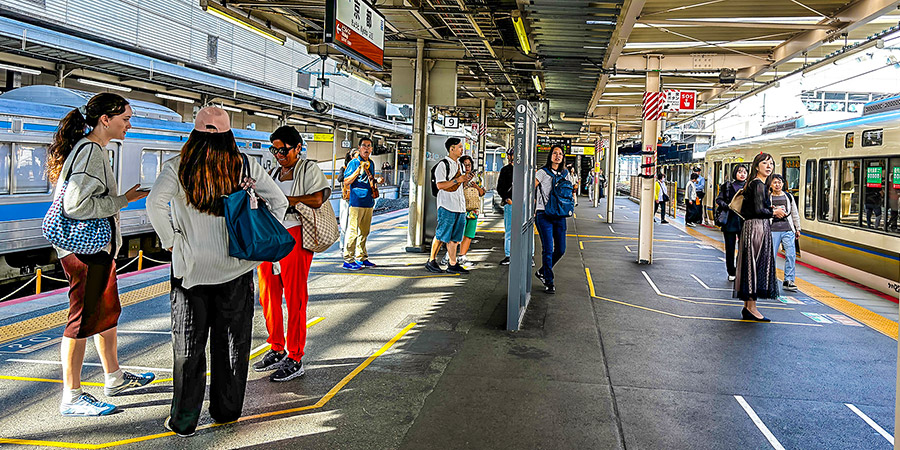
People Waiting on Train Platform
|
Luggage Storage
Luggage storage at Kyoto Station is very convenient, with two main options: coin-operated locker and staffed luggage counters.Coin-operated lockers are the most commonly used and widely available option, with several thousand across the station. They are mainly located on both sides of the north and south exits on the first floor, around the Pedestrian Walkway on the second floor, and in the Porta underground mall. They can hold anything from backpacks to 28-inch suitcases, costing 400 to 1000 yen (2.5 - 6.3 USD) per day. Payment can be made in cash or with ICOCA card. Storage is allowed for up to 3 days, after which additional fees apply. During peak seasons and weekends, lockers fill up quickly, so it’s best to arrive and store your luggage in the morning.
If your luggage is too large for the lockers, you can go to the Crosta Kyoto manned counter on the Basement first floor. From the Central Gate, take the escalator down and you’ll see it. There is no size limit, and it costs 1,000 yen (6.3 USD) per piece per day, with storage available for up to 30 days. However, this location is only open from 8:00 AM to 20:00 PM. If you don’t want to come back to pick up your luggage, you can also arrange a luggage delivery service here, which sends your bags directly to your hotel for about 2,500 yen (16 USD) per piece.
Tips
1. Kyoto Station itself has plenty of dining options. The 10th floor of Isetan is home to “Ramen Koji”, a collection of ramen shops all over Japan. The basement food floor offers specialty bento boxes and snacks. The restaurant areas in the station’s shopping mall stays open until 23:00 PM. You can find options for breakfast, lunch, and dinner all within a 5 to 10-minute walk.2. Finding a place to stay near Kyoto Station is also easy. Chain hotels are located right inside the station, and within a 5-minute walk outside you’ll find dozens of options at different price levels. You can check in without dragging your luggage around for long.
3. Between transfers, take some time to explore Kyoto Station itself. It is far more than just a train station, but a massive commercial complex with everything from department stores to snack streets, underground malls to electronics shops. It also features the iconic Grand Staircase, and the 11th floor of Isetan offers a Skyway with a free panoramic view of Kyoto.
4. Just outside the Central Gate, you’ll find a Tourist Information Center with English-speaking staff, where you can pick up travel maps and discount coupons.
5. If it is your first visit, allow 15 to 20 minutes to find your way around, so you don’t miss your train by taking a wrong turn.