

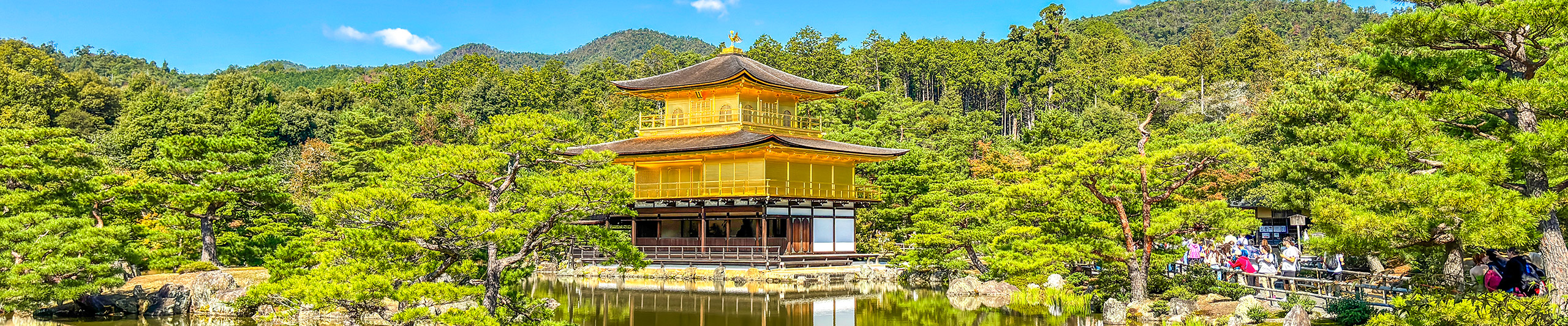

Kinkaku-ji Temple (Temple of the Golden Pavilion)
Kinkaku-ji sits in the foothills of Mount Kinugasa in northwest Kyoto. Its pavilion, entirely clad in gold leaf and perched beside the pond, stands as the most distinctive landmark of the ancient capital. This site, formally called Rokuon-ji, was first built in the 14th century as the private villa of Japan’s de facto supreme ruler. It was inscribed on the UNESCO World Heritage List in 1994 for its enduring cultural and historical significance.
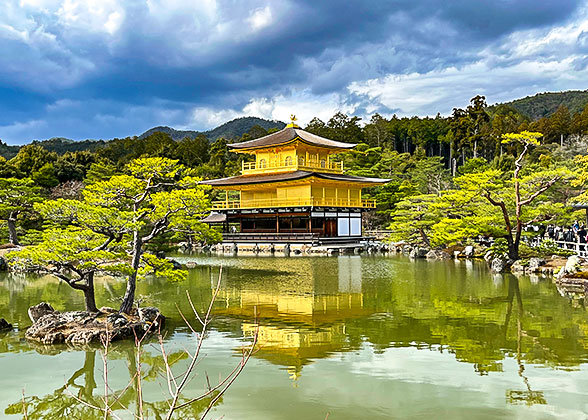
Kinkaku-ji Temple Photos ( 26
 ) )
|
Why is Kinkaku-ji an Irreplaceable Stop on Any Kyoto Itinerary?
After exploring a handful of Kyoto’s temples, you will find that most embody a minimalist Zen aesthetic with natural wood finishes, and their visual character can start to blend together after repeated visits. Kinkaku-ji, however, stands as a striking exception that completely defies this prevailing impression.1.Gold Leaf and Reflections: A Striking Visual Spectacle
2. Three Architectural Styles in One Pavilion: A Distinctly Japanese Design
Each level of this three-story pavilion embodies distinct architectural forms and aesthetic tastes from different social strata of ancient Japan. The ground floor follows the refined residential style of Japan’s ancient nobility, with natural wood framing and white plaster walls. Its graceful, flowing lines fully capture the elegant aesthetic of the aristocratic class. The middle floor adopts the stately residence style of the samurai warrior class. Defined by crisp, sturdy lines and a full gold-leaf exterior, it carries the imposing authority. The top floor is built to the formal design of a Zen Buddhist sanctuary. It enshrines Buddha relics inside and exudes a solemn, sacred atmosphere. The interior of the pavilion is not open to the public yet; you may only admire its architecture from the surrounding grounds.
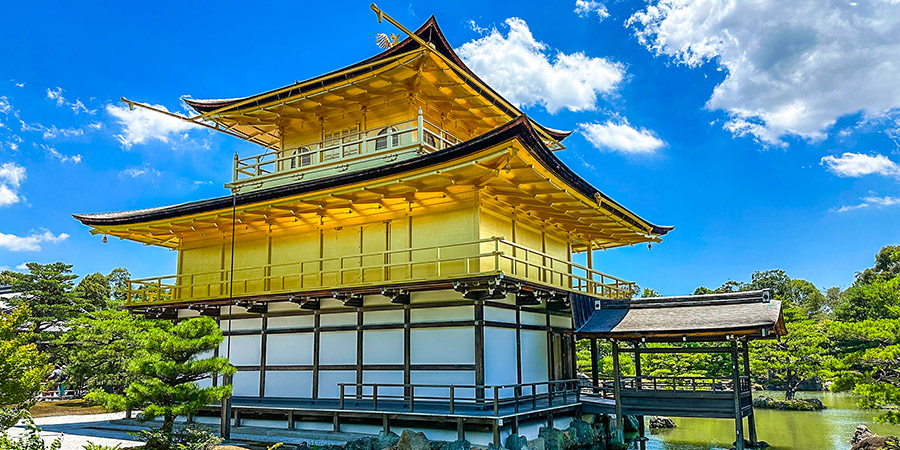
Graceful Golden Pavilion
|
3. Destruction and Rebirth: A Catastrophe Sparked by Beauty
Most visitors marvel at Kinkaku-ji’s gilded grandeur, yet few are aware that it once suffered total destruction, a tragedy driven by an obsession with its own beauty.In 1950, a young monk at the temple set fire to the centuries-old structure, burning it to the ground. He acted not out of malice or personal grievance, but from an all-consuming fixation on the temple’s beauty. To him, Kinkaku-ji represented an eternal, absolute and unattainable ideal of perfection, which only made his own life more insignificant and fragile by contrast. This extreme beauty ceased to be a source of visual pleasure; instead, it became a suffocating psychological burden that weighed on him day and night. Ultimately, he chose to destroy the pavilion by fire, believing it was the only way to break free from the shackles of this “eternal beauty”.
The pavilion was rebuilt to original specifications and completed in 1955, using just 2 kilograms (4.4 pounds) of thin gold leaf. The delicate coating weathered rapidly and began peeling within a decade. Then, a full restoration in 1986 resolved this permanently with 200,000 sheets of gold leaf weighing 20 kilograms (44 pounds) in total, creating a thicker, longer-lasting gilded finish that still shimmers over the water today.

4. Stunning in All Seasons
Kinkaku-ji is one of the few Kyoto attractions that remains consistently impressive throughout the year, rain or shine. No matter when you plan your trip, you will not leave disappointed.In spring, delicate pink and white cherry blossoms frame the gilded pavilion, softening its grandeur with gentle, refined charm. In summer, dense, deep-green foliage surrounds the temple, making the gold leaf glow more vivid against the rich green backdrop. In autumn, maple leaves turn the hillsides fiery red; the striking contrast of gold and crimson creates a deeply immersive atmosphere. After winter snowfall, pristine snow dusts the upturned eaves and pond banks. This crisp contrast of pure white against gilded gold is widely regarded as one of Kyoto’s most iconic seasonal sights. Even rainy days bring their own special charm. Veiled in light rain and soft mist, Kinkaku-ji takes on a quiet, dreamlike air, offering visitors a uniquely peaceful, intimate view they won’t find on clear days.
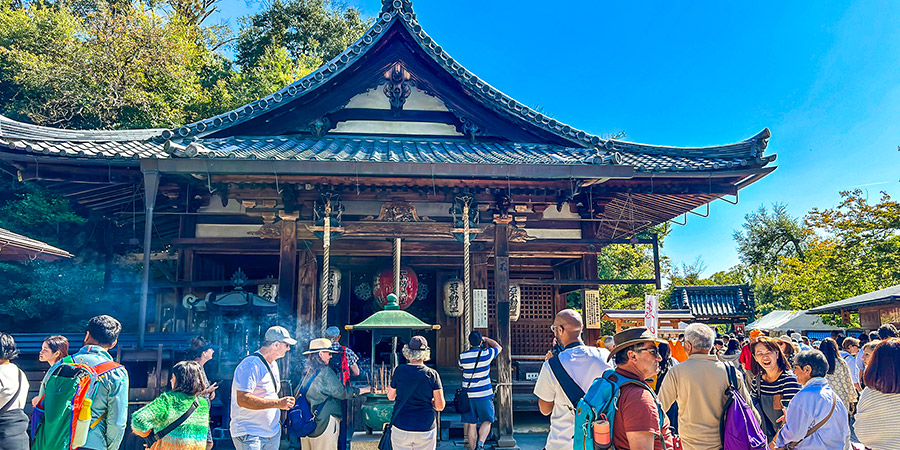
Visitors are Making Praying
|
Hidden Highlights You Won’t Want to Miss
The Gilded Phoenix on the Roof Ridge
Don’t miss the gilded phoenix perched atop the temple’s roof ridge. The statue stands proudly with its head held high, its layered tail feathers fanning out gracefully. Bathed in sunlight, its surface shimmers with a delicate, warm luster.In Japanese Buddhist culture, the phoenix symbolizes rebirth and peace. As a sacred mythical bird bearing auspicious meaning, it is the crowning decorative detail of the entire structure. When capturing reflections in the pond, pay extra attention to the water: it will mirror an inverted image of the phoenix. This perfectly symmetrical top-to-bottom composition is a neat little design trick that you can only spot from this exact vantage point.
Stroll the Circular Pond Path
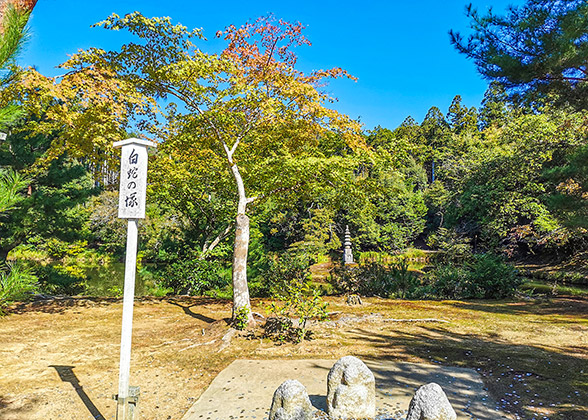
Don’t rush off after taking your classic front-view photo. A leisurely walk along the circular path around the pond will make your visit far more rewarding. The path follows a one-way loop, so you will not need to retrace your steps. Walking at a relaxed pace, the full circuit takes about 20 minutes. As you move along, Kinkaku-ji peeks in and out through trees, rocks, and greenery.Along the route, you’ll pass two notable historic spots. The first is Rikushu-no-matsu (Land Boat Pine), a tree over 600 years old planted by the shogun who first built this villa. It has been trimmed into the shape of a sailing ship with its sails spread wide, and it is one of the few surviving historic features from the shogunate era. The second are Tsuru-jima (Crane Island) and Kame-jima (Turtle Island), two small islets in the pond that are a classic touch of traditional Japanese garden design - in Japanese culture, both cranes and turtles stand for long life.
Omikuji Fortune Reading
Near Fudodo Hall inside the temple, you can try a classic Japanese omikuji fortune reading. This traditional ritual has been practiced for centuries. After paying the small fee, shake the wooden cylinder filled with numbered bamboo sticks until one stick slides out. Open the drawer marked with the same number on the stand beside it, and you will find your printed paper fortune slip inside. The slip outlines your overall luck for the coming period, with practical guidance on health, relationships, travel, and daily decisions. If you draw an unfavorable result, you can tie the slip to the nearby designated ropes to leave misfortune behind; favorable fortunes are often kept as a small souvenir.Your Entry Ticket: A Mini Lucky Paper Charm
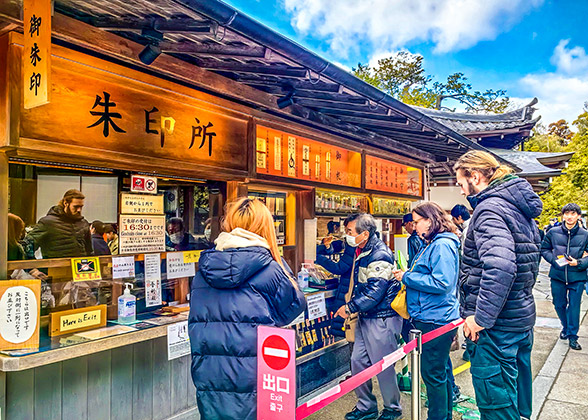
Don’t throw away your entry ticket, it’s a small surprise most visitors miss. This is not an ordinary printed ticket, but is designed in the style of a traditional Japanese temple blessing charm, printed on delicate washi paper and stamped with the temple’s official seal. Lightweight with a simple, traditional feel, it makes a truly unique small travel keepsake.
|
|
|
Tickets & Hours
Admission: 500 yen (3 US dollars) for visitors aged 16 and over. Guests under 16 pay a discounted 300 yen (1.8 US dollars).Opening Hours: 9:00 - 17:00 daily, last admission at 16:30
How to Get There?
Take bus routes 205 and 59, get off at Kinkakuji-michi Bus Stop, and the temple entrance is a 5-minute walk away.Nearby Attractions
Ryoan-ji Temple
It is roughly a 15-minute walk west from Kinkaku-ji. As a UNESCO World Heritage Site, its star attraction is the Hojo Rock Garden, an iconic masterpiece of Japanese dry rock garden design. Fifteen stones sit scattered across neatly raked white gravel, and no matter where you stand, you can never view all 15 rocks at the same time. This design embodies a core Zen teaching: there is no such thing as absolute perfection in the world.Ninna-ji Temple
Continue walking west from Ryoan-ji for 10 minutes and you will reach Ninna-ji, another UNESCO World Heritage Site. It once served as a private temple for Japan’s imperial family, and retains a complete complex of palace-style architecture along with a stately ancient five-story pagoda. The Omuro cherry trees within the temple are Kyoto’s latest-blooming cherry variety, coming into full bloom in mid-to-late April - it is a wonderful off-the-beaten spot to enjoy cherry blossoms in spring.You May Like
-
 7 Days Japan Mini Group Tour to Tokyo - Mt. Fuji - Kyoto - Nara - Osaka from USD2155
 -
 8 Days Mini Group Tour to Tokyo - Hakone & Mt. Fuji - Kyoto - Nara - Osaka... from USD2771
 -
 10 Days Private Tour in Japan with Kyoto Highlights & Nakasendo Way Hike from USD2859
 -
 13 Days Private Tour of Tokyo - Kamakura - Mt. Fuji - Kyoto - Nara - Hiroshima - Osaka from USD4443