
Ruriko-in Temple
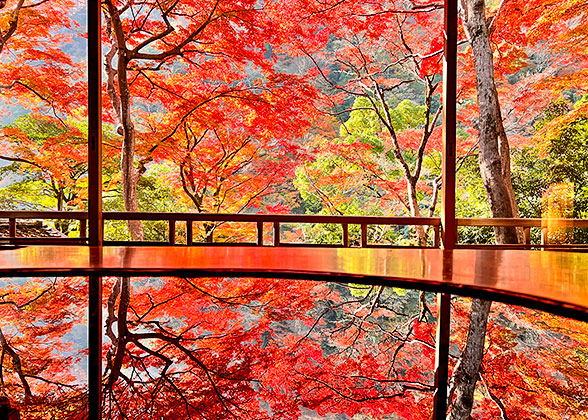
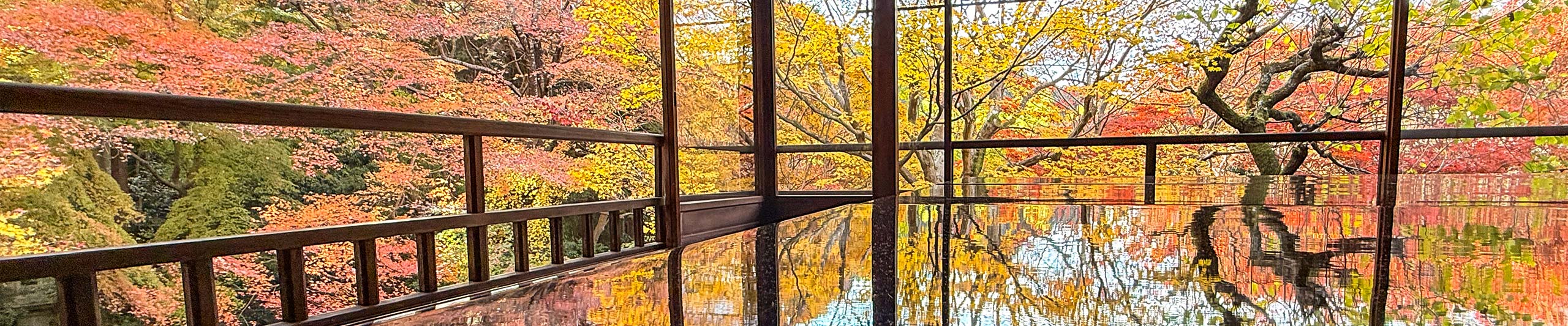
Ruriko-in Temple is one of Kyoto’s most famous spots for viewing autumn leaves, and it is renowned for one iconic scene: on the second floor of the Study Hall, a black-lacquered low table sits on the tatami by the window, and the full window of red leaves reflects directly onto its mirror-like surface; the floor is coated in the same black lacquer, so the reflection extends all the way to the edge of the tatami. Sit down and watch the wind stir the maple leaves, while their reflection shimmers on the table, until it becomes hard to tell which is real and which is reflection. Many tourists travel to the foot of Mount Hiei in northern Kyoto just to see this sight.
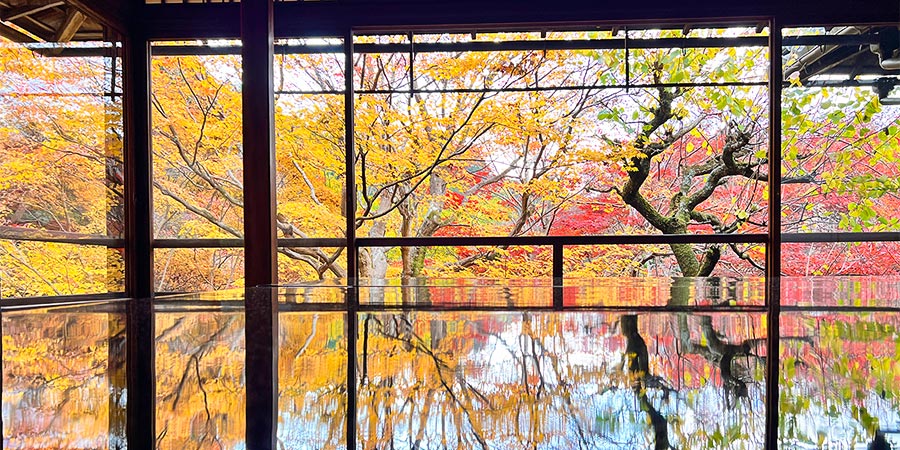
Red Foliage Reflection
|
Beyond the iconic leaf reflection, the rest of the garden is equally refined and beautiful. After entering, walk along the approach path to see moss-covered ground, a gentle stream running through, and koi swimming leisurely in the water. On the first floor of the Study Hall, there is a tea room where you can order a bowl of matcha with Japanese sweets, sit down, and savor it slowly while enjoying the garden view outside the window.
|
|
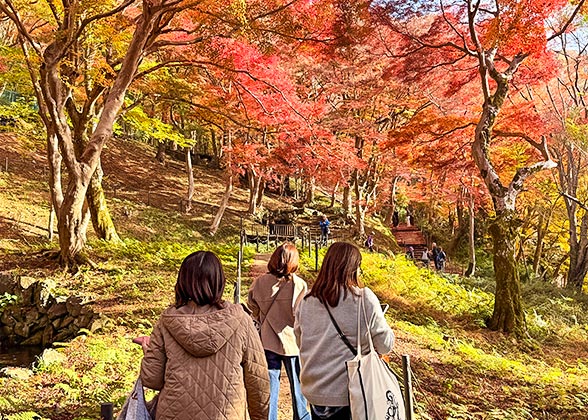
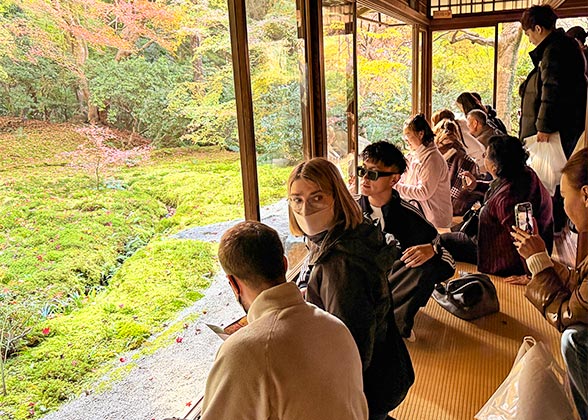
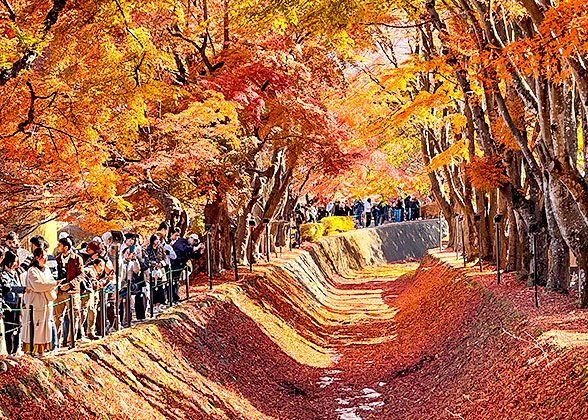
If you are coming specially for the stunning red maple reflection, timing is essential. The 2026 Autumn Special Opening runs from October 1 to December 13, open daily from 10:00 AM to 5:00 PM, with last entry at 4:30 PM. The leaves are at their absolute best during the three weeks from November 13 to December 6, when over a hundred varieties of maple trees in the garden display layers of deep crimson, orange-red, and golden yellow, as vivid as a rich paint palette. This is also the busiest period, however, and waiting in line for one to two hours to get into the study hall and photograph the famous mirror-like reflection is quite common.
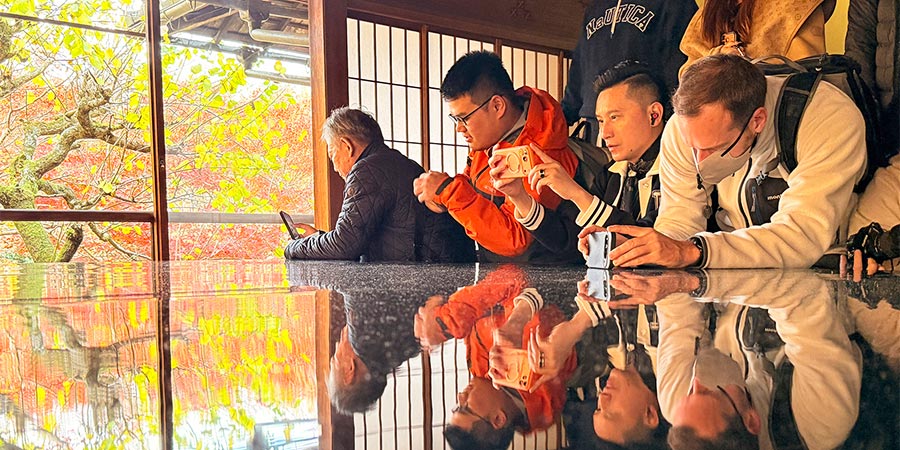
Crowds Taking Photos
|
One important detail is that the period from November 13 to December 6 operates on a fully reservation-only system. About one month in advance, the official website opens a reservation portal, where you can fill out an online form and enter a lottery drawing. A confirmation email means the booking is secured, and submitting a few times raises the odds. If no reply arrives after several attempts, the slots are full. A second route is to mail a postcard to the temple directly, which should go out around early August since applications generally close near the end of that month. That option, however, might be not feasible for overseas visitors to arrange.

If your travel dates fall between October 1 and November 12, or December 7 and December 13, no reservation is needed. You can simply go to the temple and wait in line, and crowds will be smaller. The only drawback is that the leaves may not be at their most vivid, or they may already be turning brown and withered.
Ruriko-in also opens once in spring, generally between April 15 and May 31. The spring scenery is quite different from autumn. In the same room, at the same black-lacquered table, the view outside the window changes to fresh, tender green leaves, their reflection layering the table in shades of green. The day after rain is the best time to visit, as the leaves hold droplets of water and their colors appear translucent. The temple occasionally opens in summer as well, when visitors can view only the deep green tones of the moss garden, though the dates are not fixed. Fortunately, no reservation is required for either the spring or summer special openings.
How to Get to Ruriko-in Temple?
Take the Eizan Electric Railway from Demachiyanagi Station in Kyoto, making sure to board the train heading toward Yase-Hieizanguchi. The full ride takes about 40 minutes to reach the Yase-Hieizanguchi Station, and from there it is a 15 to 20-minute walk to Ruriko-in Temple.Admission
Admission is 2,000 yen per person (12.6 USD). Payment is made in cash on site upon presenting your reservation record, as credit cards and mobile payments are not accepted. It is recommended to exchange small bills beforehand.Tips
1. It is recommended to set aside 1 to 1.5 hours for the full visit, which gives you plenty of time.2. Ruriko-in Temple is not far from Kifune Shrine, Kurama-dere Temple, and Mount Hiei, so you can easily combine them into a one-day trip.
3. For the best viewing experience, try to arrive and queue before opening time. Entering early means fewer visitors and a quieter garden, and you won’t have to wait long to view and take photos at the black table on the second floor.
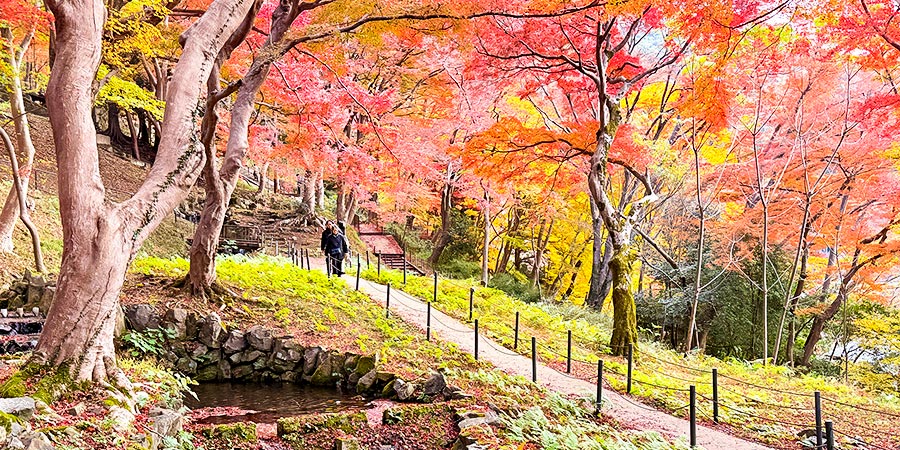
Quieter Garden in Ruriko-in Temple
|
4. For the best photos, visit in the morning if possible. The light is softer at this time, and the autumn leaves appear more natural and pleasing in photos. Additionally, standing behind the table is not allowed, so you won’t have to worry about anyone blocking your shot from the front.
5. Upon entering, staff members will proactively offer to take photos of visitors for free, and you are welcome to accept their help.
6. The temperature in the mountains is 3 to 5℃ (37 - 41℉) lower than in the city, and mornings and evenings can be cool in spring and autumn, so bring an extra layer.