JP01: 6 Days Private Tour of Tokyo - Hakone - Mt. Fuji - Kyoto - Osaka
Tour Type: Customizable tour, with a private English-speaking guide
Transportation: Private car with driver, plus bullet train rides
Accommodation: Handpicked 4 or 5 stars hotels
Meals: 5 breakfasts and 1 Omakase sushi lunch
Smooth and efficient travel in a chauffeur-driven private car, maximizing your time for sightseeing.
2
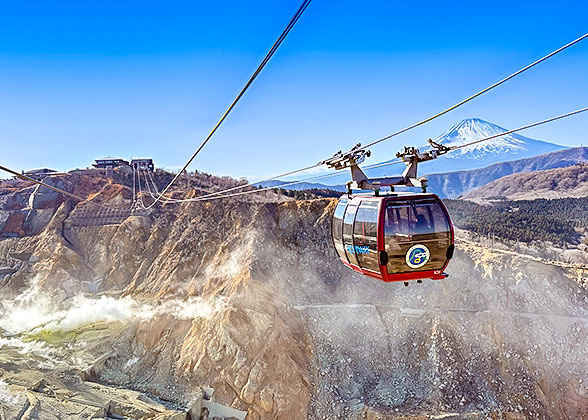
Enjoy the ropeway and cruise in Hakone while admiring the enchanting Mount Fuji.
3
Experience a premium taste of authentic Omakase Sushi prepared by a renowned chef in Tokyo.
4
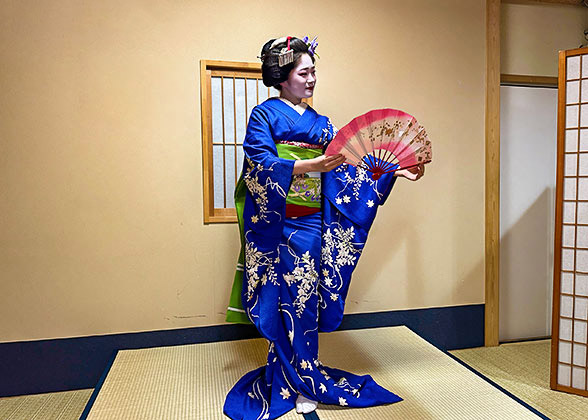
Immerse yourself in a stunning geisha show featuring Japanese traditional culture up close in Kyoto.
Compare and Book with Confidence: A low $200 deposit and free cancellation more than 40 days before departure.
This trip can be tailored to match your dates and interests!
Itinerary
Expand All
Day 1: Tokyo Airport Pick-up
Inclusions: Tokyo Narita Airport or Haneda Airport pickup by private car, accommodation in Tokyo
Itinerary Details:
Welcome to Japan! Upon your arrival at Tokyo’s airport, your trip begins with a warm greeting from your private driver, followed by a comfortable, air-conditioned car transfer instead of squeezing into the busy and complicated subway system used by budget travelers. After a 1-hour drive from Narita Airport or a 30-minute drive from Haneda Airport, you’ll arrive at a luxury hotel offering excellent value and top-notch services in the prosperous Ginza or Shinjuku business districts - each selected by our local experts after multiple visits. The rest of the day is up to you.
► Explore Tokyo at Your Leisure Japan is recognized as one of the safest countries in the world, allowing you to stroll around without worrying about your safety until dark. Our hand-picked 4-star hotel in Shinjuku is just a 10-minute walk from the lively Kabukicho, home to many shops, restaurants, clubs, and the largest red-light district in Asia. After experiencing Tokyo’s authentic nightlife, consider finding an izakaya in the narrow alleys of Golden Street or Omoide Yokocho to sip a drink and sample local snacks, such as skewers and fried chicken. This is the perfect ending to your first night in Japan. If you choose the 5-star hotel in Ginza, known for its concentration of high-end shopping malls and international brands, you can seek out a Michelin restaurant where the authentic Kaiseki cuisine will exceed your expectations of exquisite Japanese food.
► See If This Trip Suits You Committed to creating a valuable itinerary for first-timers with limited time to explore Japan, our team believes that an expensive trip without genuine enjoyment would waste your money. Therefore, after careful travel planning, we’ll spend your funds wisely. In addition to private cars and upscale hotels, we have arranged special omakase sushi prepared by renowned chefs, a rickshaw ride, and geisha performances to ensure that every penny spent is worthwhile. We maintain the industry’s lowest gross profit of 6%, only 1/10 of other sellers’, allowing you to enjoy a luxurious experience at the most cost-effective price. Significantly, any content in our fully customizable itinerary, such as visits, transportation methods, and hotels, can be upgraded or downgraded according to your needs.
Accommodation: Hotel Century Southern Tower (4 stars) or Hilton Tokyo (5 stars)
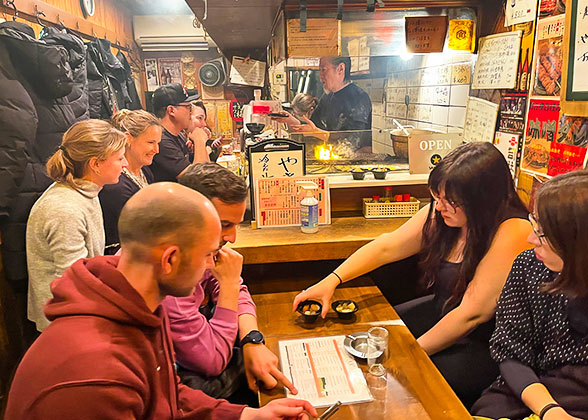
Omoide Yokocho
Authentic Japanese Food
Day 2: Tokyo Highlights
Scheduled Attractions: Meiji Jingu Shrine, Shibuya Crossing, Hachiko Memorial Statue, Senso-ji Temple with Kaminarimon Gate & Nakamise-dori Street, a distant view of Tokyo Skytree, Roppongi Hills 52nd-floor observation deck
Inclusions: Hotel breakfast, omakase sushi lunch, morning pickup & evening return escort, full-day guide & private transfer, entrance fees to all scheduled attractions, accommodation in Tokyo
Itinerary Details:
View More Videos
Sanja Festival at Senso-ji Temple
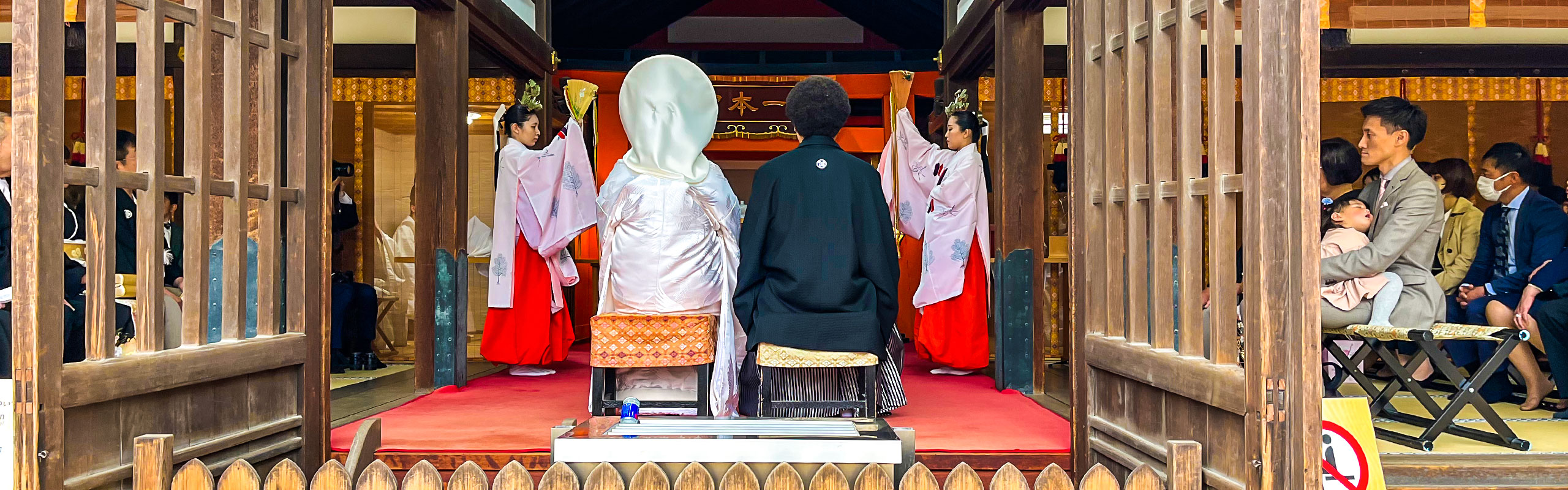
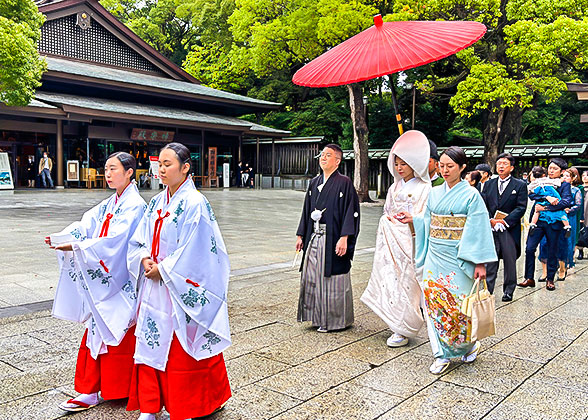
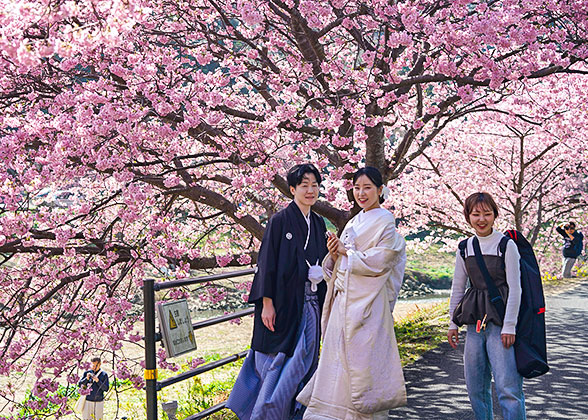
After enjoying a hearty breakfast, follow your guide on a private car ride to the Meiji Jingu Shrine, which honors the revered spirits of Emperor Meiji (1852 - 1912) and his wife, Empress Shoken. Nestled within a sacred forest of an astonishing 100,000 trees artificially planted over a century ago, the shrine offers a serene atmosphere amid the bustling city. As we walk through the exuberant pine, oak, and camphor trees toward the main hall, you’ll see two ‘couple camphor’ trees named after the emperor and empress, attracting a steady flow of worshippers who pray for a good marriage. Moreover, you may witness a captivating Shinto wedding ceremony showcasing graceful Japanese rituals.
Then, leave the tranquility behind and plunge into the vibrant chaos of Shibuya Crossing, famed as the world’s busiest, with its spectacular pedestrian flow of up to 3,000 people crossing the road simultaneously. The guide will show you the Hachiko Memorial Statue nearby, which pays tribute to a loyal Akita dog whose touching story of waiting for his owner for a decade was adapted into several famous movies. With such deep love for dogs, it is easy to see why Japan has become the world’s most renowned dog-raising country, with one in six people owning a dog.
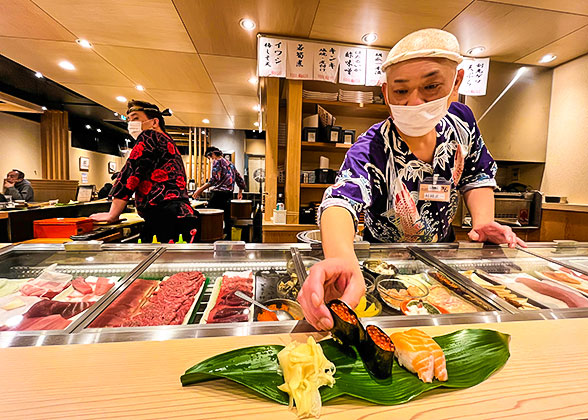
★ Premium Treat: Omakase Sushi Lunch
Around noon, we’ll take a lunch break at an Instagram-trending restaurant to savor omakase sushi (or teppanyaki), paired with a cup of sake. A local celebrity chef will transform fresh, high-quality seafood into exquisite sushi right before your eyes. The dazzling knife skills displayed in his magical hands serve not only to achieve the final presentation but also enhance the taste of the fish fillet. The chef must judge and decide within a few seconds which knife techniques to employ, ensuring they do not compromise the ingredients’ texture. What an eye-opening experience!
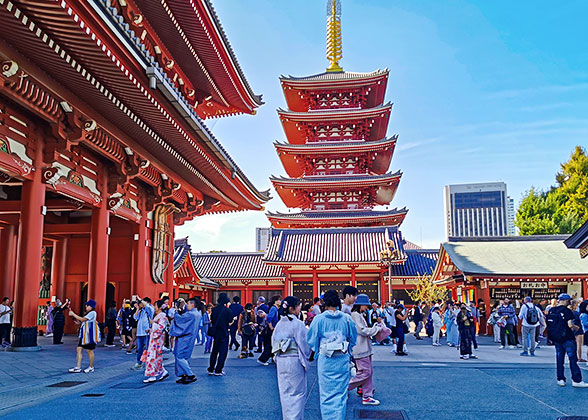
After lunch, let’s proceed to the traditional entertainment district of Asakusa, where you’ll first pass through the towering, red Kaminarimon Gate that symbolizes the gateway to the spiritual realm, and enjoy a special treat of a 30-minute rickshaw ride (subject to availability). A rickshaw man clad in traditional attire will take you through several inviting backstreets surrounding the bustling Nakamise-dori Street, filled with Showa-era nostalgia, during which you can gravitate toward the majestic Tokyo Skytree in the distance. Then, we’ll reach the Senso-ji Temple. At the rear of the Hozomon Gate facing the main hall, you’ll be amazed by two enormous straw sandals, each 4.5 meters (14.7 feet) long and weighing 500 kilograms (1,102 pounds). Made for the Nioh who guard both sides, their impressive size reflects the vast body and boundless power of the Nioh guardians, deterring and exorcising evil spirits. When the straw sandals need to be changed every ten years, elementary school students weave the edge straps and tie blessing paper signs, symbolizing that ‘the new generation guards the tradition’.
As the afternoon sun casts golden hues across the sky, we will head to the hidden gem, Roppongi Hills. While it may not be the tallest skyscraper, it is the perfect spot to capture both Tokyo Tower and Tokyo Skytree in a single shot. Plus, you won’t have to wait in long lines like at Tokyo Skytree. From the 52nd-floor observation deck, you can admire the stunning cityscape, including the Rainbow Bridge, Odaiba, and the shimmering expanse of Tokyo Bay. There’s also an open-air deck two floors higher. In addition to enjoying the sunset and nighttime views, you can explore the Mori Arts Center on the 53rd floor.
Finally, your guide and the driver will escort you back to your hotel, Shinjuku Station, or Kabukicho if you like.
Accommodation: Hotel Century Southern Tower (4 stars) or Hilton Tokyo (5 stars)
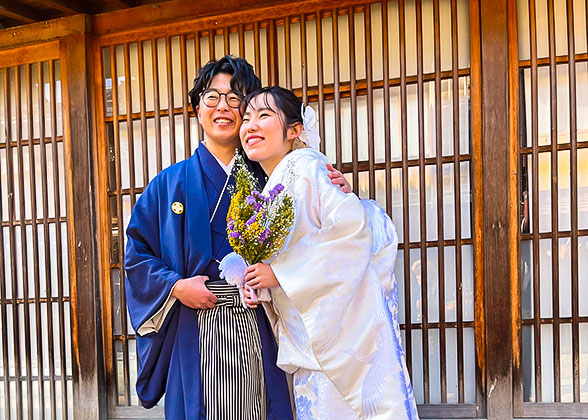
Traditional Wedding at Meiji Jingu Shrine
Senso-ji Temple
Day 3: Tokyo - Hakone & Mt. Fuji - Odawara
Scheduled Attractions: Hakone Owakudani Valley, Owakudani Nature Study Path, a distant view of Mt. Fuji, Lake Ashi cruise passing by Hakone Shrine Peace Torii
Inclusions: Hotel breakfast, morning pickup & evening return escort, full-day guide, entrance fees to all scheduled attractions, tasting of Hakone black eggs, all-inclusive Hakone transport (including Tokyo-to-Hakone express train, Hakone Mountain Railway & Ropeway, and Lake Ashi cruise ship), accommodation in Odawara
Itinerary Details:
This morning, your guide will pick you up at the hotel and accompany you on a 1.5-hour express train to Odawara, where we’ll board a one-hour Hakone Tozan Train that travels up the mountain, allowing us to enjoy the train’s zigzagging as it changes direction on steep slopes. Next, continue our journey on a retro Hakone Tozan Cable Car rumbling to Sounzan Station, and the subsequent Hakone Ropeway will take us to the first highlight of our Hakone tour: Owakudani Valley. While capturing a panoramic view of the magnificent volcanic valley, don’t miss out on another rare experience.
★ Exploration along the Owakudani Nature Study Path
Join the base security guard for a unique 40-minute adventure to explore the volcanic area more intimately. As you wander down the path, with volcanic scents in the air, you can observe the rising plumes and distinctive landscape up close. On a clear day, you may see the Hakone Mountains and Mount Fuji from the observation deck. At the hot spring ponds, you can watch staff making the famous Owakudani black eggs and have a taste; eating one is said to prolong your life by seven years. ► Note: Since the number of participants daily is quite limited, please inform us if you’re interested so we can make an appointment as early as possible. Due to the unique environment, the activity might be canceled if the air quality exceeds the volcanic gas standard or if adverse weather conditions such as rain, strong winds, or fog occur.
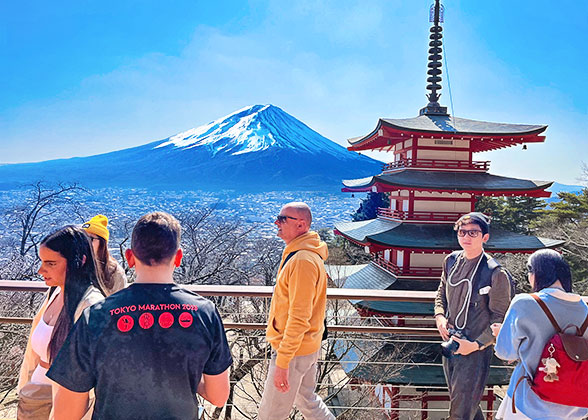
Next, we’ll continue on the Hakone Ropeway for 30 minutes, during which you can enjoy sweeping vistas of Lake Ashi and Mt. Fuji, particularly the breathtaking views of Mt. Fuji’s elegant snow-capped summit. Due to the frequent cloudy and rainy weather, Mt. Fuji is often shrouded in a playful veil of clouds for nearly two-thirds of the year, while it is most visible during winter when there are more sunny days. May you be blessed with clear skies to appreciate the majestic mountain in all its glory.
After arriving at Togendai Port, let’s embark on a roughly 30-minute Lake Ashi cruise aboard a unique ship with a striking exterior resembling an ancient pirate ship. Standing at the bow as you glide over the crystal-clear waters, you’ll admire the enchanting reflection of Mt. Fuji in the lake, complemented by the surrounding scenery. Zoom in and take captivating pictures as your gaze is drawn to a grand red torii that seems to float on the lake’s surface - the Peace Torii of Hakone Shrine. Finally, your guide will escort you to the hotel in Odawara in about one hour by local bus.
► For Your Information If your schedule permits, consider adding one day here to stay in an onsen ryokan in Hakone Yumoto and visit more of Hakone’s highlighted attractions the next day. Whether you want to relax at Gora Park, admire Lake Ashi and Mt. Fuji once more at the Onshi Hakone Park, or explore various art museums such as the Hakone Open-Air Museum, Venetian Glass Museum, and Narukawa Art Museum, we can customize a personalized itinerary for you.
Accommodation: Tenseien Odawara Station Annex (4 stars)
Mt. Fuji
Hakone Ropeway
Day 4: Odawara - Kyoto
Scheduled Attractions: East Temple, Pure Water Temple, Sannenzaka and Ninenzaka, Gion area with a geisha show
Inclusions: Hotel breakfast, Odawara-to-Kyoto bullet train tickets, Kyoto guide & private transfer, entrance fees to all scheduled attractions, geisha show VIP seats, accommodation in Kyoto
Itinerary Details:
Today, you’ll first take the train from Odawara to Kyoto by yourself. However, don’t worry; your hotel is just a one-minute walk from Odawara Station, and we will purchase you tickets with reserved seats in advance. After a 2- to 3-hour train ride to Kyoto, you’ll meet the local guide at the station and be greeted by the Kyoto Tower upon your exit.
Check into the hotel, and the guide will escort you to the East Temple, an important Buddhist site associated with the Japanese monk Kukai. As an envoy to the Tang Dynasty, he systematically studied esoteric Buddhist classics for two years (804-806 AD) at Qinglong Temple in Chang’an (now Xi’an), China. After Kukai returned to Japan with numerous Buddhist scriptures, instruments, and texts, he established Japanese Shingon Buddhism at the East Temple, rapidly becoming one of the mainstream sects of Japanese Buddhism. Additionally, he significantly influenced the development of Japanese religion, literature, calligraphy, medicine, and tea culture.
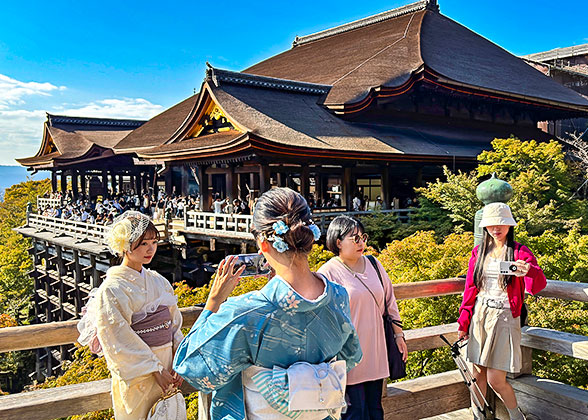
Let’s continue to Pure Water Temple, where you’ll marvel at its Buddhist architecture and climb onto the massive wooden Kiyomizu Stage, a platform extending from the main hall and clinging to the cliffside, constructed without a single nail. An old Japanese saying goes, ‘jump off Kiyomizu Stage’, stemming from the belief that daring to jump from the stage would grant one’s wishes. Shockingly, hundreds of people did it! The government later enacted laws to forbid this suicidal act, and now the phrase metaphorically means ‘make up your mind to do something’. You can poke your head out from the handrail to appreciate its height and enjoy a panoramic view of Kyoto. If you want to capture distinctive Japanese-style photos with the ancient Pure Water Temple, consider renting a kimono to create unique memories in Kyoto.
Pure Water Temple, Kyoto
Cherry Blossom in Japan
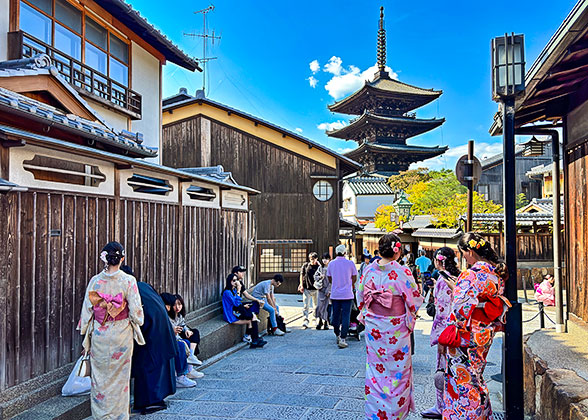
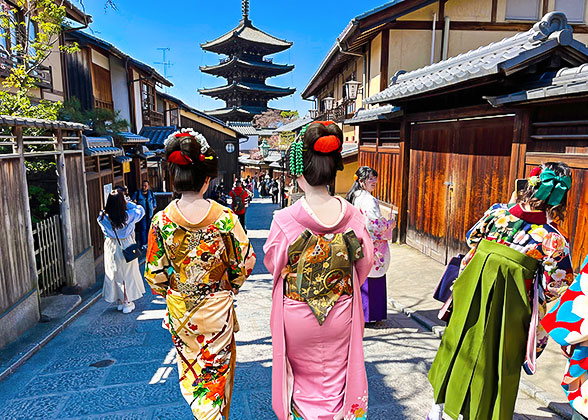
Out of the temple, our Gion walking tour begins. Let’s stroll along the lively ramped pedestrian streets of Sannenzaka and Ninenzaka, admiring the traditional Japanese architecture, teahouses, and souvenir stalls that flank the paths. Take photos in front of the five-story Yasaka Pagoda before we continue to Maruyama Park, renowned for its 200-year-old weeping cherry tree with stunning blossoms in spring. Visit the Yasaka Shrine, whose doorsteps finally lead us to Gion, Kyoto’s geisha district, where you might have a chance to see kimono-clad geishas walking past.
★ Enjoy a Geisha Show at Gion Corner Theater
A tour to Japan is not complete without watching a traditional geisha performance. Therefore, this itinerary especially includes an enriching, up-close experience with premium VIP seats at a renowned local theater, rather than informal performances in small teahouses. Dressed in kimonos, adorned with delicate oshiroi makeup and exhibiting graceful manners, these geishas specialize in various artistic performances, offering a sumptuous feast of several authentic traditional Japanese arts all at once, including Kyoto-style dance, Japanese court dance, Koto instrument playing, flower arranging, tea ceremony, and puppet show.
► Recommendation for Dinner (at your own expense) After the show, you can walk 10 minutes south from the theater to a Michelin one-star restaurant, Tempura Endo Yasaka (North). Its dishes primarily consist of various tempura made from seasonal vegetables, seafood, and freshwater fish, so it’s advisable to try extraordinary selections from the seasonal menu. After dinner, you can stroll through South Gionmachi to admire the night view before taking a 10-minute taxi back to the hotel. Average Cost per Person: USD 70 Address: 566, Komatsucho, Higashiyama Ward, Kyoto
Accommodation: Mitsui Garden Hotel Kyoto Station (4 stars) or The Thousand Kyoto (5 stars)
Inclusions: Hotel breakfast, morning pickup & evening return escort, full-day guide & private transfer, entrance fees to all scheduled attractions, accommodation in Osaka
Itinerary Details:
View More Videos
Hozenji Temple, Osaka
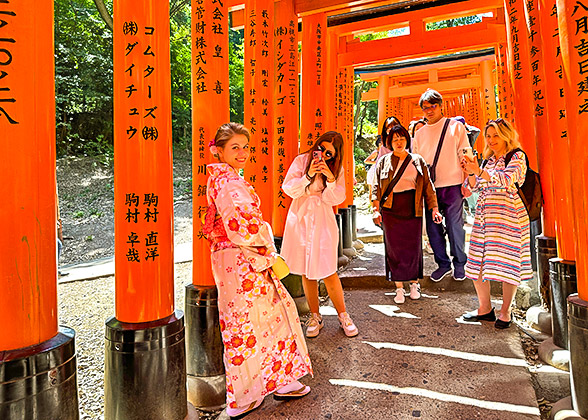
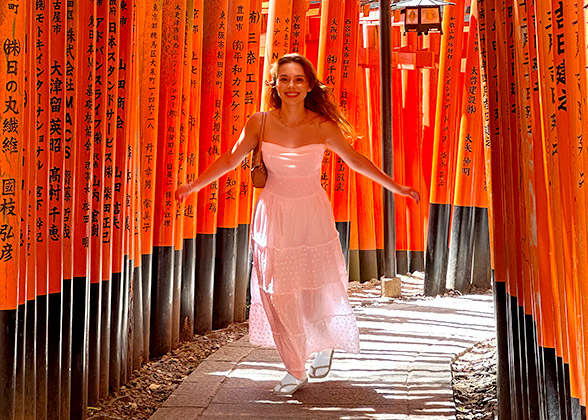
After breakfast, your guide and driver will accompany you to appreciate Kyoto’s exceptional World Heritage Sites. The first destination is the Fushimi Inari Shrine, which features the iconic Senbon Torii (Thousand Torii Gates), a long row of thousands of vermilion torii gates stretching up to the mountaintop. Why are there so many torii gates? This relates to the Mitsukoshi Department Store. Around 1727, its second-generation successor brought his family to worship at an Inari Shrine, and their small kimono shop gradually evolved into the largest department store group in Japan. Such success sparked a trend of constructing torii gates at Inari Shrines across Japan to pray for business prosperity and a successful life. As the headquarters of all Inari Shrines in Japan, Fushimi Inari Shrine thus boasts a breathtaking scene with thousands of torii gates.
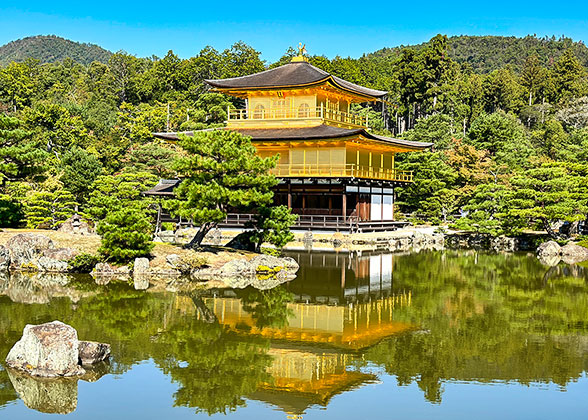
Next, proceed to the Golden Pavilion, which will impress you with its resplendent exterior and graceful reflection in the Mirror Pond. Since the Golden Pavilion has been rebuilt and restored twice, you might wonder how much gold foil was required to revitalize its glitter. Initially, only 2 kilograms of gold foil were used during the 1955 reconstruction, but it began to peel off after years of exposure to sunlight and rain due to its thinness; consequently, ten times that amount, or 200,000 sheets of gold foil, was used in the 1986 restoration! Afterward, continue following your guide to visit Nijo Castle, the residence of Tokugawa Ieyasu, who initiated the Edo Period (1603-1868). Cross the moat, pass through the city wall, and enjoy the gardens and architecture dating back to the early 17th century. From the well-preserved palaces, you can sense the supreme power of the Tokugawa shogunate in Japan.
Late in the afternoon, your guide will escort you to Osaka in about 1.5 hours by private car. After a short break at the hotel, let’s explore Osaka’s most popular business and food districts: Hozenji Yokocho, Shinsaibashi, and Dotonbori. As we stroll through the bustling crowds beneath the dazzling, flashing neon shop signs on both sides of the canal, with the enticing smell of street snacks like takoyaki and sushi filling the air, you’ll unknowingly indulge in an endless carnival at Dotonbori’s night. In the end, your guide will escort you back to the hotel, or you can keep enjoying the nightlife here and return to the hotel on your own, just a less than 10-minute walk away.
► Where to Feast Yourself a Satisfying Dinner (at your own expense) If you prefer fine dining, which may cost USD 100-200 per person, the Michelin three-star restaurant Taian near Shinsaibashi specializes in charcoal grilling, and Guenpin Houzenji Souhonten in Hozenji Yokocho offers safe and rich puffer fish sashimi. For more affordable bites, you can try Kani Doraku Dotonbori Main Branch, marked by a giant crab sign, which offers various crab dishes, Yakiniku Rikimaru Nanba Dotonbori, a cost-effective barbecue buffet, Kobe Beef Steak Ken (Teppanyaki), or Kushikatsu Daruma famed for Kansai-style fried skewers, all of which will entertain you while costing only USD 30-60 per person.
Accommodation: Namba Oriental Hotel (4 stars) or Swissotel Nankai Osaka (5 stars)
Fushimi Inari Shrine
Temple of the Golden Pavilion
Day 6: Osaka Airport See-off
Inclusions: Hotel breakfast, Osaka Kansai International Airport see-off by private car
Itinerary Details:
On the last day, you’ll be accompanied on a private car ride to Osaka Kansai International Airport based on your flight schedule. We hope you’ve enjoyed the journey and a nice trip home! If you wish to continue visiting Nara, Hiroshima, or Nagoya, or travel to neighboring countries such as China, South Korea, and Mongolia, please contact us anytime to customize an extended itinerary!
► Suggested Osaka Extension for Your Free Time: If your departure flight is late afternoon or evening, consider exploring Osaka’s famous attractions on your own or contacting us to add a guided tour service. The Kuromon Market near your hotel offers a glimpse into the vitality of the Japanese morning market, where fresh sea catches are soon made into delicacies, providing a unique tasting experience. Osaka Castle Park is also worth visiting, with the striking black and white Osaka Castle at its center, surrounded by the inner moat and lush gardens. Additionally, you can ask for a stop at Sumiyoshi Grand Shrine on the way to the airport, appreciating a distinctive style of shrine architecture and its symbolic red-hued bridge.
Expand All
This trip can be tailored to match your dates and interests!
Destinations
4 Stars Hotel
5 Stars Hotel
Tokyo
Hotel Century Southern Tower
Hilton Tokyo
Hakone
Tenseien Odawara Station Annex
Tenseien Odawara Station Annex
Kyoto
Mitsui Garden Hotel Kyoto Station
The Thousand Kyoto
Osaka
Namba Oriental Hotel
Swissotel Nankai Osaka
Note: Hotel rooms in popular destinations are always in short supply, so please try to book your tour well in advance. If any of the above hotels cannot be arranged, we will use a similar hotel of the same grade and let you know in time.
If you are a group of 6 people or more, we will offer a more favorable price by your group size.
What's Included
Service of private English-speaking guide.
Private car with driver, airport pick-up & drop-off.
Bullet train tickets for Tokyo - Odawara - Kyoto.
Accommodation with daily breakfast at hotels.
Lunch specified in the itinerary.
Entrance fees for mentioned sights visited.
What's Excluded
International flights.
Japan visa fee if necessary.
Booking Policy
One-to-One Travel Consultant: Our one-to-one travel consultant is responsible for your tour from start to finish and guarantees to reply within 24 hours. He/she will work with you for an ideal tour plan till you feel satisfied.
Free Alteration of the Itinerary: For any alterations made prior to the tour, there will be no charges for our services. However, if there are extra costs due to reservations changes, you will be responsible to pay for that.
Payment: To confirm a booking, a deposit of US$200 per person or an equal amount in other currencies is required, and the final payment is due 60 days prior to the tour. For each payment received, we will provide you with a receipt.
Favorable Cancellation Policy:
- The reservation deposit is non-refundable if you cancel the tour, and it will not be calculated into the charge of the cancellation percentage. The following cancellation charge will be applied to the remaining tour cost.
- More than 40 days before the arrival day: Free cancellation charge of the remaining tour cost.
- 40 to 15 days before: 30% of the remaining tour cost.
- 14 to 8 days before: 50% of the remaining tour cost.
- Within 7 days or no show: 100% of the remaining tour cost.
Around 15 days or more before your departure, we will send you some useful information, travel tips, and local contact information for your easy preparation of the trip.
We offer the most flexible and favorable cancellation policy for Japan tours. Be sure to compare with others!
Our Insights
Money Exchange Tips from Our Travel Experts
Try to exchange the cash you need in Tokyo, as the exchange rates are less favorable in other cities. However, you’d better not exchange too much at airports or hotels, where a poor rate typically hovers around USD 1 to JPY 120. According to our expert’s field survey in May 2025, the best exchange rates are found at currency exchange shops in downtown Tokyo, such as those at Exit D3 of Shinjuku Nishiguchi subway station, including ‘Ninja Money Exchange’ and ‘ACCESS TICKET Shinjuku Nishiguchi’, which offer an exchange rate of approximately JPY USD1 to JPY 144 or higher if you exchange more than JPY 100,000. Avoid ‘Amazon Exchange’, which charges an 8% commission. You can mark this address for reference: 1 Chome-2-12 Nishishinjuku, Shinjuku City, Tokyo 160-0023. If you have no time to find them, you can also withdraw cash from ATMs at convenience stores like Family Mart, Lawson, and 7-Eleven, using VISA or MasterCard, which also provide reasonable rates.
Things to Know about Luggage
It’s recommended to pack light, as oversized suitcases with dimensions between 160 and 250 cm require extra reservations for dedicated spots on Japan’s bullet trains. Please note that you will need to walk with your luggage when traveling by public transport from your hotel to the train station or airport, which can be challenging, especially on stairs or crowded paths. If you wish to have your heavy luggage delivered to your next or third destination city, please inform your guide to arrange it and pay the delivery fee on-site.
Wear Comfortable Shoes
It’s advisable to avoid high heels because there would be much walking each day, from the public transportation stations to the scenic areas, from the entrance to the central visiting spot, and there are usually some steps, ramps, and gravel paths.