Trip Planning FAQs
What is Bhutan famous for?
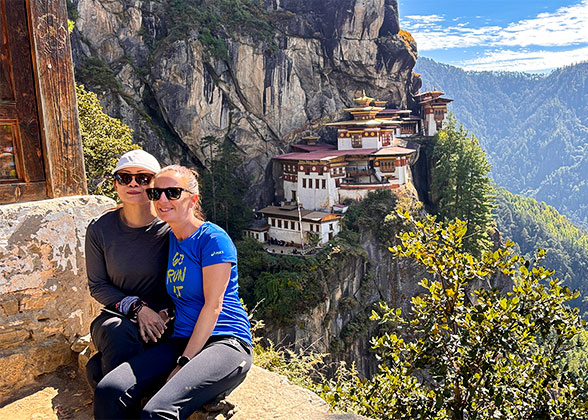
The top highlight is the Tiger’s Nest Monastery. Hiking up to this cliffside landmark rewards visitors with breathtaking Himalayan vistas and a profound sense of mindfulness. Ancient Tibetan Buddhist temples like Chimi Lhakhang and Kyichu Lhakhang unveil monks’ lifelong devotion and daily rituals. Meanwhile, the distinctive dzong fortresses showcase local architectural genius and serve as a vibrant backdrop for the annual Tsechu festivals. Moreover, the country’s carbon-negative environment harbors rare takins and black-necked cranes, adding to its natural charm.
Can I travel independently in Bhutan?
Technically, entirely independent travel in Bhutan is impossible. While you can explore the main streets of Thimphu and Paro on your own, access to most attractions requires a licensed guide. Furthermore, public transport throughout the country is limited, and foreign visitors are not permitted to rent cars for self-driving. Visiting remote regions such as the Phobjikha Valley or Bumthang demands private transportation organized through a local travel agency. That is where our customizable Bhutan tour packages come in: you’ll control the destinations and pace while we seamlessly handle the guides, transfers, Sustainable Development Fee, and all the logistics behind the scenes.
Will I get altitude sickness in Bhutan?
Usually not, as it’s rare. Primary tourist hubs, including Paro, Punakha, and Thimphu, sit at comfortable elevations between 1,300 and 2,320 meters (4,265 - 7,611 ft.). Mild symptoms like headaches or shortness of breath may appear when crossing high-altitude mountain passes, such as the Dochula Pass (3,100 m / 10,170 ft.), or during the climb to the Tiger’s Nest Monastery (3,120 m / 10,236 ft.). To help your body adjust, drink 3 to 4 liters of water daily, take it slow, and rest well during your first days. This natural acclimatization will prepare you for the hike to the Tiger’s Nest.
Is there too much walking in Bhutan?
Generally speaking, yes – but it is far more manageable than traveling in its neighboring Nepal. The walking in a classic Bhutan tour is relatively light to moderate in both distance and difficulty. The main physical challenge is the 5-to-6-hour round-trip hike to Tiger’s Nest Monastery, which involves a 900-meter (2,953 ft.) climb along mountain trails and steep stone stairs. Beyond this, visits to local temples, ancient dzongs, and picturesque valleys mainly feature gentle walks on flat terrain or dirt paths, easily tackled with high-traction shoes. Rest assured, all of our itineraries can be fully customized to match your physical fitness!
1.Attire: When visiting dzongs and temples, ensure your clothing covers your shoulders and knees. Since you’ll need to remove your shoes frequently at sacred sites, bring thick socks and slip-on hiking shoes for convenience. Don’t forget a lightweight down jacket to handle the chilly mornings and evenings.
2.Health: Medical resources in Bhutan are limited, so please bring an adequate supply of your personal and emergency medications. Motion sickness pills are also highly recommended due to the winding mountain roads.
3.Other Essentials: Electricity can occasionally be unstable in some valleys, and it is wise to pack a reliable power bank and a small flashlight.
Which is better, Nepal or Bhutan?
Both destinations boast Himalayan views and rich Buddhist heritage, yet they cater to different travel preferences. Nepal is ideal for budget travelers seeking adventure, with diverse, world-class trekking and extreme sports, while Bhutan calls for a slower journey focusing on deep cultural and spiritual immersion.


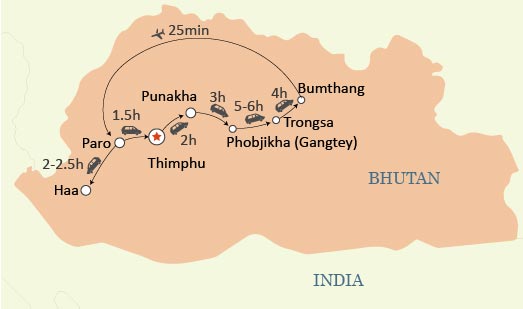
 5-6 Days
 Bhutan