

Wakayama Weather
What is the weather like in Wakayama?
Having a subtropical climate, Wakayama experiences no bitter cold but four distinctive seasons. It gets not much rainfall, and the rainy season typically lasts from early or mid-June to mid-July. From June to October, Wakayama is likely to be impacted by typhoons, especially in August and September.
Temperature
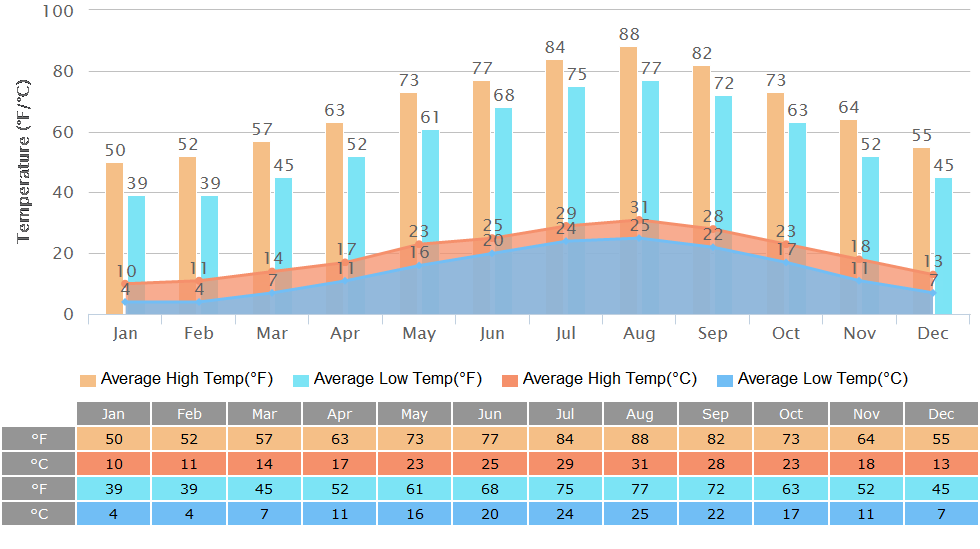
Wakayama’s annual temperature spans a wide range: annual highs are more than 30℃ (86℉), while annual lows can drop to around 0 degrees Celsius (32 degrees Fahrenheit). And due to complicated topography, including coasts, plains and mountains, temperatures vary across these regions: the temperature in coastal areas is a bit higher, ranging from 1-31℃ (34-89℉), while it becomes lower in the mountains, ranging between -2-29℃ (36-85℉).
The hottest month in Wakayama
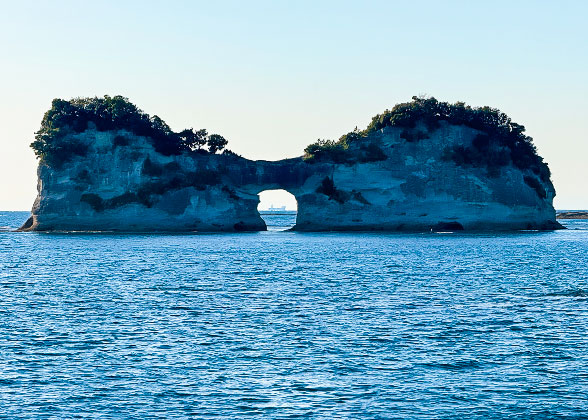
August is typically the hottest month in Wakayama. Daytime temperatures mostly hover around 30-34℃ (86-93℉), and in some days, can reach more than 36℃ (97℉). Though rainfall leads to dropping temperatures, highs rarely sink below 28℃ (82℉). After nightfall, temperatures decline a lot but generally stay above 24℃ (75℉).
|
|
|
The coolest month in Wakayama
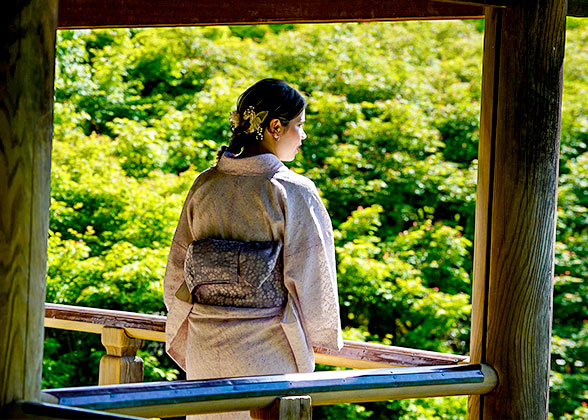
The coolest month in Wakayama is January. Most days, the maximum temperatures are 8-14℃ (46-57℉), while minimum temperatures are normally 0-4℃ (32-39℉). The mountain areas get colder, with the low dropping to -2℃ (36℉).
|
|
|
Precipitation
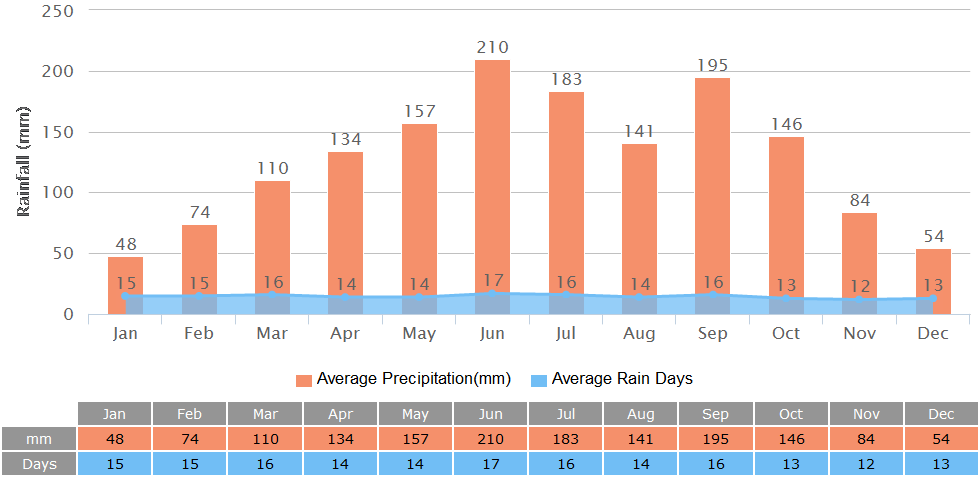
As Wakayama stretches considerably from north to south, it sees a difference in precipitation. The north has relatively low annual precipitation, averaging roughly 1,300 mm (51.2 in), while the southern areas see abundant, with an annual average rainfall of over 2,500 mm (98.4 in).Monthly rainfall shows a wide variation: June and July stand out as the rainiest months in Wakayama, which feature moderate or heavy rain that seldom falls all day long. And September also receives abundant rainfall. January and December are the driest periods of the year, only having 50 mm (2 in) of rainfall each on average.
Does it snow in Wakayama?
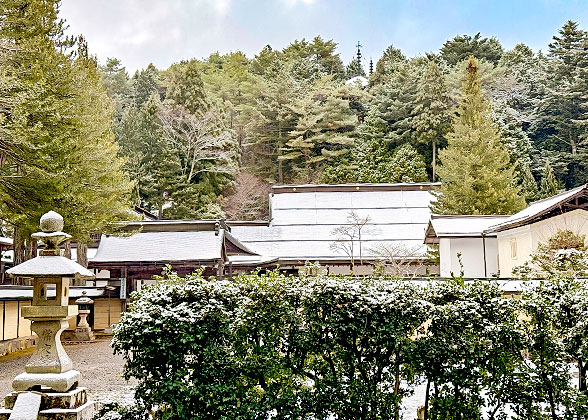
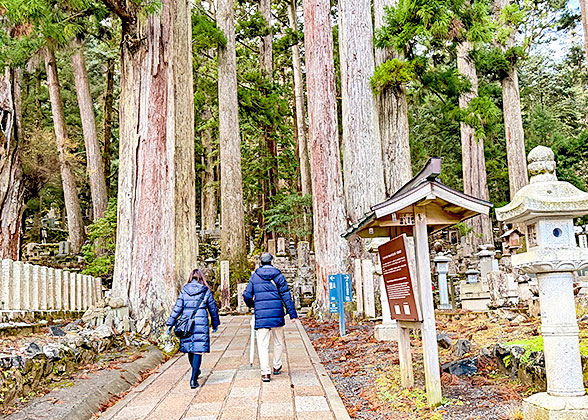
Except the mountainous areas, it hardly snows in Wakayama. Take Mount Koya as an example: its first snow may occur in late December, and January sees the most snowfall over the year with occasional snow accumulation over 30 cm (11.8 in).
Humidity
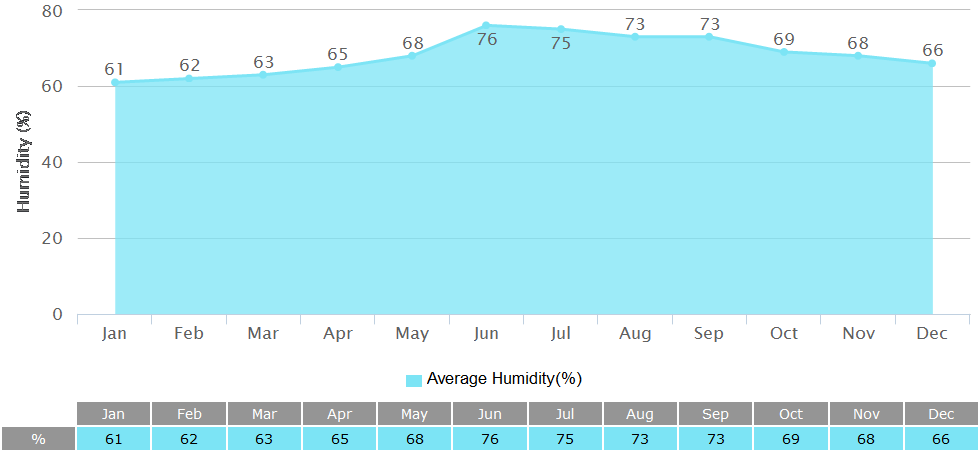
The humidity is closely related to precipitation. Summer has the highest humidity of the year, and together with high temperatures, you may feel quite muggy sometimes. Winter gets drier a lot, but the humidity is just right.
Humidity Graph of Wakayama
Typhoon
Wakayama is possibly affected by typhoons in June to October, particularly in August and September. They usually come with high winds and heavy rainfall, and in severe situations, may cause transportation suspension and the closure of attractions. Therefore, check the weather forecast and try to avoid the typhoon days.What's the best time to visit Wakayama?
March to May
The overcall climate is comfortably warm with moderate rainfall. Plus, both stunning natural landscapes and cultural activities await your exploration. For example, you have a chance to see cherry blossoms and peach flowers in late March to early April, as well as rhododendrons in May; Wakayama Festival on the second Sunday in May gives you a good way to understand local customs.
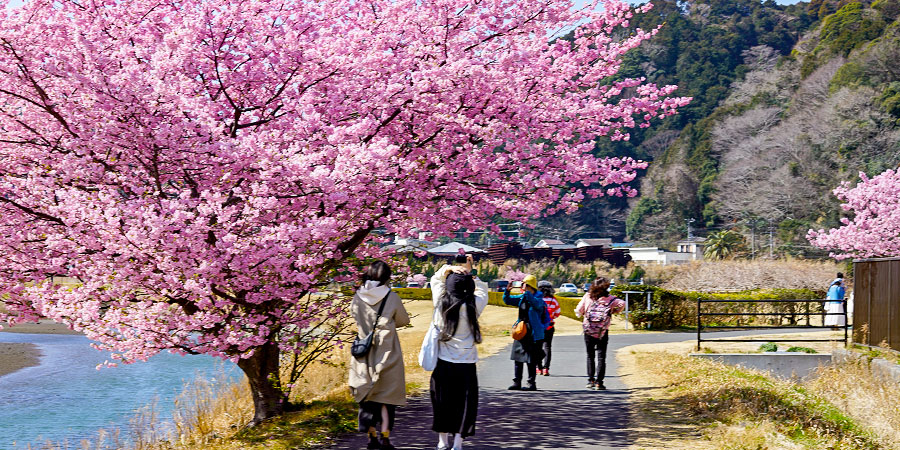
Cherry blossoms in Wakayama
|
October to Early December
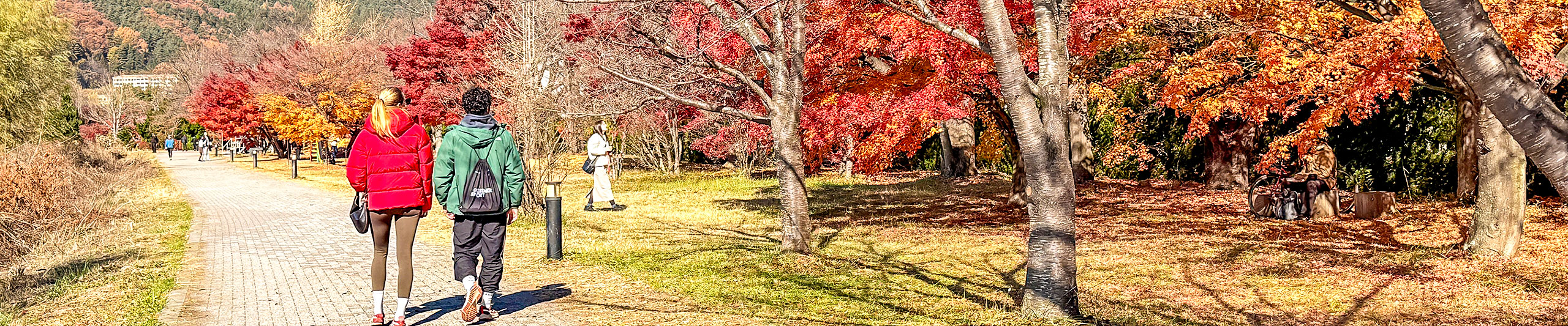
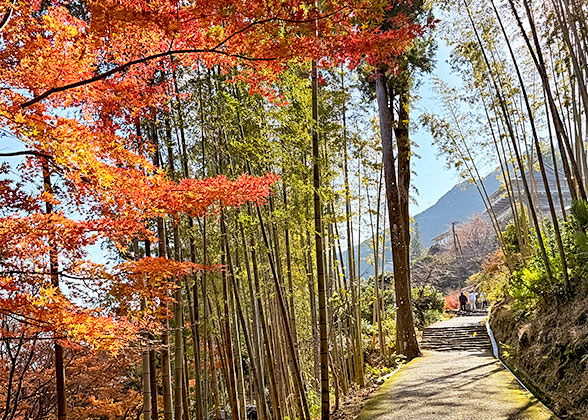
Wakayama is balmy in this time, making it ideal for numerous outdoor activities like hiking and climbing. In addition, you can appreciate colorful autumn foliage from early November to early December - colorful leaves in the whole prefecture display their beauty. However, ones in high-altitude regions may change color as early as in late October. Besides, there are lots of grand events, such as Benkei Festival on the first Friday and Saturday in October and Mifune-matsuri Festival on every October 16.
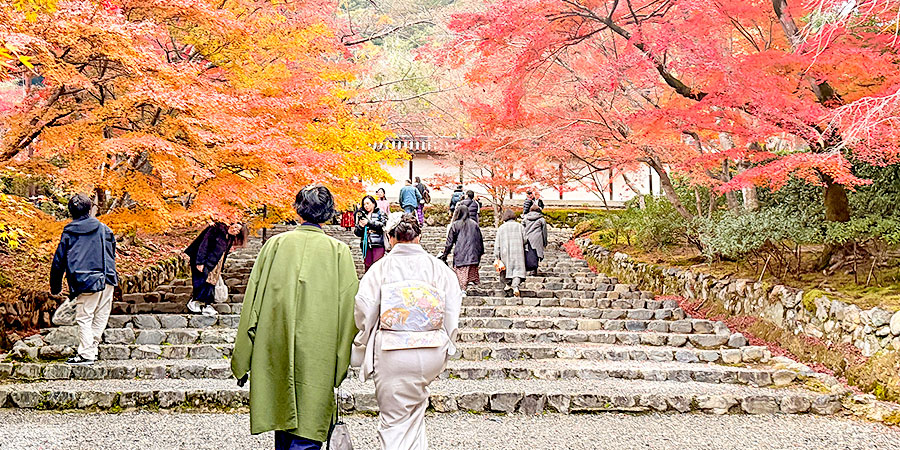
Autumn Scenery
|
Read more about Wakayama Attractions & Best Time to Visit Japan
Wakayama Climate - Seasons & Travel Suggestions
Spring: March - May
Average Temperatures: 7-23℃ (45-73℉)Average Precipitation: 110-157 mm & 14-16 rainy days per month
Weather: Spring is one of the most pleasant periods in Wakayama, with highs of 10-25℃ (50-77℉) and lows of 3-17℃ (37.4-62.6℉). As a transitional month from winter to spring, March is slightly colder than the rest of the season, but the overall temperature shows an upward trend. By April and May, it gets comfortably warm. Wakayama frequently suffers moderate rain of short duration, exuding a different kind of natural beauty.
Outfits: Most of the time, long-sleeve T-shirts or hoodies, light trench coats or cardigans and jeans or sweatpants are sufficient for spring weather, but in early March and nippy mornings and evenings, prepare a mid-weight jacket. Comfortable walking shoes and sneakers are recommended.
Top Things to Do:
1. From late March to early April, you’re advised to admire elegant cherry blossoms in Wakayama Castle, Negoro-ji Temple and Kimiidera Temple and Heisogen Park.
2. Wakayama Festival is celebrated at Kishu Toshogu Shrine on the second Sunday in May, when participants carrying a portable shrine go down 108 steep steps, and then parade through the Wakayamaura area while beating taiko drums or waving naginata swords.
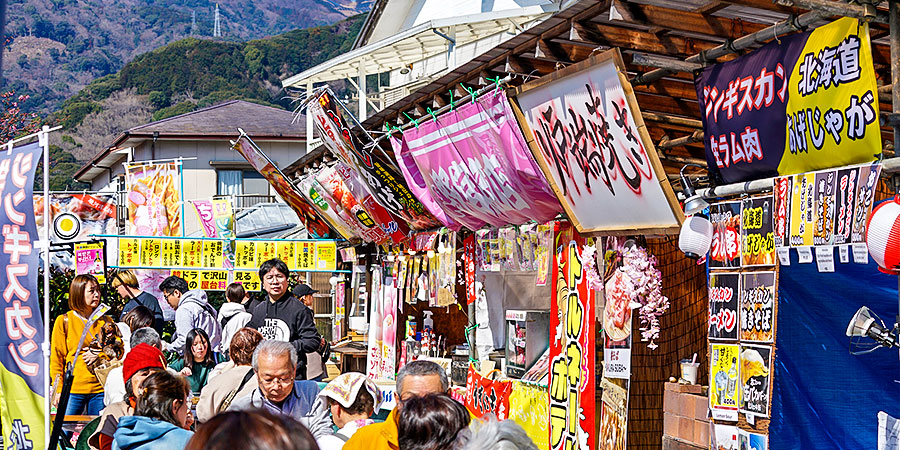
Food Stalls in Sakura Season
|
Summer: June - August
Average Temperatures: 20-31℃ (68-88℉)Average Precipitation: 141-210 mm & 14-17 rainy days per month

Splendid Fireworks
|
Dressing Code: choose breathable clothing, such as short-sleeve or tank tops in cotton or linen fabrics and loose shorts or capris. Considering that indoor places are well-cooled by air conditioning, bring along a light coat, which can also be used for sun protection. Rain gear and other sun-protective items are necessities.
Seasonal Highlights:
1. Summer is the best time to enjoy water activities like surfing and diving. Beaches in Shirahama and Kushimoto are highly recommended.
2. In July and August, many places in Wakayama set off splendid fireworks. For instance, Wakayama Port Firework Display in late July and Shirahama Firework Display on August 10.
3. Nachi Fire Festival is held on July 14 near the Kumano Nachi Taisha Shrine and Nachi Falls, where torch bearers sing the chant to pray for harvest and safety.
Autumn: September - November
Average Temperatures: 11-28℃ (52-82℉)Average Precipitation: 84-195 mm & 12-16 rainy days per month
Weather: Hot weather tends to linger till early to mid-September, and daytime temperature gradually drops to roughly 15℃ (59℉) by late November. Typhoons are more likely to occur in September, bringing a lot of rainfall. October and November weather gets more stable and the rainfall decreases a lot.
|
|
|
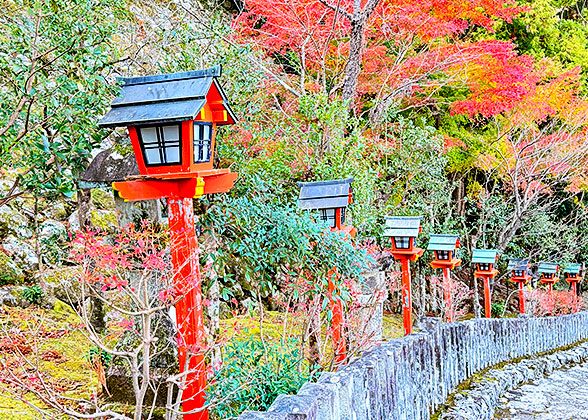
Clothes: In September, short-sleeved shirts and shorts are advised. Due to high UV index of 8-10, sun hats and sunglasses are still needed. From October to mid-November, choose thicker clothes like long-sleeved T-shirts, cardigans and jeans. In late November, sweaters, thick jackets and light-fleece sweatpants are more suitable. Also, pack comfy walking shoes and raingear.
Travel Recommendations: Colorful fall leaves appear in sites like Kongobuji Temple and Koya-Ryujin Skyline from late October to early November, Nishi-no-Maru Teien Garden from late November to early December. Another unmissable event is Benkei Festival held in Tanabe City on the first Friday and Saturday in October, including traditional theatrical performances and an evening firework display.
Winter: December - February
Average Temperatures: 4-13℃ (39-55℉)Average Precipitation: 48-74 mm & 13-15 rainy days per month
Weather: December is getting colder and colder, and January sees the annual lowest at 0℃ (32℉) or so, but temperatures rebound slightly in February. Thus, winter in Wakayama is not bitterly cold. Plus, it is the driest season with the smallest precipitation of the year.
Clothes: Wear woolen sweaters, down jackets, fleece-lined pants and hiking shoes, plus winter accessories such as knitted hat, scarf and heating pads.
Travel Highlights:
1. In mid-February, you can admire blooming plum flowers in Minabe-bairin Ume Orchard Grove and the Otorii nearby Kumano Hongu Taisha Shrine.
2. The optimal choice for winter travel is to soak in a hot spring, not only to ward off the cold but also to relax body and mind. If you plan to come here and enjoy onsens in 2026, Shirahama Onsen and Ryujin Onsen are both famous destinations.
|
|
|