

Meiji Jingu Shrine
As Tokyo’s largest shrine, Meiji Jingu Shrine attracts numerous visitors with its rich historical atmosphere, distinctive Japanese architecture, and magnificent natural scenery, making it one of Tokyo’s most iconic attractions. Built in 1920 to honor Emperor Meiji and Empress Dowager Shoken, who led Japan toward modernization, Meiji Jingu Shrine spans 70 hectares (173 acres), equivalent to around 100 soccer fields, most of which is forested. This makes it a remarkably quiet and serene place, despite its location in the heart of Tokyo. The core attractions are its shrine complex, including the Main Hall and torii gates.
What to Do when Visiting Meiji Jingu Shrine
Visit the Main Hall of Meiji Jingu Shrine to Experience Local Culture
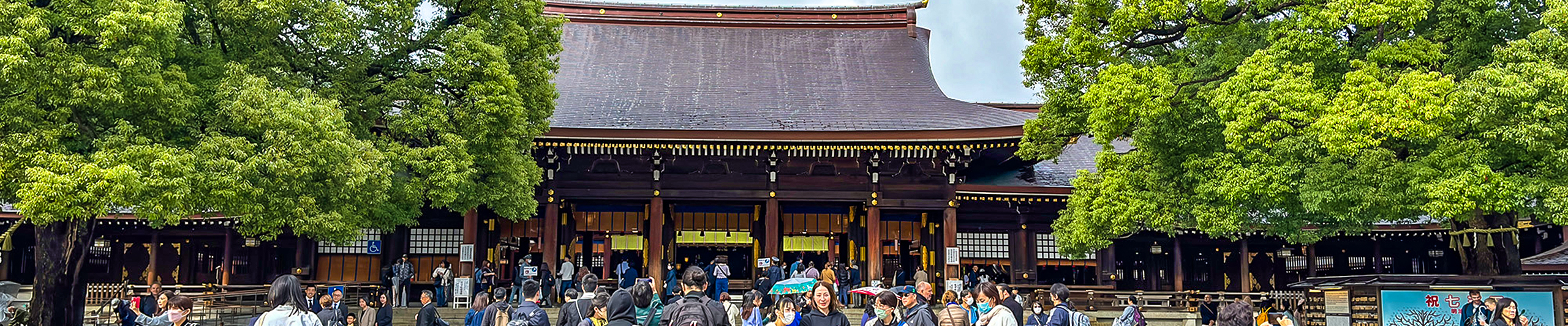
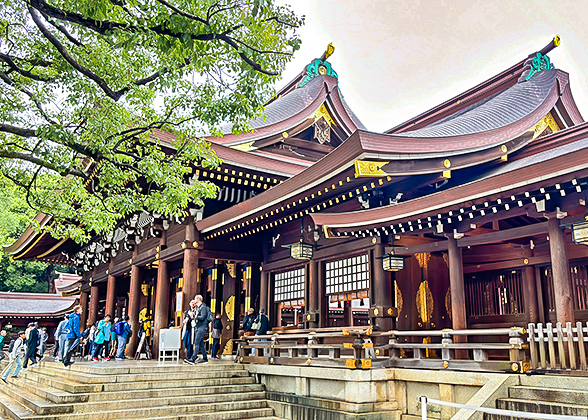
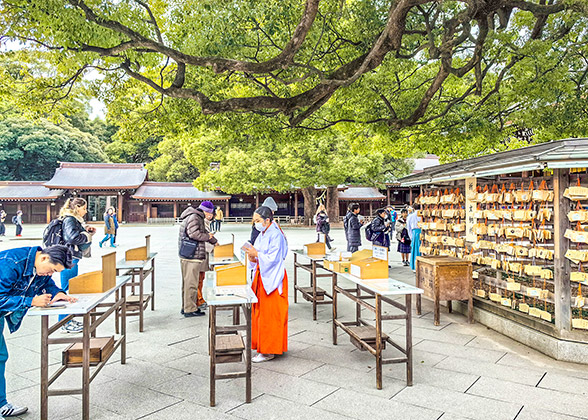
The Main Hall is the main structure of Meiji Jingu Shrine and serves as the place to worship Emperor Meiji and Empress Dowager Shoken and pray for good luck. Built in the classical Japanese style using cypress wood, the Main Hall features unique and ornate decorations.Before reaching the Main Hall, you will first see a Temizuya - hand-washing pavilion where people wash their hands and rinse their mouths before paying their respects. Surrounding the Main Hall are numerous racks displaying wooden plaques offering gifts to the deities or expressing wishes, and places selling omamori amulets and offering fortune-telling sticks.
|
|
|
 )
)
Visit Giant Torii Gates
At several entrances of Meiji Jingu Shrine and near the Main Hall, you will see giant torii gates, which used to mark the boundary between the sacred realm and the mortal world in Japanese culture. Among them, the Second Torii Gate located along the path from the south entrance to the Main Hall is Japan’s largest wooden torii gate, standing 12 meters (39.4 feet) tall and 17.1 meters (56.1 feet) wide, and constructed from trees that are 1,500 years old.
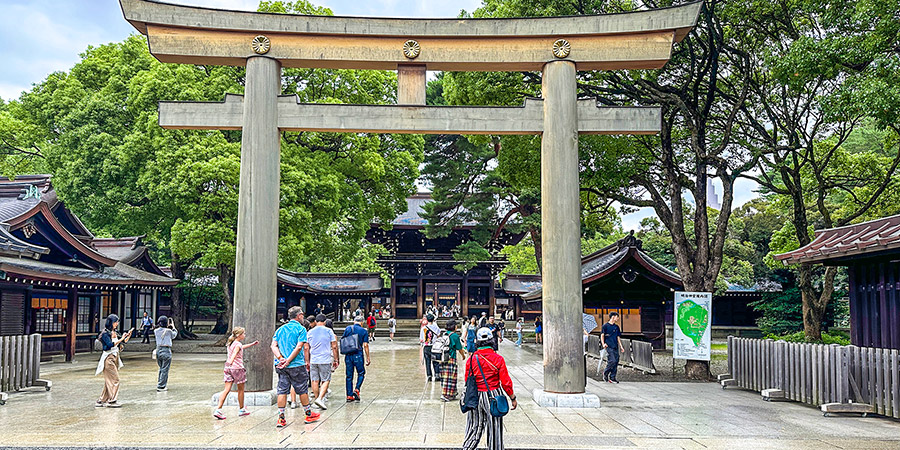
Huge Torii Gate
|
Walk along the Approach and Enjoy the Vibrant Forest
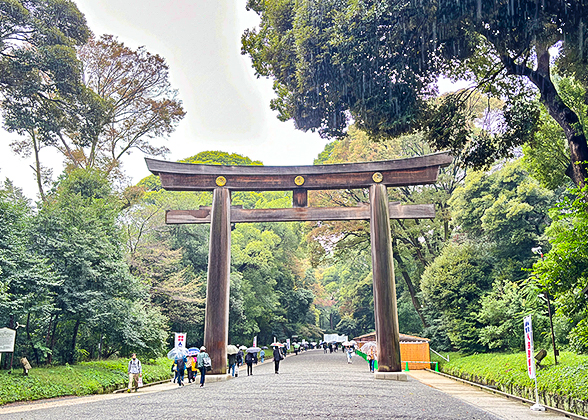
Meiji Jingu Shrine has three entrances, and each is connected to the Main Hall by a long path, called the sacred approach. As you walk along the approach, you will notice an interesting phenomenon: most people walk on either side rather than in the middle. This is because, in Japanese culture, the center of the path is typically left clear for the deities descending to the shrine to pass.
Both sides of the approach, and indeed most of the shrine grounds, are covered by a vast forest, which will shield you from the hustle and bustle of the city and offer you a peaceful experience. If you gaze down at the panoramic view of Tokyo from high vantage points such as the Tokyo Skytree and Tokyo Tower, you will be impressed by its vast expanse of greenery.
|
|
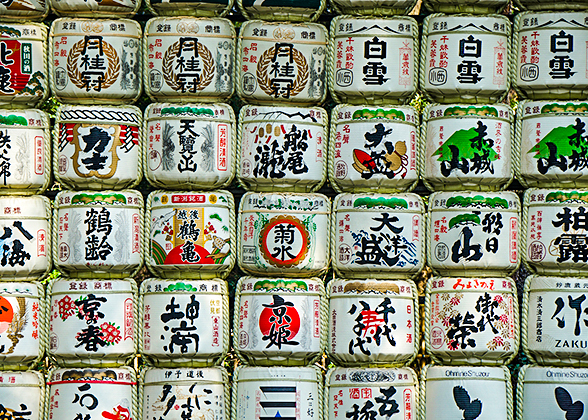
Take Photos in Front of the Barrel Wall
Along the approach leading from the south entrance to the Main Hall, you will see rows of sake and wine barrels lined up on both sides, used to make offerings to the deities. It’s a popular photo spot.
Visit the Meiji Jingu Museum
Located next to the Sacred Bridge near the south entrance, the Meiji Jingu Museum was built to commemorate the 100th anniversary of Meiji Jingu Shrine. In addition to exhibiting artifacts related to Emperor Meiji and Empress Dowager Shoken, the museum also features restaurants and shops.

Admire Meoto Kusu - Couple Camphor Trees
Meoto Kusu refers to two massive camphor trees in front of the Main Hall whose roots are intertwined and which grow side by side. They are regarded as symbols of love and a happy marriage and are a famous spot for praying for a good match.
Admire Colorful Flowers in Meiji Jingu Gyoen
If you plan to visit Meiji Jingu Shrine in the spring or summer, consider going to the Meiji Jingu Gyoen, an exquisite Japanese-style garden, to enjoy the flowers. During spring and summer, it is filled with a variety of blooms, including Japanese kerrias, azaleas, wisterias, Japanese irises, and lotus. Among them, the 1,500 Japanese irises of 150 varieties that reach full bloom in mid-June are the most popular for visitors.
Some Special Things to Do
(1) Appreciate a Traditional Japanese Wedding
As mentioned above, Meiji Jingu Shrine is dedicated to Emperor Meiji and Empress Dowager Shoken, who are regarded by the Japanese as a model couple known for their unwavering devotion and mutual support. As a result, the shrine has become a popular venue for weddings. If you are lucky enough to witness a wedding here, you will see the bride and groom dressed in traditional attire, a sacred and unique ceremony, and a spectacular procession of the wedding party.
|
|
|
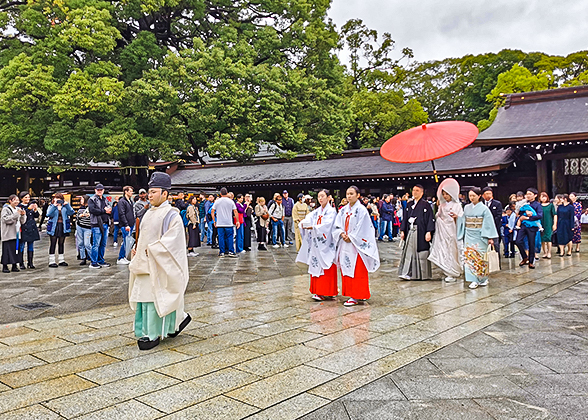
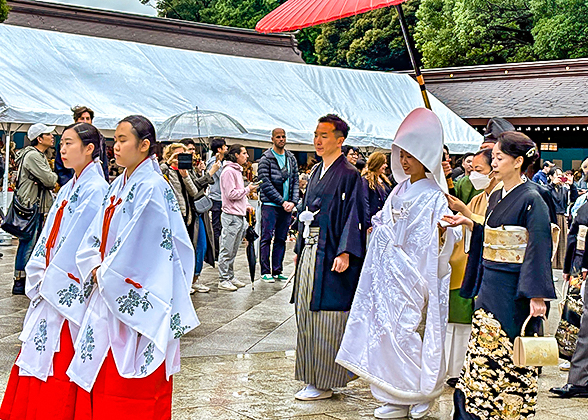
How can you tell if a wedding is taking place at Meiji Jingu Shrine that day? Look for a plate next to the ticket booth at the south entrance that indicates related information.
(2) Spring Grand Festival & Autumn Grand Festival
Both festivals are held to commemorate and honor Emperor Meiji and Empress Dowager Shoken. The Spring Grand Festival takes place every year in late April or early May, while the Autumn Grand Festival is held from November 1 to 3. The former provides visitors with traditional art performances by Japan’s top artists, such as ancient court dance performances; the latter, in addition to some traditional art performances, also features martial arts demonstrations and chrysanthemum exhibitions.
Opening Hours and Fare
Most areas of Meiji Jingu Shrine are free to visit. It is open year-round, but the opening hours vary each month, as they are based on the sunrise and sunset times for that month.|
Month |
Opening Hours |
|
January |
6:40-16:20 |
|
February |
6:20-16:50 |
|
March |
5:40-17:20 |
|
April |
5:10-17:50 |
|
May |
5:00-18:10 |
|
June |
5:00-18:30 |
|
July |
5:00-18:20 |
|
August |
5:00-18:00 |
|
September |
5:20-17:20 |
|
October |
5:40-16:40 |
|
November |
6:10-16:10 |
|
December |
6:40-16:10 |
Notes:
(1) The Meiji Jingu Museum is open from 10:00 to 16:30, except on Thursdays, when it is closed. Admission is JPY1,000 (USD6.3).
(2) Admission to the Meiji Jingu Gyoen is JPY500 (USD3.2).
Three Visiting Routes in Meiji Jingu Shrine
Meiji Shrine has three entrances on its south, north, and west sides. So, accordingly, there are three tour routes:South Entrance / Harajuku Entrance Tour Route: This is the most classic and popular tour route. This route has the most highlights along the way, including the Second Torii Gate, Barrel Wall, Meiji Jingu Museum, and Meiji Jingu Gyoen mentioned above.
North Entrance / Yoyogi Entrance Tour Route: This route is the best to experience the tranquility of the shrine.
West Entrance / Sangubashi Entrance Tour Route: If you are short on time or want to reach the Main Hall quickly, you can choose this route. It takes about 9 minutes to walk from the West Entrance to the Main Hall.
How to Get to Meiji Jingu Shrine
Meiji Jingu Shrine is located in central Tokyo and covers a vast area, making it very accessible: there are stations of public transportation near all three entrances.|
Entrance |
You can Take |
Walking Time from the Station to the Entrance |
|
South Entrance / Harajuku Entrance |
(1) JR Yamanote Line, arrived at Harajuku Station (2) Tokyo Metro Chiyoda Line, arrived at Meiji-jingumae Station (3) Tokyo Metro Fukutoshin Line, arrived at Meiji-jingumae Station |
2 minutes |
|
North Entrance / Yoyogi Entrance |
(1) JR Yamanote Line, arrived at Yoyogi Station (2) JR Chuo-Sobu Line, arrived at Yoyogi Station (3) Toei Oedo Line, arrived at Yoyogi Station (4) Tokyo Metro Fukutoshin Line, arrived at Kita-sando Station |
5 minutes |
|
West Entrance / Sangubashi Entrance |
Odakyu Line, arrived at Sangubashi Station |
3 minutes |
Tips
1. Unless you are particularly interested in Hatsumode, the Japanese tradition of visiting temples and shrines to pray for the New Year, you are recommended to avoid visiting Meiji Jingu Shrine on January 1, as the shrine will be packed with local people at that time.2. There are many gravel roads in the shrine, so be sure to wear comfortable shoes.
3. Because of the extensive forest and trees, you are recommended to take precautions against mosquitoes when visiting in the summer.
4. Please note that the Meiji Jingu Gaien is not located here but about 2 kilometers (1.2 miles) away. It is well worth a visit in autumn: from mid-November to early December, the approximately 300-meter-long (984 feet) Ginkgo Avenue in the Meiji Jingu Gaien has about 150 ginkgo trees adorned with golden leaves. During this period, the Ginkgo Festival will also be held, featuring stalls selling food and specialties from all over Japan.
5. When planning your itinerary, you may want to know that Meiji Jingu Shrine is about a 5-minute walk from Yoyogi Park and a 10-minute walk from Omotesando.