


Zuihoden (Mausoleum of Date Masamune)
Zuihoden, a black-gold Momoyama-style architecture, is the exclusive mausoleum of Date Masamune, who was one of the daimyos in late Sengoku Period (1467-1615) and the early Edo Period (1603-1651), and the first lord of Sendai. It was built by the second lord of Sendai, Date Tadamune (1599-1658) in 1637. Zuihoden is one of the most representative military officer’s mausoleum buildings in Tohoku region of Japan for its extremely luxurious architectural style.
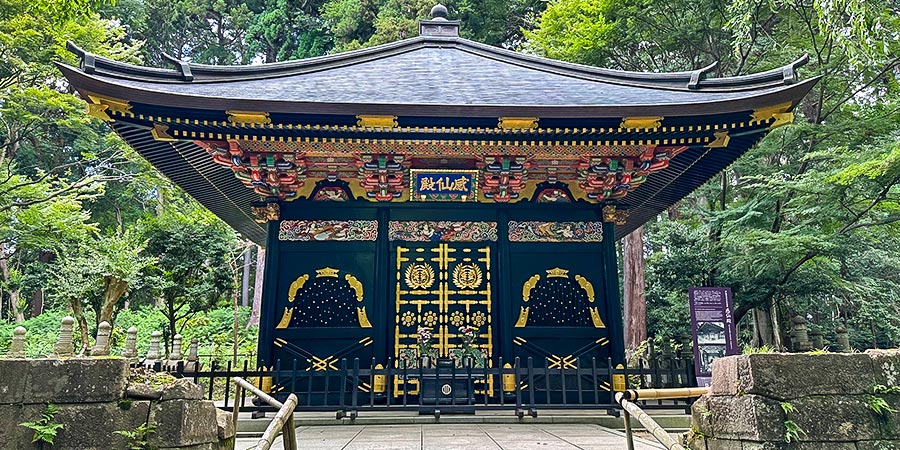
Kansenden in Zuihoden Scenic Area
|
Nearly 400 Years’ History of Zuihoden
Zuihoden was built in accordance with the will of Date Masamune during his lifetime. In 1636, after Date Masamune died of illness in Edo, his successor, the second Lord Date Tadamune, built this mausoleum and named it Zuihoden.Apart from the first feudal lord of Sendai, the second and the third lords were also buried here, with the Kansenden and Zennoden being built respectively, forming a complete mausoleum complex of the feudal lords of Date clan throughout the ages.
However, during the Great Air Raid on Sendai in July 1945, all the above-ground buildings including Zuihoden, Kansenden and Zennoden, were destroyed. Current Zuihoden was rebuilt on the original site in 1979 and renovated in 2001, faithfully restoring the original Momoyama-style when it was first built. Kansenden and Zennoden were rebuilt in 1985.

The Momoyama-style: Bold Colors and Exquisite Carvings
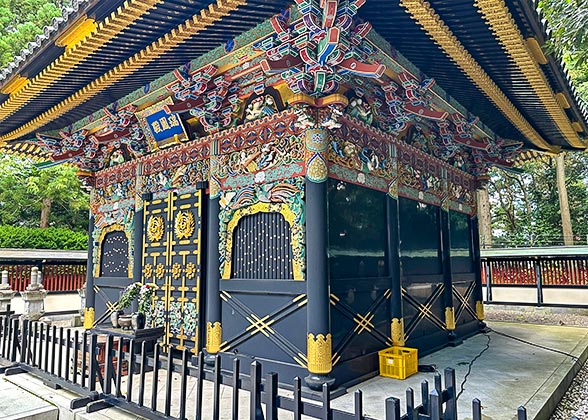
the Momoyama Style of Zuihoden
|
Don’t miss the Zuihoden Museum.
After visiting Zuihoden mausoleum, it is recommended to go to the Zuihoden Museum near it, where the burial objects unearthed from the mausoleum during its reconstruction like swords, lacquerware, ornaments are displayed, offering a more intuitive glimpse into history. You can also see the replicas of the relics of Date Masamune.The balcony of the second floor of the Museum is the only place where you can see the side of Zuihoden. It is a great place to take photos.
Seasonal Charm and Night Lighting Events
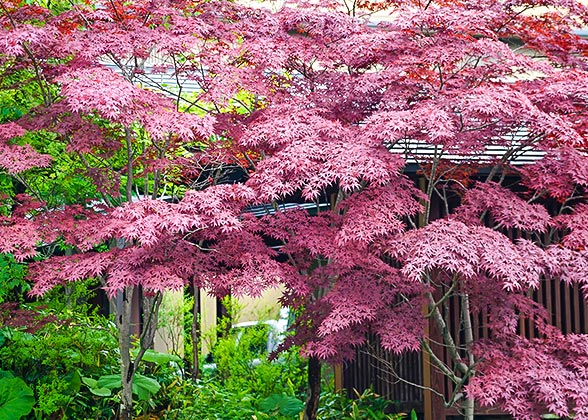
Red Leaves in Zuihoden
|
Useful Tips
1. The main hall of Zuihoden is not open to the public in normal circumstances. Only during certain specific periods, such as New Year or the death anniversary of Date Masamune, which is on May 24th, the Main Hall is open for people to admire the interior.2. The pathway to Zuihoden is flanked by tall and straight fir-forest. The trees are towering and the green shade is thick, almost cover the sky. The atmosphere is tranquil and solemn, perfect for a leisurely walk and photo taking.
3. From the ticket office to the Main Hall, you need to climb about 80 stone steps. The slope is moderate but the surface of steps is slippery due to moss. It is recommended to wear anti-slip shoes.
4. There are no stores or vending machines at the entrance of Zuihoden, so it is recommended to buy some water in advance if needed, like at JR Sendai Station.
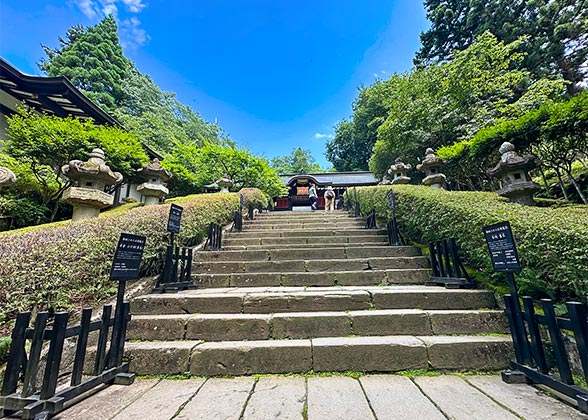
Stone Steps of Zuihoden
|
Opening Time
February 1st – November 30th: 09:00-16:50, with last admission at 16:30December 1st – January 31st: 09:00-16:20, with last admission at 16:00
Days closed: December 31st
The best time to visit is 9 am on weekdays, when there are fewer people and the light is most suitable for shooting the front of Zuihoden. After 2 pm, the gold foil on the side has the best reflective effect. It is recommended to avoid weekends and Japanese holidays, especially Golden Week in late April to early May and the Obon Festival in middle August, when there are more visitors.
Admission Fee
The ticket price is 550 yen (3.4 USD), including the Museum.If you have a one-day pass for Sendai Loople sightseeing bus, you can enjoy a price of 450 yen (2.8 USD).
How to Get There
The most convenient way to go to Zuihoden is to take Sendai Loople sightseeing bus from the West Exit of JR Sendai Station, which can get you to Zuihoden directly. The one-way fare for Loople sightseeing bus is 260 yen (2 USD). If you plan to take the bus many times on one day, then it is more cost-effective to buy a one-day pass, which is 630 yen (4 USD). In addition to Zuihoden, you can also enjoy discounted tickets for some other scenic spots with the one-day pass.
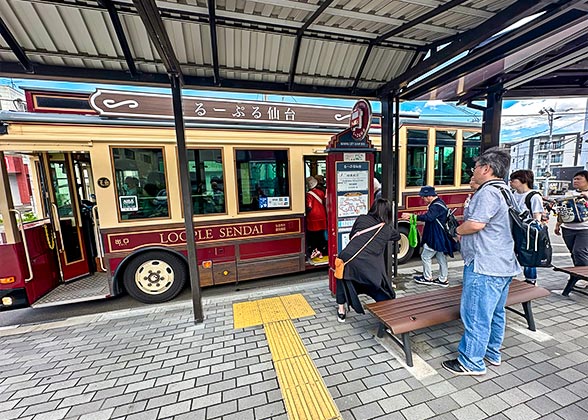
Loople Sightseeing Bus
|
You can also walk to the katahira campus of Tohoku University from JR Sendai Station first, and then follow the signs up the mountain to get to Zuihoden. It takes about 15 minutes. The way to Zuihoden is shaded by lush trees, beautiful and tranquil.
Nearby Attraction
It takes 15-20 minutes to walk from Zuihoden to Sendai Castle, where you can see the Bronze Equestrian Statue of Date Masamune and also overlook the entire Sendai city. It is a must-visit place to learn about the history of Sendai.