

Kitano Ijinkan-Gai
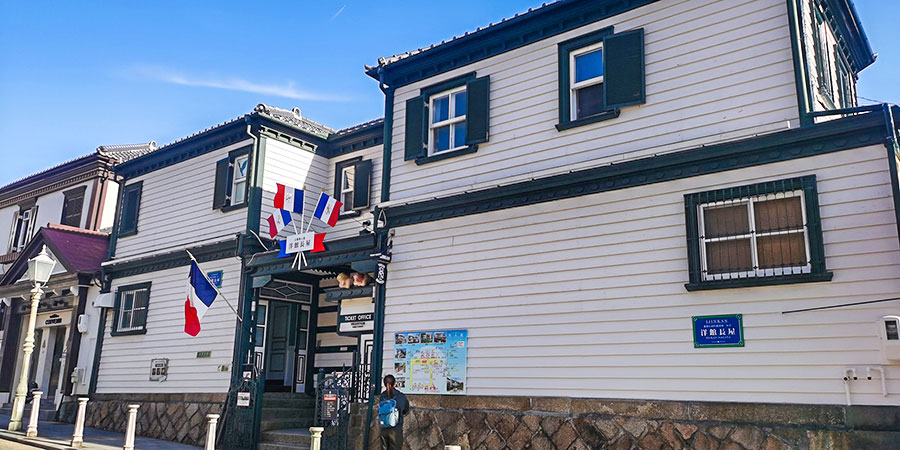
Kitano Ijinkan‑Gai, a hilly district near Kobe Port, developed into a foreign‑residential enclave after Kobe opened its port in the mid‑19th century. Today, more than thirty Western‑style buildings from Meiji‑era (1868-1912), known as Ijinkan, remain on the site. Around twenty of these are open to the public, and many are designated Japanese national cultural properties.
Kitano Ijinkan-Gai in Kobe
|
Nestled along sloped lanes, these European‑inspired structures blend seamlessly with Japanese‑style streets. Visitors can admire the exteriors free of charge or buy tickets to tour the interiors and experience foreign residents’ everyday lives, making this district one of Kobe’s most iconic historical attractions.
Featured Residences in Kitano Ijinkan‑Gai
1. Weathercock House - Iconic Red‑Brick Important Cultural Property
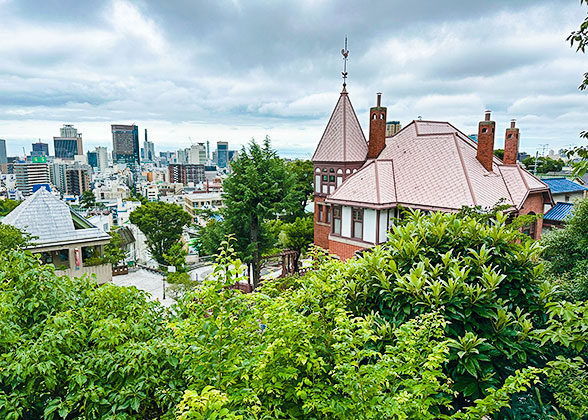
Completed in 1909 for a German merchant, Weathercock House is the district’s most recognizable building and the only surviving red‑brick Western‑style residence, whose spire‑top weathercock has become a symbol of Kitano. Its interior faithfully recreates the original home with vintage furniture, carved doors and iron lighting fixtures, giving visitors a vivid sense of wealthy European merchants’ lives in Kobe over a century ago.
|
|
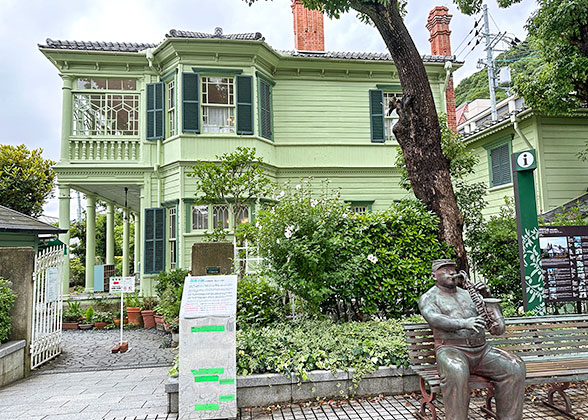
2. Moegi House - Pale‑Green Wooden Former US Consul’s Residence
Built in 1903, this two‑story wooden residence gets its name from its soft lime‑green exterior. Once the private home of Kobe’s US Consul, its thoughtful design balances practicality and elegance, featuring distinctive bay windows, ornate mantels and carved balconies. Restored rooms sit alongside a compact courtyard illustrating early‑20th‑century foreign diplomats’ daily lives.

3. Uroko House - Fish‑Scale Slate Facade Architecture
Uroko House takes its name from thousands of overlapping slate tiles on its outer walls, creating a striking fish‑scale effect and representing fine craftsmanship among Kitano’s historic mansions. Though compact inside, visitors can observe its unique wall construction, while displayed historical photos further illustrate the construction techniques for Western‑style houses. Additionally, its upper‑floor gallery offers sweeping views over Kobe and its port.
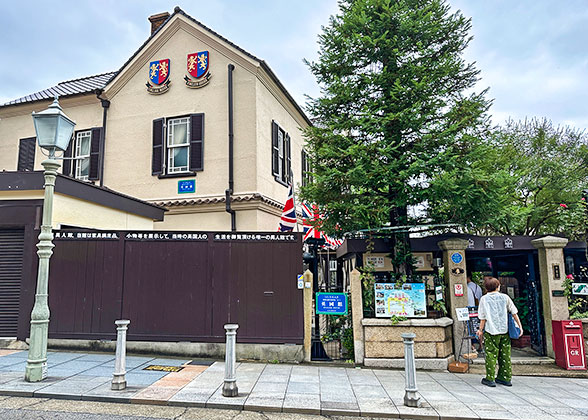
4. English House - British‑Style Sherlock‑Themed Exhibition
Built in 1909, this British‑colonial‑style residence features a faithful reproduction of Sherlock Holmes’ Baker Street 221B room, complete with period‑themed props, where visitors can try on costumes for photos. Beyond the exhibition rooms lies a well‑kept British‑style garden shaded by mature old trees, so visitors can stroll the grounds after touring the interior to immerse themselves in the atmosphere of a classic British private estate.
|
|
5. Yamate 8‑Bankan - Western Antiques & Legendary Wishing Chair
Yamate 8‑Bankan houses a fine collection of Western antique sculptures and decorative furnishings. It is widely known for the so‑called “Satan’s Chair”, surrounded by local folklore that grants wishes to anyone who sits upon it. While less historically immersive than other major residences, the antique collections and popular legendary chair make it a lively stop for sightseers.
6. Yokan Nagaya - Striped‑Wall Multi‑Purpose Exhibition Hall
This historic building is noted for its striking black‑and‑white striped facade. Inside, exhibition spaces trace the history of Kitano Ijinkan‑gai and document the impact of the Great Hanshin Earthquake, while the building also provides lounge areas and a souvenir shop for visitors to rest and pick up memorabilia.
7. Ben’s House - Vintage Residence with Western Daily Items
Originally a private foreign resident’s home, Ben’s House displays a range of preserved Western furniture, porcelain and household items, offering an intimate look at personal belongings once used by early foreign settlers in Kobe.
8. Foreigner’s Association Hall - Historic Social Venue
Once a social gathering hub for foreign residents in Kobe, this hall retains its original layout. Its archival‑focused displays feature old photographs, meeting records and period documents from the settlement era.
9. Hilltop House - Oriental‑Influenced Former Consulate
Hilltop House once functioned as a local consulate building. It boasts Western structure design with solid masonry walls and lofty ceilings, complemented by Japanese details like carved wooden lintels.
10. Kobe Trick Art Museum - Optical‑Illusion Photo Attraction
This venue uses specially constructed sets to create playful optical‑illusion effects ideal for creative photography, including perspective‑trick backdrops that distort proportions for whimsical portrait shots.
Opening Hours
October 1 - March 31: 9:30 - 17:00, with last entry at 16:30
April 1 - September 30: 9:30 - 18:00, with last entry at 17:30
Tickets & Pass Options
Visitors are free to wander the public streets of Kitano Ijinkan‑gai, and tickets are only required for entry into the interior of each Western‑style residence. Simply exploring street‑level exteriors and architecture takes roughly one hour. If you plan to tour inside the buildings, it’s advisable to allow an extra 20 to 30 minutes for each residence.
|
Venue |
Adult Ticket (JPY/USD) |
|
Weathercock House |
400 / 2.5 |
|
Moegi House |
400 / 2.5 |
|
Uroko House |
1100 / 7 |
|
English House |
880 / 5.5 |
|
Yamate 8‑Bankan |
550 / 3.5 |
|
Yokan Nagaya |
550 / 3.5 |
| Ben’s House |
550 / 3.5 |
|
Foreigner’s Association Hall |
550 / 3.5 |
|
Hilltop House |
550 / 3.5 |
|
Kobe Trick Art Museum |
880 / 5.5 |
Note: Child discounted tickets are available for all venues.
Pass Options
All passes remain valid for two consecutive days after purchase. If you arrive late in the afternoon on day one, you may return the next day to finish visiting remaining residences.
|
Pass Name |
Coverage |
Price (USD) |
Notes |
|
2‑venue Pass |
Weathercock House & Moegi House |
4 |
Best value for first‑time visitors |
|
3‑venue Pass |
Any 3 participating venues |
9.5 |
Flexible pick‑your‑own combination |
|
8‑venue Pass |
8 major participating venues |
14 |
Includes souvenir stamp booklet; for in‑depth visits |
|
Full‑access Pass |
All participating venues on‑site |
21 |
For history & architecture fans; collect all venue stamps |
Note: Ticket prices and pass combinations are subject to change due to seasonal events or policy updates. Please confirm the latest ticket options at the on‑site ticket center upon arrival.
How to Get to Kitano Ijinkan-Gai?
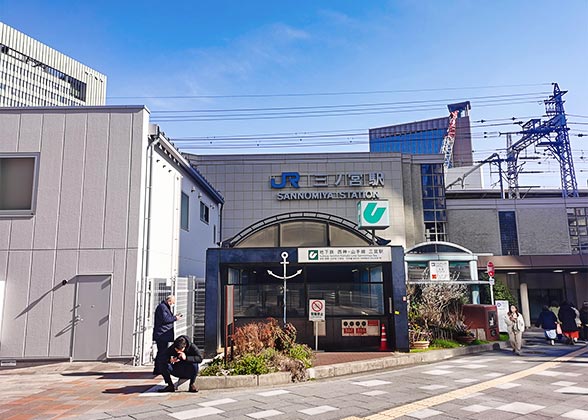
Kitano Ijinkan‑gai sits on hilly terrain, and most travelers start their journey from Kobe’s central Sannomiya transport hub.
1. On‑foot - Most popular, approximately 15 minutes
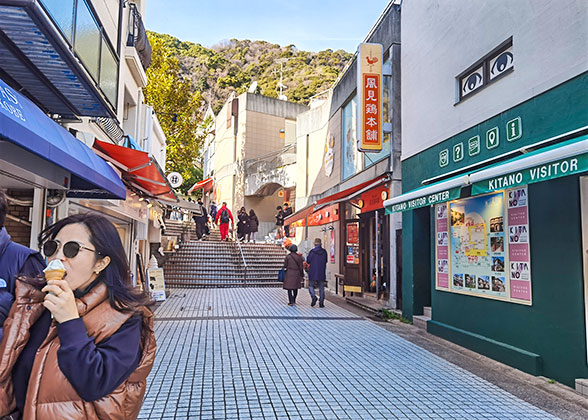
From the following stations, head uphill along Kitano‑zaka slope for roughly 15 minutes to reach the district entrance:
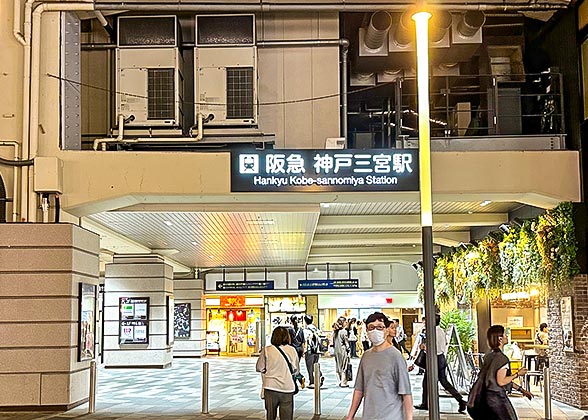
- Hankyu Kobe Line: East Exit of Sannomiya Station
- Hanshin Main Line: East Exit of Kobe‑Sannomiya Station
- JR Kobe Line: West Exit of Sannomiya Station
- Port Island Line: Sannomiya Station
|
|
2. By Bus - Avoid steep uphill walking
Take the Kobe City Loop Bus, the city’s tourist‑circulation service. Board at Sannomiya Subway Station (For North) bus stop, and alight directly at Kitano Ijinkan‑gai stop right outside the district.
Single‑ride Fare: JPY 260 (USD 1.5) for adults
Operating Hours: 9:00 ‑ 17:40 on weekdays; 9:00 ‑ 19:00 on weekends and public holidays.
Practical Tips for Visiting Kitano Ijinkan-Gai
1. Most indoor buildings require visitors to remove shoes upon entry.
2. Peak crowds occur from midday to afternoon; arriving early delivers a better sightseeing and photography experience.
3. The district has steep, uneven slopes, so wear comfortable non‑slip shoes; those travelling with seniors or children can choose venues according to physical fitness.
Nearby Sites to Visit
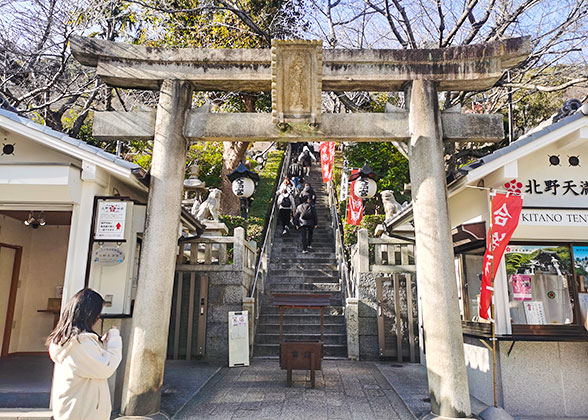
1. Kitano Tenman Shrine
Perched on high ground within the district, this shrine enshrines the deity of scholarship and draws many students praying for exam success. Stone steps lead up to its grounds, where visitors can overlook sweeping city views of Kobe.
|
|
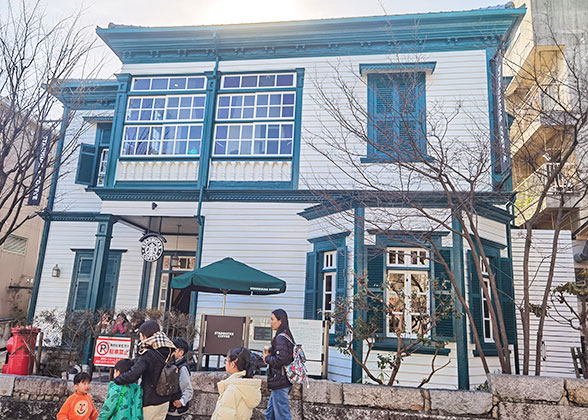
2. Starbucks Coffee Kitano Ijinkan‑gai Store
Housed inside a preserved historic American‑style residence, this well‑known cafe stands out with its iconic green‑and‑white color scheme. No ticket is required to enter for drinks or photography.