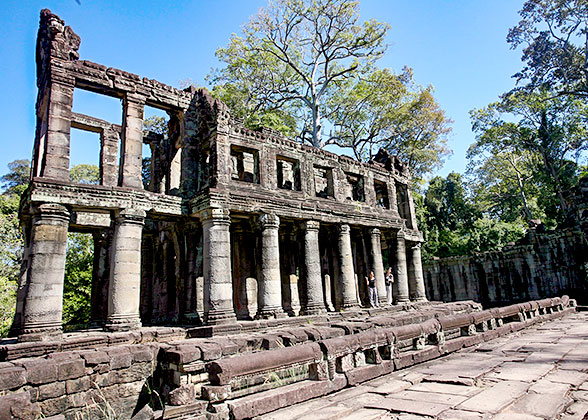
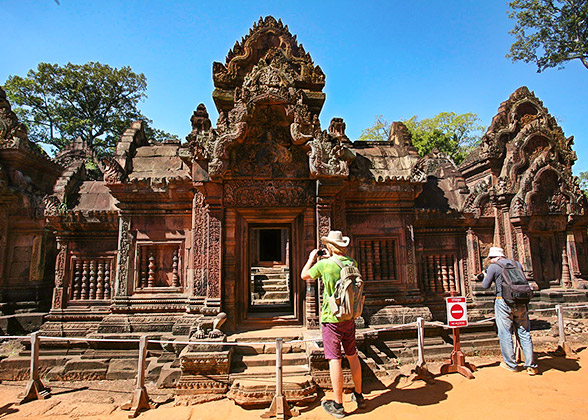
In the 9th century, a magnificent stone-piled metropolis rose from the ground and after about 300 years, it became the heart of Angkor Dynasty (9th-15th century), also known as the Khmer Empire, the most prosperous kingdom in Southeast Asia. Although the empire has long since fades, its monumental remnants still whisper the secrets of its bygone glory. Today, your guide and driver will accompany you to unveil the mysteries of this legendary dynasty by exploring the Angkor Ruins.
★ Admire Sunrise at Angkor Wat:
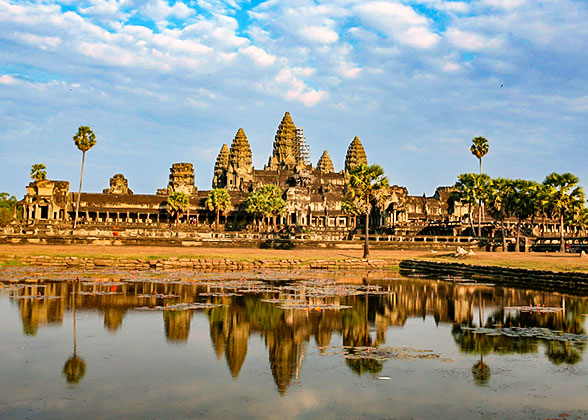
One hour before dawn, your guide and driver will escort you to Angkor Wat Temple. About 20 minutes before the first sunlight pierces across the clouds, it’s the best time to soak up in the “blue hour” of this holy land. As the sky shifts from light violet to pinkish-orange, the contour of the temple becomes clear, resembling a gouache painting. After the sunrise, we’ll return to the hotel for breakfast. Or we can prepare a breakfast box, so that you can enjoy a picnic breakfast while admiring the stunning setting under the glowing of the twilight.
► Photo Tips:
1. The lotus pond in front of the main entrance of Angkor Wat is the premier spot for sunrise reflections. Standing on the left edge of the pond, you can capture the sweeping wide shots with fewer crowds, while the right side near the wooden plank lets you frame all five iconic towers without overlap and is perfect for silhouette portraits.
2. Stepping inside the Sutra Depository, you can capture a backlit scene through the window. Or just stand in the entrance corridor where golden morning light streams through the columns, ideal for artistic images.
Then, let’s continue to Angkor Thom, the last capital of the Khmer Empire. In the late 12th century, the nearly 60-year-old king Jayavarman VII (1125-1219 BC) led his people to recapture Angkor and expanded the empire to its greatest territorial extent, becoming the dominant power on the Indochinese Peninsula. To commemorate his triumphs, the king built Angkor Thom on the ruins of the old city. At its zenith, the city houses nearly one million residents, a testament to its name of “Great City”.
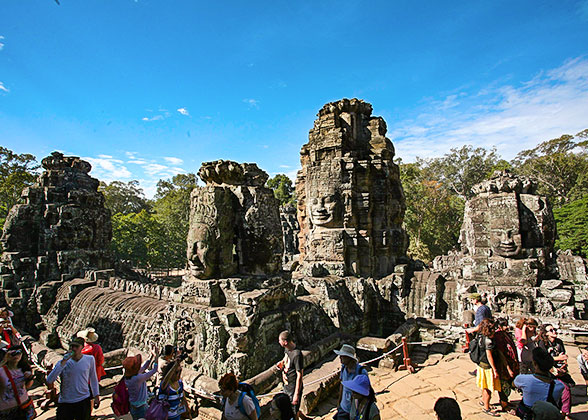
Passing through the bridge flanked by dilapidated stone statues, we’ll arrive at the heart of Angkor Thom, where Bayon Temple stands. If Angkor Wat Temple represents the peak of Hindu-inspired god-kingship, the Bayon Temple completely rewrite the symbols of royal power. When Hindu was still dominated, kings united with the divine through the “Devajra” ritual, while retaining human form. However, Jayavarman VII not only converted to Buddhism but took it a step further by carving face of bodhisatva fusing his own features on the four sides of every tower. You can totally find 216 giant stone faces of the king here, watching over his kingdom.
Moving onward, we’ll arrive at the Victory Gate of Angkor Thom, through which the Angkor army marched home after triumphant campaigns in the part. Just opposite to the gate is the Terrace of the Elephants, a stand for troops inspection. Turning to the north, you can see the royal court, Terrace of the Leper King, where the king himself would occasionally preside over trails.
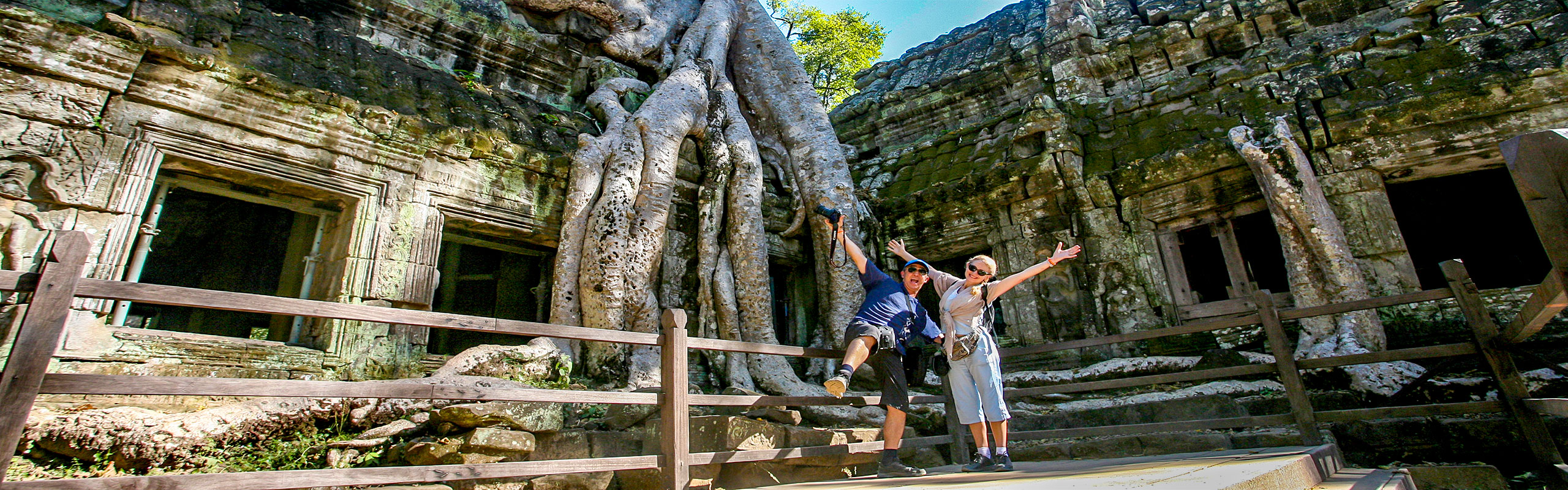
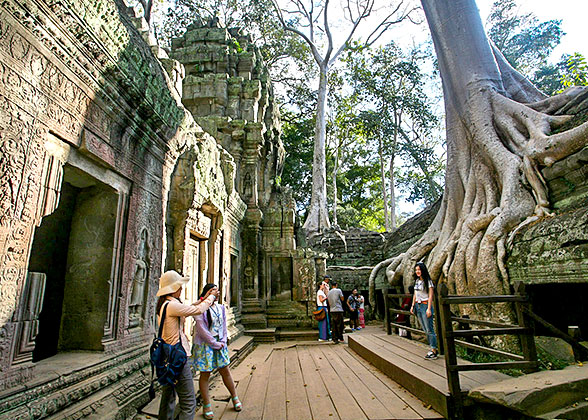
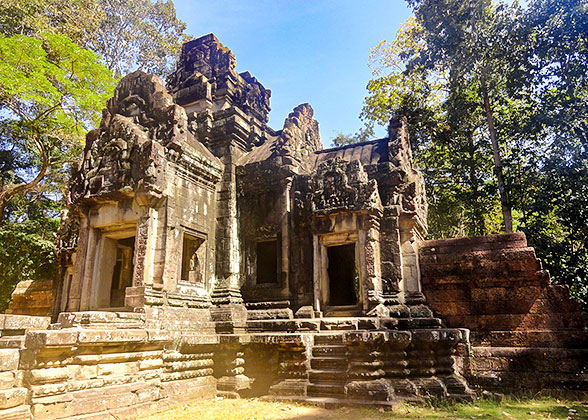
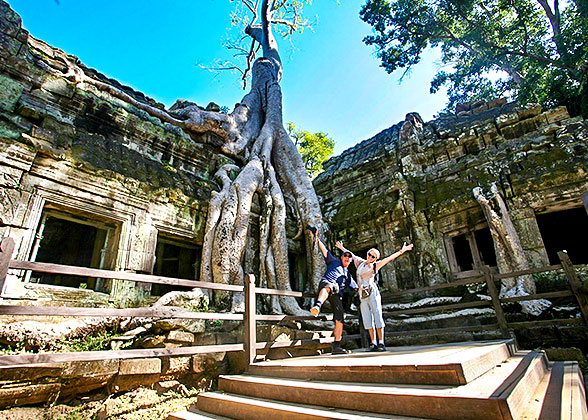
Continue to explore deeper and Ta Prohm Temple will instantly bring you into the mysterious scene in the film “Tome Raider”. Colossal roots tangle the roofs and walls as if the temple is growing directly from the trees. At dusk, we’ll ascend to the Bakheng Temple on the mountaintop to capture a panoramic view of Angkor Wat in the glow of golden sunset.
★ Special Inclusion: Apsara Dance Dinner Show
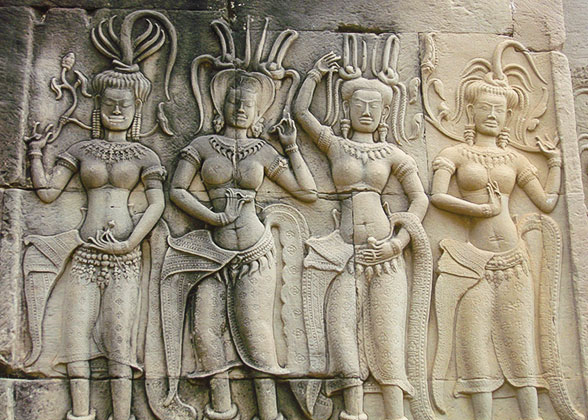
Finally, we’ll conclude your full-day sightseeing admiring an Apsara dance performance while savoring authentic local dishes at our handpicked restaurant. Legend has it that in the 12th century, the king of Hindu gods descended to Earth and bestowed upon Jayavarman II the kingdom of Cambodia, its regalia, and the Apsaras. Then, these part-human, part-spirit celestial dances taught their circular steps, graceful postures and smooth hand gestures to Angkor people. In the following centuries, these dances were performed at solemn religious rituals and grand celebrations to show people’s respect to the god.
After the performance, your guide and driver will escort you back you your hotel.
Meals: Breakfast, Lunch, Apsara Dinner Show
Accommodation: Tara Angkor Hotel (4 stars) or FCC Angkor by Avani (5 stars), Siem Reap