Day 1: Siem Reap Airport Pick-up; Visit Angkor National Museum
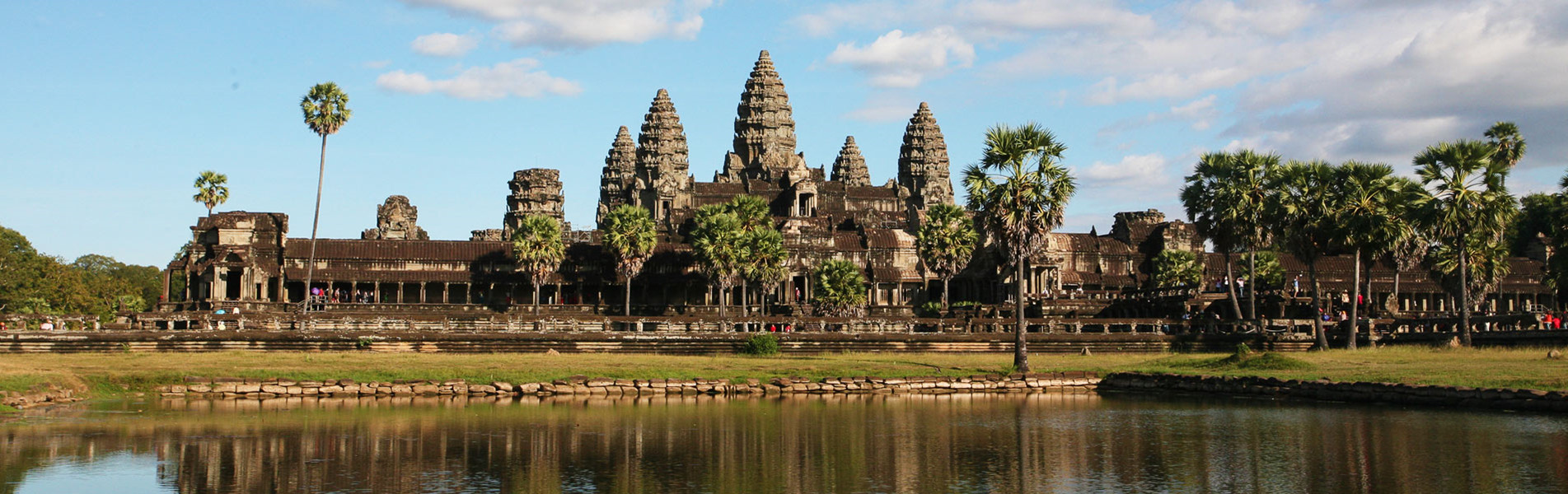
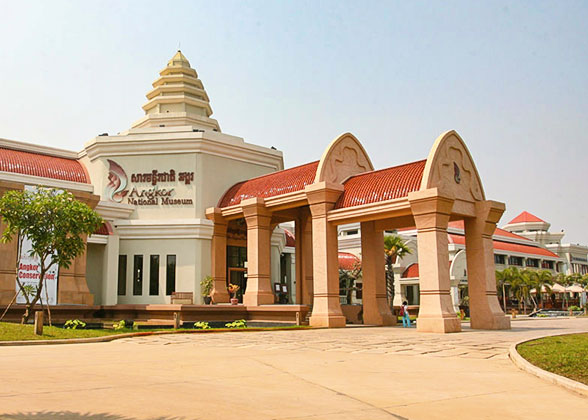
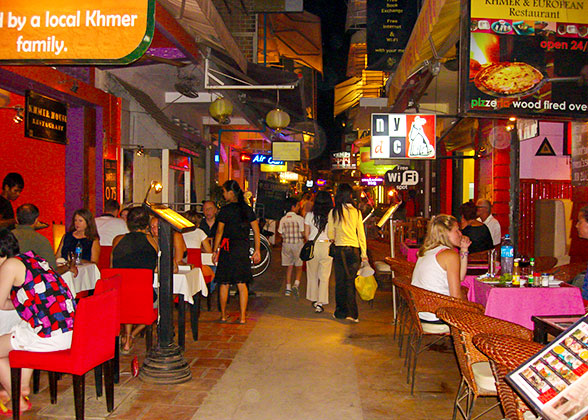
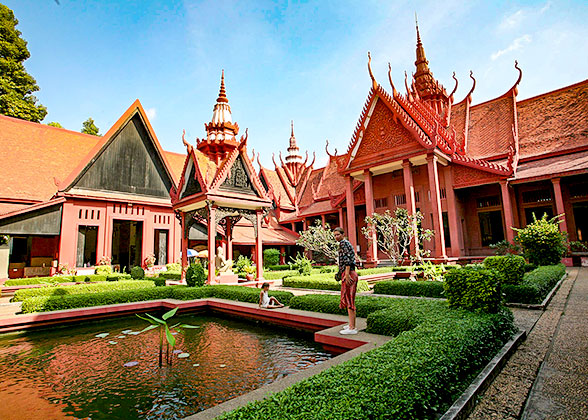
Welcome to Siem Reap, your gateway to Angkor Wat! After arriving at the airport and receiving a warm greeting from your guide and driver, enjoy a 1-hour private car transfer to your hotel. If time allows, you’ll visit the Angkor National Museum today with your guide. Many exhibits come from the Angkor ruins, giving you a deeper insight into Khmer history, culture, and art, and offering a great prelude to exploring Angkor Wat. For your own dinner and thrilling nightlife, it’s recommended to explore the popular Pub Street in the Old Quarter, where bars usually function as restaurants before 22:00 and become drinking and dancing places afterward. The Red Piano and Temple Club are both sought-after choices. ► Pre-Travel Reminders & Suggested Packing Checklist 1. Visa: You can apply online for an e-Visa or obtain a visa on arrival at Siem Reap Airport. The fee is USD 30, and each entry allows a stay of up to 30 days. Regardless of the method you choose, you need to complete an electronic arrival card (CeA) within 7 days before entry, and your passport should be valid for at least 6 months. 2. Clothing: Lightweight, breathable summer attire is recommended. Wearing a long-sleeved jacket or shawl with knee-length trousers or a dress is essential for proper access to temples and the Royal Palace. Additionally, comfortable sneakers and sun protection are also necessary. 3. Medicine: Cambodia has many mosquitoes, so it’s advisable to bring effective mosquito repellent and anti-itch cream. If you’re sensitive to environmental changes, it’s helpful to carry basic medications such as stomach relief, cold remedies, fever reducers, and motion sickness pills. 4. Plug: Cambodian outlets primarily use two-prong flat plugs, which differ from European and American standards. Remember to pack a universal adapter. Accommodation: Tara Angkor Hotel (4 stars) or FCC Angkor by Avani (5 stars), Siem Reap Angkor National Museum Siem Reap Pub Street
|
Day 2: Siem Reap: Angkor Thom with Bayon, Baphuon, Ta Prohm, Angkor Wat Sunset
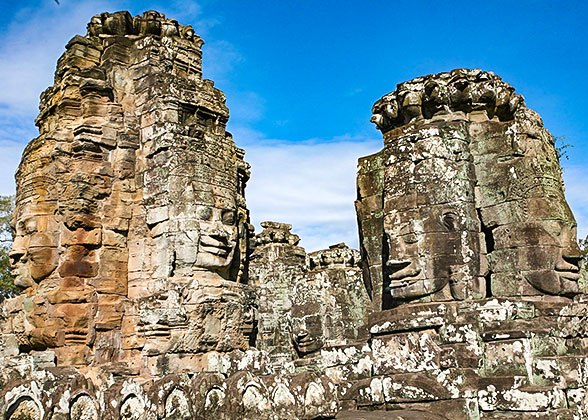
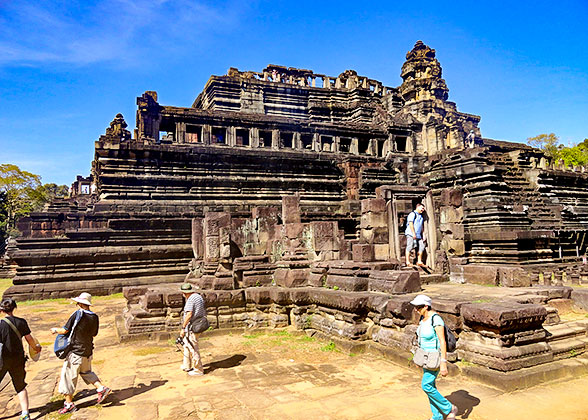
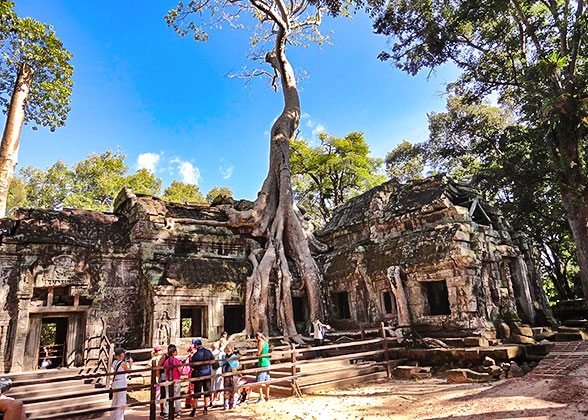
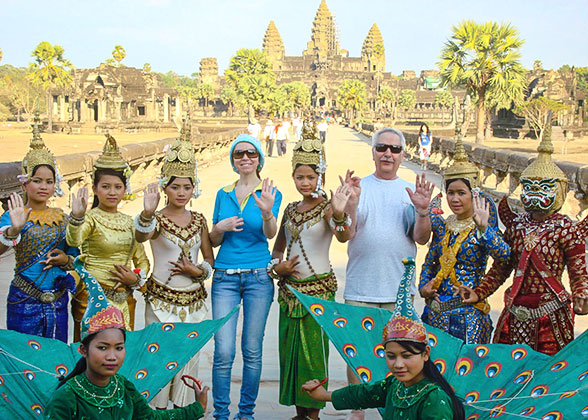
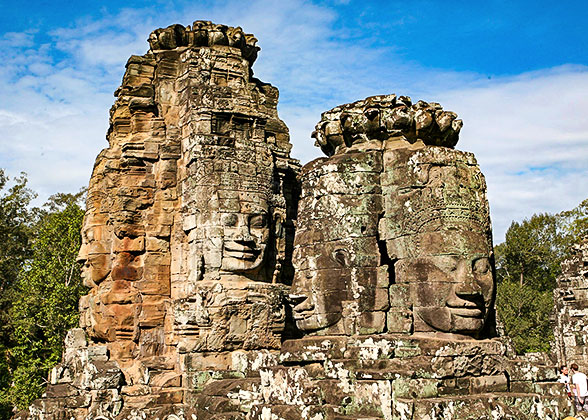
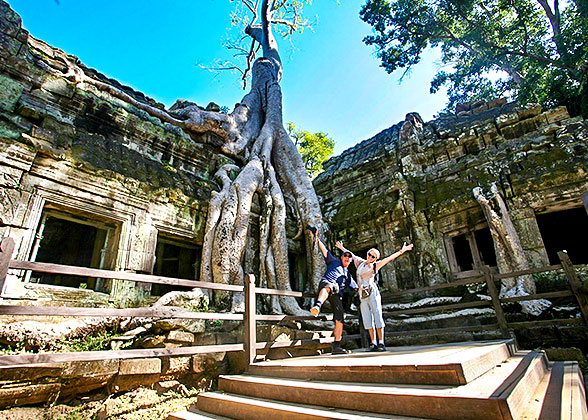
Today, your guide and driver will pick you up at your hotel to begin your Angkor Wat adventure, the highlight of your Cambodia tour. We will enter Angkor Thom via the iconic South Gate, which rises majestically like a stone mountain spanning the moat. At the top, four-faced Buddha bas-reliefs with lowered eyes and slightly upturned lips appear to gaze upon visitors, as if watching over them for over eight hundred years. The smile originates from Jayavarman VII (1122-1218 AD), a strong ruler and a devout Buddhist, who rebuilt Angkor in the 12th century and established Mahayana Buddhism as the state religion. As we cross the bridge, stone carvings of the “Churning of the Ocean of Milk,” from Hindu mythology, symbolize the creation story and remind us that this was a kingdom where gods and kings co-ruled. Continue our steps toward Bayon Temple at the heart of Angkor Thom. Built in 1219, it was the Angkor Dynasty’s final Mahayana Buddhist temple and served as the mausoleum for Jayavarman VII. Its pyramid-like layout features 54 towers, each crowned with four smiling Buddha bas-reliefs, for a total of 216 faces, evoking a blooming lotus flower rising upward. Our next stop is Baphuon Temple, the world’s largest and most intricate three-dimensional structure. It also served as a filming location for the popular action game “Temple Run.” Try creating your own first-person videos, mimicking the game’s scenes as you climb the tall stone steps and skywalks! Then, the Terrace of the Elephants, known for its distinctive 3D elephant carvings, will be your final stop in the morning. After a lunch break, we’ll visit Ta Prohm Temple, well known as a filming spot for “Tomb Raider”. Encircled by tall, lush trees, this distinctive temple feels alive. During the tour, you’ll also see the Dancers’ Gallery, adorned with Apsara reliefs. Later, follow your guide to Angkor Wat Temple, the best-preserved temple in the Angkor complex. The 400-meter-long gallery on the first floor features remarkable bas-reliefs depicting two ancient Indian epics – Mahabharata and Ramayana – along with scenes from the court life of Khmer Empire (802-1431 AD). Over 2,000 Apsara celestial maidens, each with distinct headdresses and attire, showcase the height of ancient Khmer sculptural artistry. The reliefs use a continuous narrative technique; walking clockwise helps you fully grasp the story, much like reading a three-dimensional ancient history book. Even if you don’t have time to learn the full stories, vivid explanations from your guide will make you feel immersed. You can also climb to the top for a panoramic view of Angkor Wat. At sunset, the sandstone bathes in a golden-red glow, echoing the original light and shadow seen in the 12th century. ★ Special Inclusions: Apsara Dinner ShowHaving admired the Apsaras bas-reliefs at Angkor Wat, you’ll then enjoy a special dinner tonight accompanied by an Apsara Dance, a traditional Khmer court dance inspired by these celestial figures, showcasing elegant gestures and stunning costumes. Its stories are primarily drawn from the two Indian epics we discussed. This dance represents the essence of Cambodian classical art and is recognized by UNESCO as an Intangible Cultural Heritage. After that, your guide and driver will escort you back to your hotel. Meals: Breakfast, Lunch, Apsara Dinner Show Accommodation: Tara Angkor Hotel (4 stars) or FCC Angkor by Avani (5 stars), Siem Reap
|
Day 3: Siem Reap: Angkor Wat Sunrise, Banteay Srei, Beng Mealea, Tonle Sap Lake Cruise
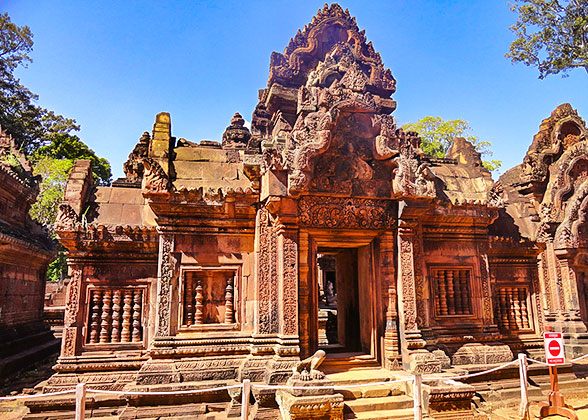
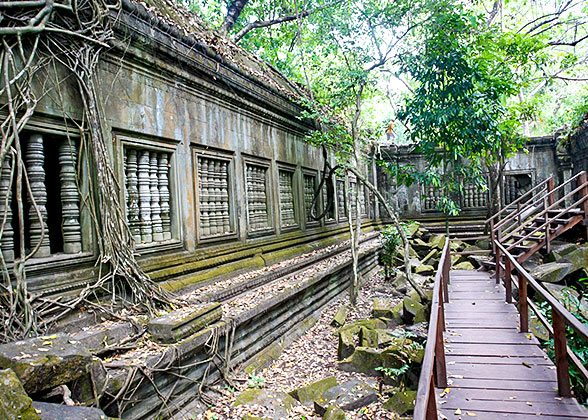
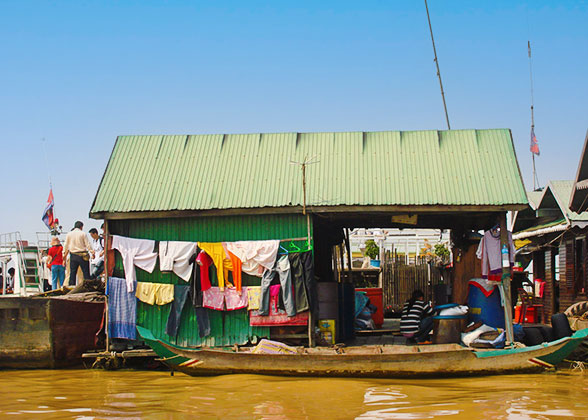
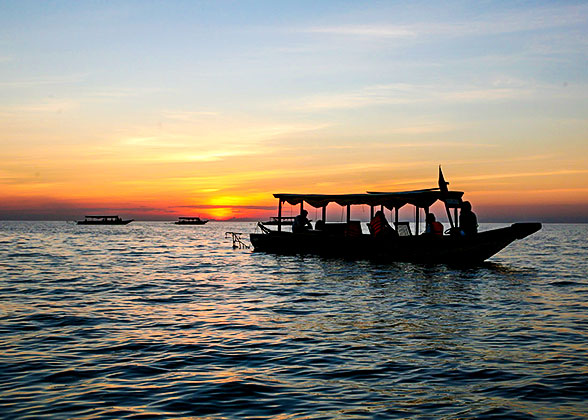
Since the sunrise at Angkor Wat is considered one of the most beautiful in the world, we suggest an early start for you this morning. Sunrise usually occurs between 5:30 and 6:30, and your guide and driver will pick you up from your hotel early enough to arrive before the site opens at 5:00. This allows you to avoid crowds and reach the best photo spot, which offers the most complete reflections of Angkor Wat Temple’s five towers in the lotus pond. After sunrise, we can escort you back to the hotel for breakfast or provide a packed breakfast picnic. ★ Adjustable Date to Watch the Stunning SunriseWatching the sunrise during the rainy season (May-October) depends on luck, whereas it’s much easier to see it during the dry season (November-April). To help you catch the best sunrise, your guide will monitor the weather forecast during your stay in Siem Reap and try to schedule it on a sunny day. Next, we’ll head to Banteay Srei, a Hindu temple outside the urban area, passing through local villages where we can witness authentic Cambodian rural life. Banteay Srei, meaning “Palace of Women” in Khmer, was named by the French discoverer, who was captivated by its only 1.2-meter-high (3.9 feet) stone gates and relief-adorned walls depicting Apsara nymphs and Shiva, believed it was a residence for royal concubines. In fact, it was a temple dedicated to the imperial preceptor, making it smaller than the King’s temple. Nevertheless, the carvings are free from hierarchical constraints, allowing artisans to pour passion into every detail. The lintels and column capitals feature deep reliefs, with even Rafana’s ten fingers clearly carved, earning it the nickname “Diamond of Angkor Art.” Our next stop is Beng Mealea Temple. If Angkor Wat is a human-reconstructed miracle, Beng Mealea remains a living ruin. This 12th-century temple is now a battleground of tree roots and massive stones, illustrating how a tree can, over centuries, gradually topple a stone wall. Sunlight filters through the thick forest canopy, spotlighting broken bas-reliefs, while moss blankets the structure in a lush green velvet. Here, you can hear only the whisper of wind through cracks and the crunch of gravel beneath your feet. Bid farewell to the ancient Angkor ruins and let’s explore a different aspect of Cambodian life with a boat ride through the floating village. On Tonle Sap Lake, hundreds of thousands of stateless people displaced by war live in stilt houses on the water, relying on rice farming, fishing, and a small share of tourism income. Yet during the six-month rainy season, their rice paddies flood, so despite seemingly multiple income sources, they struggle to achieve stability. Please note that, as many tourist sites and guides in Cambodia emphasize, it’s advisable not to give children small change, since this may limit their educational opportunities by encouraging begging. Finally, your guide and driver will accompany you back to your hotel. Meals: Breakfast, Lunch Accommodation: Tara Angkor Hotel (4 stars) or FCC Angkor by Avani (5 stars), Siem Reap
|
Day 4: Siem Reap Cooking Class; Fly to Phnom Penh
★ Interactive Experience: Khmer Cuisine Cooking Class► Schedule: 8:30 to 13:00 or 13:30, including private transfers.
► Location: Preh Dak Village
During your three-day stay in Siem Reap, you’ve likely noticed that Khmer cuisine is known for its mildness and harmonious flavors. Unlike Thai food, which tends to be very spicy and sour, or Vietnamese food, which can be quite bland, Khmer dishes use Kroeung – a spice paste – as a foundation, but only in small amounts, highlighting the natural blend of spices and the true flavors of the ingredients. Among the traditional dishes you’ve sampled, do any catch your interest?
This morning, your guide and driver will pick you up for a special cooking class, where you can discover the secrets of Khmer cuisine firsthand and connect with locals to experience their lifestyle.
Below are the detailed activities:
1. Visit a nearby market to explore local vegetables, meats, river fish, spices, and other ingredients. You’ll be surprised to discover that many unusual fried foods, like spiders, crickets, scorpions, and frogs, are popular among locals.
2. Enjoy some refreshments and follow guidance from the culinary team to prepare your own dishes.
3. Attend the chef’s demonstration to learn how to make Cambodia’s national dish, Fish Amok, as well as roasted chicken and mango sticky rice.
4. Savor a lunch you’ve made yourself, complemented by a special dish crafted for you by the chef.
In the afternoon, your guide and driver will see you off at Siem Reap Airport for your 1-hour flight to Phnom Penh. Upon arrival, your local guide and driver will provide you with a smooth transfer to your hotel.
Meals: Breakfast, Lunch
Accommodation: Chaiya Palace Hotel (4 stars) or Hyatt Regency (5 stars), Phnom Penh
|
Day 5: Phnom Penh: Royal Palace, National Museum, Tuol Sleng & Choeung Ek Killing Fields
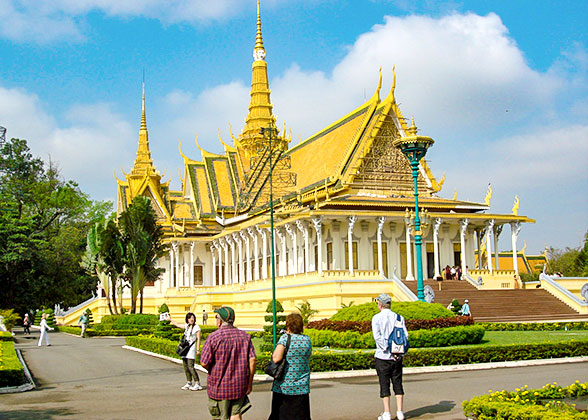
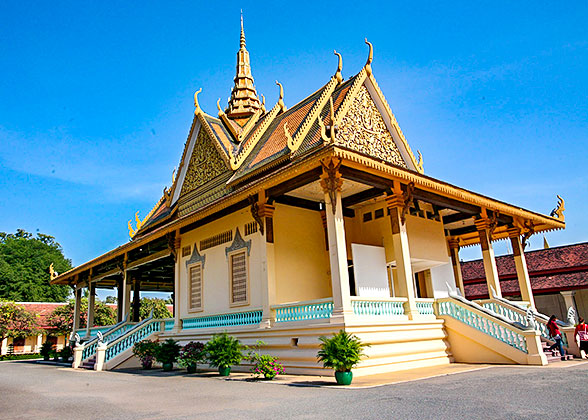
Leaving behind Siem Reap’s relaxed cultural atmosphere and lively Khmer customs, today your guide will lead you through Phnom Penh, the nation’s political and economic center, to experience a vibrant urban landscape that reflects both a turbulent past and an optimistic outlook. Our first stop will be the Royal Palace, built in 1434, symbolizing Cambodia’s shift from the Angkor era to the Phnom Penh period. Prince Ponhea Yat moved the capital from Angkor to Phnom Penh to escape conflicts and established the city, which remains the capital today. Throughout history, the palace has always represented the merging of royal power and spiritual faith. Even the red-and-white checkered floor in the mural gallery carries symbolic meaning – red for royal authority and white for Buddhism – illustrating the Khmer tradition of integrating monarchy and religion. Just a short walk away is the National Museum of Cambodia, the country’s largest and most significant archaeological museum, where you’ll see numerous sandstone statues and lintel carvings from Angkor Wat, including the seated statue of Jayavarman VII, Angkor’s greatest king, and the six-armed Vishnu statue, a masterpiece from the 6th to 7th centuries. In the afternoon, follow your guide to the Tuol Sleng Genocide Museum (S21 Prison) and Choeung Ek Killing Fields to explore Cambodia’s dark history under the Khmer Rouge from 1975 to 1979. These sites served as concentration camps where nearly 20,000 civilians—including intellectuals, women, and children—were imprisoned, tortured, and ultimately killed. Your guide will offer a comprehensive account of the Khmer Rouge’s reign, including details of prison interrogations, torture, victim testimonies, archival information, and survivor stories, helping you grasp the extent of the suffering during that era. As the Tuol Sleng guide remarks, after visiting S21, you become a guardian of this memory. Sharing what you learn here ensures that humanity continues to stand against injustice, upholding human dignity and compassion to maintain peace today and for future generations. If you’re fortunate, you may encounter a survivor sharing his stories here, and with your guide’s help, you can chat with him and take photos. Once all visits end, your guide and driver will escort you back to your hotel. Meals: Breakfast, Lunch Accommodation: Chaiya Palace Hotel (4 stars) or Hyatt Regency (5 stars), Phnom Penh
|
Day 6: Phnom Penh Airport See-off
On the last day, your guide and driver will continue to provide courteous service, including a hotel-to-airport transfer and additional support.
If you want to explore additional Angkor sites, such as the Roluos Group and the Koh Khe Pyramids, or visit more cities like Kampong Chhnang, Kep, and Battambang, please contact us anytime to tailor your itinerary!
► Information about Phnom Penh Techo Airport
As a fusion of Khmer culture and modern design, the brand-new airport features wave-like roofs that echo Angkor Wat’s temple shapes, ceilings inspired by traditional bamboo weaving, a massive bronze Buddha statue, and abundant local greenery, making it comparable to Singapore Changi Airport. Moreover, check-in, security, and customs procedures are swift. You can also use the e-gate by scanning your passport and ticket, though it’s a bit distant from the boarding area.
Meals: Breakfast
|