Day 1: Kathmandu Airport Pick-up, Visit Swayambhunath Stupa
Welcome to Kathmandu, the capital of Nepal! When your flight arrives at the airport, your guide and driver will pick you up and provide a smooth private car transfer to your hotel.
After check-in and a short rest, let’s visit Swayambhunath Stupa, or the “Monkey Temple”, located on a hill in the west of the city. According to the legend, this hill is transformed from a sacred self-luminous lotus flower, so people built a stupa here to chant and pray. From here, you can enjoy a panoramic view of the charming Kathmandu Valley while listening to the history about how the valley was divided into three kingdoms 500 years ago. After the tour, your guide and driver will escort you back to your hotel.
► Nepal & Bhutan Visa Tips
1. You can get a Nepalese visa on arrival at Kathmandu Airport. The cost of a 15-day visa is USD 30, and please bring cash to pay on site.
2. This package covers all your expenses for entering Bhutan, including your single-entry visa fee and the Sustainable Development Fee paid to Bhutan government.
Accommodation: Ramada Encore by Wyndham Kathmandu Thamel (4 stars), or Radisson Hotel, Kathmandu (5 stars)
|
Day 2: Kathmandu: Durbar Square, Pashupatinath Temple & Boudhanath Stupa
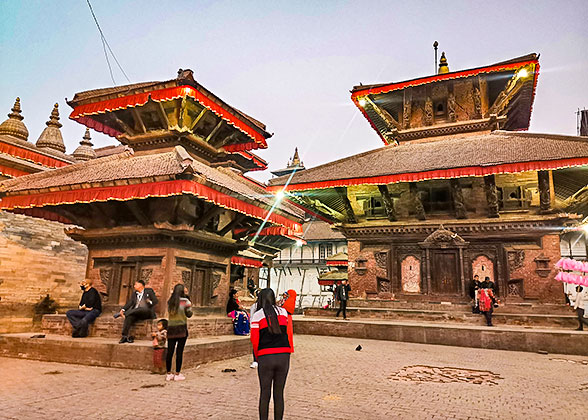
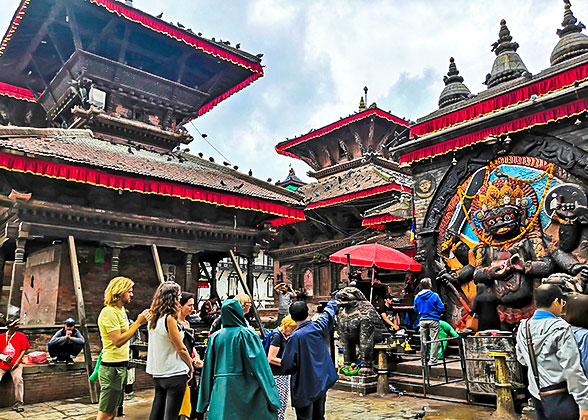
Today, your private guide and driver will be waiting for you at your hotel, and accompany you to tour the historic and cultural sites in Kathmandu Valley. Let’s first go to Kathmandu Durbar Square, the “City of Temples”. It houses over 50 temples and royal palaces from the 16th to 19th century AD, the renaissance time of Nepal. Although it’s a place of many gods, you may not take it as a solemn and serene site as you walk inside. Instead, you can find vendors, students, couples, doves and even livestock on the square. In the past when there were no hotels in Kathmandu, the square would also provide accommodation for tourists and peasants seeking for job opportunities in the city. Follow your guide to see the most stunning architecture on the square, including the Kasthamandap Temple which is built with wood from one single tree, and Kumari Temple. In Nepal, Kumari is a living goddess worshipped by both the Hindus and the Buddhists, traditionally a little girl who meets certain strict criteria, and is seen as an embodiment of goddess in the secular world. If it’s around 11 a.m., this mysterious goddess would show up and you may see her by the temple’s window. After lunch, let’s proceed to Pashupatinath Temple. It’s a world-famous Hindu pilgrimage site not only because it has a history of over 1,500 years, but also because Hindus believe cremating the deceased here can bring purification and liberation to their soul. However, not all the deceased need to get cremated, such as people who died from snake bites, because snakes are thought as the purest animal. ► Tip: Every evening, the Bagmati Aarati ceremony takes place by the river next to the temple, and there are various activities like ritual dances. If interested, you may watch it by yourself. After we visit Boudhanath Stupa, the world’s largest round pagoda, your guide and driver will escort you back to your hotel. Meals: Breakfast, Lunch Accommodation: Ramada Encore by Wyndham Kathmandu Thamel (4 stars), or Radisson Hotel, Kathmandu (5 stars) Kathmandu Durbar Square Swayambhunath Stupa
|
Day 3: Kathmandu: Bhaktapur & Patan Durbar Squares, Cultural Dinner Show
Today, your guide and driver will meet you at your hotel and accompany you to visit the other two brilliant pearls of the UNESCO-listed sites in Kathmandu Valley, Bhaktapur Durbar Square and Patan Durbar Square. Bhaktapur Durbar Square is the best-preserved palace square of the three. Each building on the square is like an exquisitely decorated artwork, and if you take a closer look, you can find the Newari wood carvings hidden on the lintels, window frames and beam columns. The subjects of the carvings vary according to the places: carvings of birds, elephants and crocodiles are often seen in royal palaces, while in temples, there are more about mythological stories. Follow your guide to find the most remarkable wood carving on the square, the Peacock Window of the Dattatreya Temple, and try to see the texture of the peacock’s tail feather. You know what? the window is not carved out of a whole piece of wood, but is assembled from countless small pieces like Lego bricks! Although Patan Durbar Square, our next stop, is not big in size, it’s praised as the “City of Art”. Here, you can see masterpieces of Newari stone and bronze carving. The most striking structure on the square is the stone-built Krishna Temple. We’ll not miss the Golden Temple, a gilded Buddhist site from the 12th century AD. ► Warm Tips: 1. Please respect the local culture, and do not bring leather products, such as leather bags and belts, into the temples, because cows are considered holy animals by Hindus. 2. It’s recommended to wear comfortable walking shoes since the squares are stone-paved. In the evening, we’ll arrange special cultural experiences for you. Enjoy an excellent Cultural Dance Show while savoring your traditional Nepali dinner. After that, your guide and driver will escort you back to your hotel. Meals: Breakfast, Lunch, Dinner Accommodation: Ramada Encore by Wyndham Kathmandu Thamel (4 stars), or Radisson Hotel, Kathmandu (5 stars) Golden Temple in Patan Patan Durbar Square
|
Day 4: Fly to Pokhara; Phewa Lake Boat Tour with Barahi Temple
In the morning, your driver will pick you up from your hotel and escort you to Kathmandu Airport for a flight to Pokhara, a picturesque hiking paradise. You’ll arrive there in an hour, and your local guide and driver will meet you and escort you to your hotel.
After lunch and a short break, let’s take a relaxing Phewa Lake boat tour. Phewa Lake is the largest freshwater lake in Nepal, with the snow-capped Mt. Annapurna not far away. Then, we’ll arrive at the islet on the lake, and visit Barahi Temple, a two-storied stone building with a golden roof. Dedicated to Lord Shiva’s wife, it’s one of Nepal’s few temples that can only be reached by boat. Afterward, your guide will escort you back to your hotel.
► How to Increase Your Chance of Seeing Snow-capped Mountains
1. When taking the flight from Kathmandu to Pokhara, you can choose a window seat on the right side. It offers a superb opportunity to admire the peaks from the air.
2. Visit Pokhara in the dry season from October to April. October to November or March to April will be better. Clear weathers offer good visibility.
► Dinner Recommendation (at your own expense)
If you want to enjoy the not-to-be-missed evening view of the Phewa Lake, you can choose the lakeside restaurant - The Juicery Cafe for dinner. Address: near str, 22 A, Lakeside Rd, Pokhara. It serves various western dishes and vegetarian food, at a quite affordable cost of USD 5-10 per person.
Meals: Breakfast, Lunch
Accommodation: Soaltee Westend Lakeside, Pokhara (4 stars), or Hotel Pokhara Grande (5 stars)
|
Day 5: Pokhara: Sarangkot Sunrise, World Peace Pagoda, Devi’s Fall & Begnas Lake
Let’s start a wonderful day by watching a spectacular sunrise at Sarangkot! If the weather is fine, your guide and driver will escort you to the viewing deck to enjoy a panoramic vista of the stretching snow peaks. Hold your breath, and see the changes of colors and views as the sun lights the sea of clouds and the mountains. Then, we’ll visit the hilltop Bindhyabasini Temple, which enshrines the Hindu goddess of power, and overlook the mountains and Pokhara city from a different perspective. Afterward, we’ll go to World Peace Pagoda. Its construction was initiated and funded by Japanese monks after the atomic bomb blasts in Hiroshima and Nagasaki in the last century. You may walk clockwise around the pagoda, and make a wish in the peaceful atmosphere. ► Tip: If you would like an easy hiking experience, we can arrange a 1 to 2 hours’ hike down from the World Peace Stupa to the Phewa Lake. There is no additional cost for this activity and you can discuss this with your guide ahead of time. Then, let’s head to Devi’s Fall to admire Pokhara’s natural scenery. It’s formed by the melted ice and snow from the Himalaya mountains, and the constant flow of water has created caves and an underground river below the fall. Inside the Gupteswor Mahadev Cave, you can see a large stalagmite looking like Shiva Lingam, and learn facts about the fertility worship in Hinduism. Next, we’ll gain some knowledge about the history of human beings’ mountaineering at International Mountain Museum, and enjoy relaxing time beside Begnas Lake. Your guide and driver will then escort you back to your hotel. Meals: Breakfast, Lunch Accommodation: Soaltee Westend Lakeside, Pokhara (4 stars), or Hotel Pokhara Grande (5 stars)
|
Day 6: Pokhara: Seti River & Kalika Suspension Bridge; Fly back to Kathmandu
After breakfast, your guide and driver will meet you at your hotel and accompany you to watch the rapids of the Seti River. It’s named “seti”, or “white” in the local language, is because of its water rich in calcium carbonate, so you may find the river milky and muddy.
Then, after taking a leisurely walk across the Kalika Suspension Bridge spanning the river, we’ll say goodbye to Pokhara and head to the airport for a flight back to Kathmandu. After landing, your local guide and driver will pick you up and escort you to your hotel.
Meals: Breakfast
Accommodation: Ramada Encore by Wyndham Kathmandu Thamel (4 stars), or Radisson Hotel, Kathmandu (5 stars)
|
Day 7: Fly to Paro of Bhutan, Transfer to Thimphu, City Tour
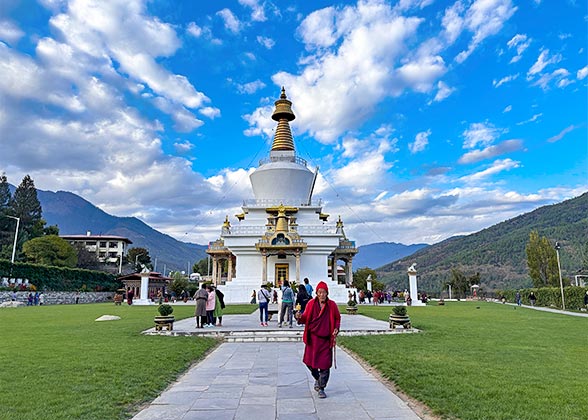
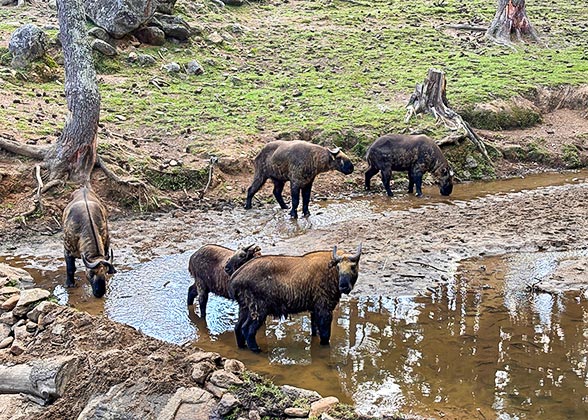
This morning, your driver will escort you to Kathmandu Airport, and you’ll take a 1-hour flight to Paro Airport, Bhutan’s only international airport. Upon arrival, the local guide and driver will pick you up and escort you to the capital city, Thimphu. During the 1.5-hour private car ride, we’ll pass by the Tamchog Lhakhang Iron Bridge, where you can see colorful prayer flags, and admire the natural scenery of the valley. After arriving and taking a short break, follow your guide to take a Thimphu city tour from National Memorial Chorten. In this capital city with few tall buildings and cars, this towering stupa is one of the most striking structures. It’s built to commemorate a king who was loved by his people but died young. Walk around the stupa three times like the locals who believe this can bring redemption for their sins. Then, let’s continue to visit the glistening Buddha Dordenma Statue, the tallest seated Buddha statue in Southeast Asia with a height of 51.5 meters (170 ft.). From the hilltop where the statue is situated, you can enjoy a panorama of Thimphu city. After that, we’ll go to the Royal Takin Preserve Motithang, to take a look of takin, the national treasure of Bhutan. Though with a humble looking, the creature is able to adapt to the harsh environment of plateau areas at an altitude of 2,000 to even 4,500 meters (6,560-14,760 ft.)! Let’s unveil the secrets of how they live in extreme natural environments. Our last stop is Tashichho Dzong. This fort-shaped, white-walled and red-roofed architecture serves as the political and religious center of Bhutan, and the present Bhutan king works here regularly. If time permits, you can watch a unique Flag Lowering Ceremony hosted by monks. After that, your guide and driver will escort you back to your hotel. ► Things to Know before Visiting Bhutan 1. Tibetan Buddhism is the state religion of Bhutan. When visiting religious sites, please wear conservative clothes and ask for permissions before taking photos. 2. US dollars are widely accepted in major cities, and you can also use credit cards like MasterCard and Visa in Thimphu. 3. Traditional Bhutanese dishes are spicy. If you don’t like spicy food, please tell your restaurant and hotel staff in advance. Meals: Breakfast, Lunch, Dinner Accommodation: Hotel Bhutan Home, Thimphu (3 stars) or similar
|
Day 8: Visit Bhutan Post Office Headquarters; Private Car Transfer to Punakha
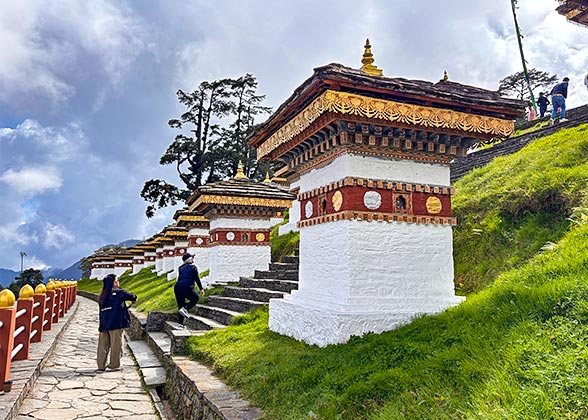
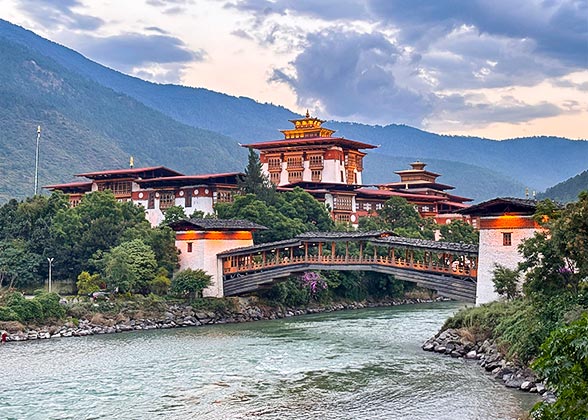
After breakfast, your guide and driver will meet you at your hotel and accompany you to visit Bhutan Post Office Headquarters. Although the industry of Bhutan is not well-developed, the country is renowned in stamp making and innovation. Here, you can find three-dimensional stamps made of silk, and metal stamps that can “sing”! Next, let’s proceed to a traditional Paper Making Factory to learn more about the local handicrafts. Bhutan’s papermaking techniques, introduced from China, have a history of over 1,300 years. You can see daphne bark everywhere in the factory. Interestingly, the sap of this plant has toxins that is natural insect repellent, so the paper made from it is sturdy and durable. After that, we’ll leave Thimphu for Punakha, the former capital, which takes about 2 hours. In Bhutan’s law, the rate of the country’s forest coverage must be over 60%, and Bhutanese are very proud of their fresh air and dense forests. On the way, you can feast your eyes on the delightful scenery and overlook the Himalaya mountains from the Dochula Pass and admire the 108 Chortens. And you can ask your driver to make a quick stop to take photos at any ridges or mountain passes you like. Upon arrival, let’s visit Punakha Dzong, which is facing Mo Chhu River and backed by mountains. If it’s in spring, you can see the grand architecture standing among alluring jacaranda blooms. Follow your guide to walk across the Wooden Suspension Bridge spanning the river to the Dzong. When you marvel at the delicate patterns and carvings in the Dzong, your guide will share you the legend about it. Local people believe that, there must be some divine power that helped the first Je Khenpo (the chief abbot) of Bhutan complete the Dzong’s construction in only one year. After the tour, your guide and driver will escort you to your hotel. Meals: Breakfast, Lunch, Dinner Accommodation: Hotel Zangto Pelri, Punakha (3 stars) or similar
|
Day 9: Visit Punakha Village & Chimi Lhakhang, Transfer to Paro, Visit Ta Dzong & Kyichu Lhakhang
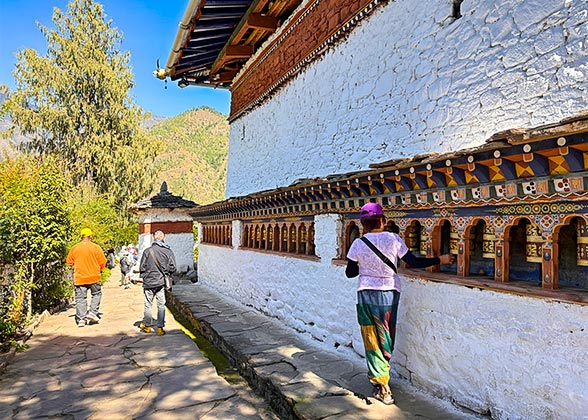
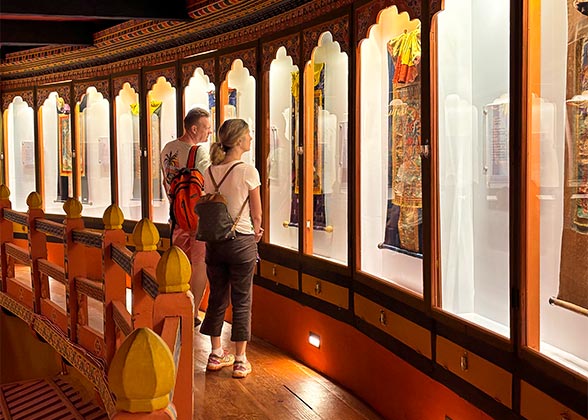
In the morning, your guide and driver will meet you at your hotel for your Punakha exploration. We’ll first go to the picturesque Rinchengang Village. As the oldest village in Bhutan, it’s now home to the descendants of the craftsmen who built Punakha Dzong. Then, let’s visit the Sangchhen Dorji Lhuendrup Nunnery. For long, women in Bhutan have no chance to receive Buddhist education like monks. With more and more nunneries, they gain more life choices and can get vocational training like English learning and computer use. Then, let’s hike to Chimi Lhakhang, also known as the “Fertility Temple”. Approaching the temple, you could soon see the eye-catching phallus patterns: some are wall paintings, and some are wood carvings. Different from Hindus’ fertility worship, this is related to an extraordinary saint in Bhutan, the Divine Madman. According to legend, he defeated the demons with his phallus, and is seen as a patron saint by the locals. After that, proceed to Paro by a 5-hour private car ride. Upon arrival, your guide will accompany you to visit Paro Dzong, built on the site where Padma Sambhava, the founder of Tibetan Buddhism, made his spiritual practices, and then explore Ta Dzong on the hilltop, a former watchtower and now the National Museum of Bhutan. Inside, you can admire the relics spanning 1,500 years, including ancient Thangkas and gilded ritual implements. Our next stop is Kyichu Lhakhang. Built in 638 AD, this temple is one of the most revered sacred sites in Bhutan. It’s built because of a Chinese princess, and your guide will share her stories with you. After that, your guide and driver will escort you back to your hotel. Meals: Breakfast, Lunch, Dinner Accommodation: Hotel Olathang, Paro (3 stars) or similar
|
Day 10: Tiger’s Nest Monastery Hiking; Visit Drukgyel Dzong & Paro Old Town
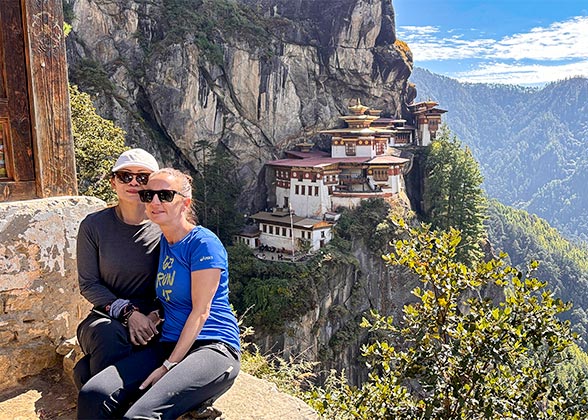
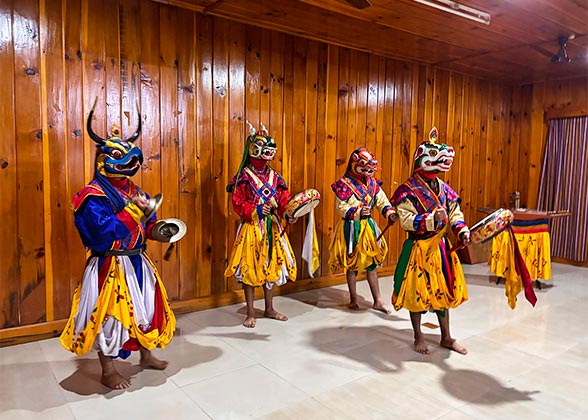
Today ushers in the landmark of Bhutan, the Tiger’s Nest Monastery! To reach this sacred site perched on a cliff face, we’ll need to hike for about 2 hours. Your experienced guide will accompany you to complete this pilgrimage and explore the stunning temple buildings. Legend has it that, Padma Sambhava once came to the mountains here by riding a flying tiger for spiritual practices, and thus the place is named “Tiger’s Nest”. For Bhutanese, they need to visit the Tiger’s Nest Monastery at least once in their lifetime. Walking up the stairs from the foot of the mountain and surrounded by pristine forests and streams, you may find it not only a spiritual journey, but also a dialogue with nature. All your efforts will get rewarded when you see the monastery embedded in the cliff as if lifted up by the clouds. ► Hiking Tips: 1. The hiking takes about 5 to 6 hours in total, climbing to an altitude of over 3,000 meters (9,842 ft.). It can be a challenge for your fitness and stamina, and please take precautions against altitude sickness. If you don’t feel well during the hiking, please communicate with your guide in time. 2. Wear anti-skid hiking shoes and layers of clothes, and bring drinking water and snacks for energy supplying. 3. Self-paid horse-riding option is available for uphill, which is helpful for saving your energy. The cost is generally USD 25 per ride. After the hiking, take our comfortable private car to visit Drukgyel Dzong, a 17th-century fortress. Then, we’ll conclude today’s sightseeing with a relaxing Paro Old Town stroll. There are a lot of stores selling tea, handmade soap, fabrics and traditional clothing. After that, your guide and driver will escort you back to your hotel. Meals: Breakfast, Lunch, Dinner Accommodation: Hotel Olathang, Paro (3 stars) or similar Tiger’s Nest Monastery Bhutan Folk Dance
|
Day 11: Departure from Paro, Airport See-off
After breakfast, your guide and driver will escort you to Paro Airport, assist you with the check-in process and see you off. Bon voyage!
Meal: Breakfast
|