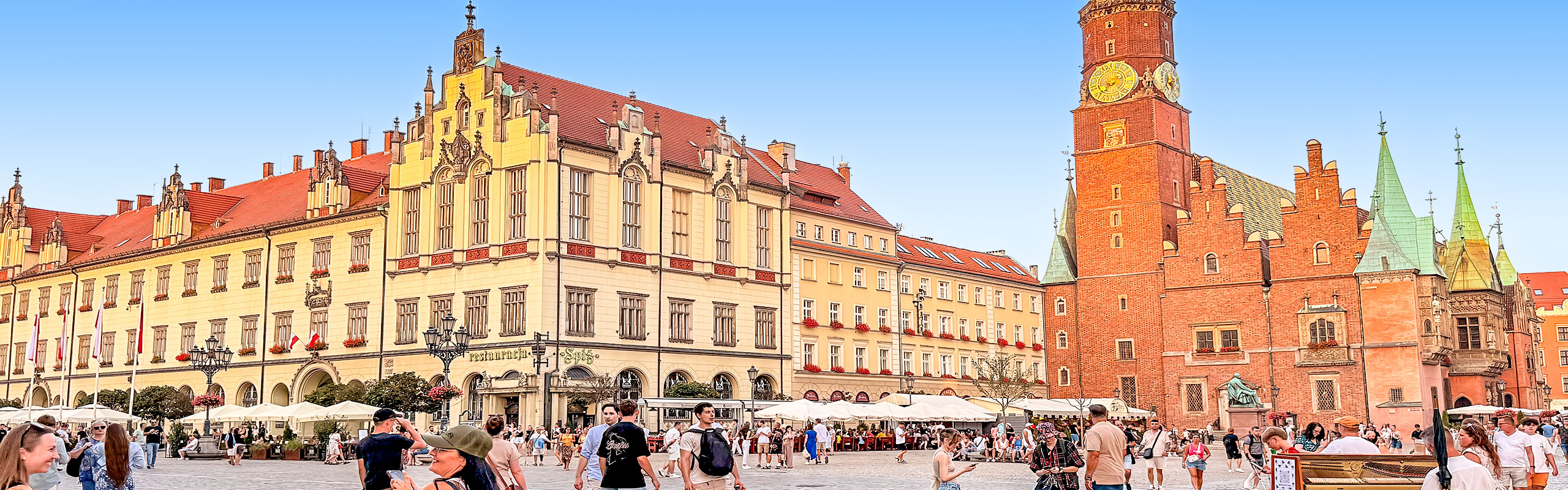
Visitors on the Castle Square, Warsaw
Today, your private guide will pick you up from your hotel and accompany you to visit some famous sights in Warsaw city center. As the capital, Warsaw suffered severe damage during World War II (1939-1945 AD), and about 85% of the buildings were destroyed by the Nazis. The city was restored based on historical materials, and monuments and museums were gradually established. Nowadays, Warsaw has recovered from the shadow of war, and is becoming a vibrant metropolis.
We’ll first go to Castle Square, which is the starting point of the Royal Route and also the entrance from Warsaw’s modern downtown to the bustling Old Town. Standing in the center of the square is the 22-meter-tall (72 ft.) Sigismund’s Column. First built between 1643 and 1644 AD, it features a monument to King Sigismund III Vasa (1587-1632 AD). During his reign, the capital of Poland was moved from Krakow to Warsaw. The striking brick-red Baroque building behind the column is the Royal Castle - the former palace of the Polish royal family. It is now a national museum, housing artworks from the 16th to the 18th century as well as the royal thrones and swords. Next, proceed to St. John’s Archcathedral, one of the oldest and most significant cathedrals in Warsaw inscribed on the UNESCO World Heritage list. Its red-brick Gothic-style building, without luxuriant decorations inside, creates a solemn and peaceful atmosphere, and was once used for coronations and funerals. Its well-preserved crypt is the last resting place of generations of bishops, royal members and dukes including Poland’s last King Stanislaw Augustus (1732-1798 AD) and Nobel Prize winner Henryk Sienkiewicz (1846-1916 AD).
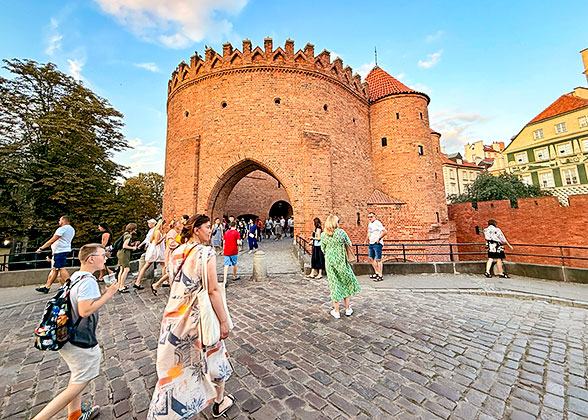
Keep going and we’ll come to Old Town Square, the heart of Warsaw Old Town, whose history can be traced back to the 13th century. Rebuilt vintage buildings around the square have been transformed into boutiques, cafes, and restaurants, among which street artists and handicraft vendors are easy to encounter. There is an elegant mermaid statue in the center of the square, which is said to symbolize the story about the origin of the name “Warsaw”.
Then, let’s go to Lazienki Royal Park, the largest park in Warsaw, notable for housing Lazienki Palace, which is a water palace and the summer residence built for Poland’s last King in 1674 AD. Squirrels, peacocks and foxes live in the lush gardens of the park. The Monument to Frederic Chopin (1810-1849 AD) is hidden in the serene natural atmosphere. This Poland’s best-known composer spent the first half of his life in Warsaw. In memory of Chopin, the monument was erected on the 100th anniversary of his birth, and Chopin Concerts are held on the grass in front of it every summer.
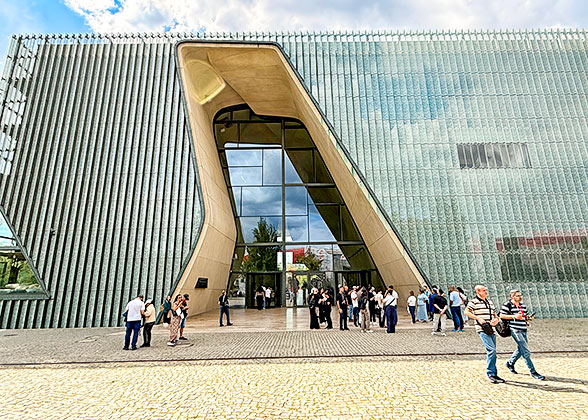
Afterward, we’ll head to the Warsaw Ghetto. By the 16th century, most of the Jews worldwide were living in Poland, while during World War II, hundreds of thousands of their descendants were murdered by the Nazis. First, visit the Umschlagplatz Monument. Umschlag Platz is a German word meaning “collection point”. This is the place where more than 300,000 Jews were sent to death camps between 1942 and 1943 AD, mainly to Treblinka Concentration Camp. Not far from the monument is the Monument to the Ghetto Heroes, in front of which Chancellor Willy Brandt (1913-1992 AD) of West Germany spontaneously knelt to pay tribute to the victims in 1970. Go ahead and we’ll visit POLIN Museum of the History of Polish Jews, which focuses on the “history of Polish Jews over a millennium” from the 10th century to the present. You could have a look at the artworks, photographs, and religious handicrafts related to Jewish heritage. After the visit, your guide will escort you back to the hotel.
Meals: Breakfast
Accommodation: Novotel Warszawa Centrum, Warsaw (4 stars) or similar